The Plant Lady SF
Sarracenia rubra ssp. viatorum
Sarracenia rubra ssp. viatorum
Couldn't load pickup availability
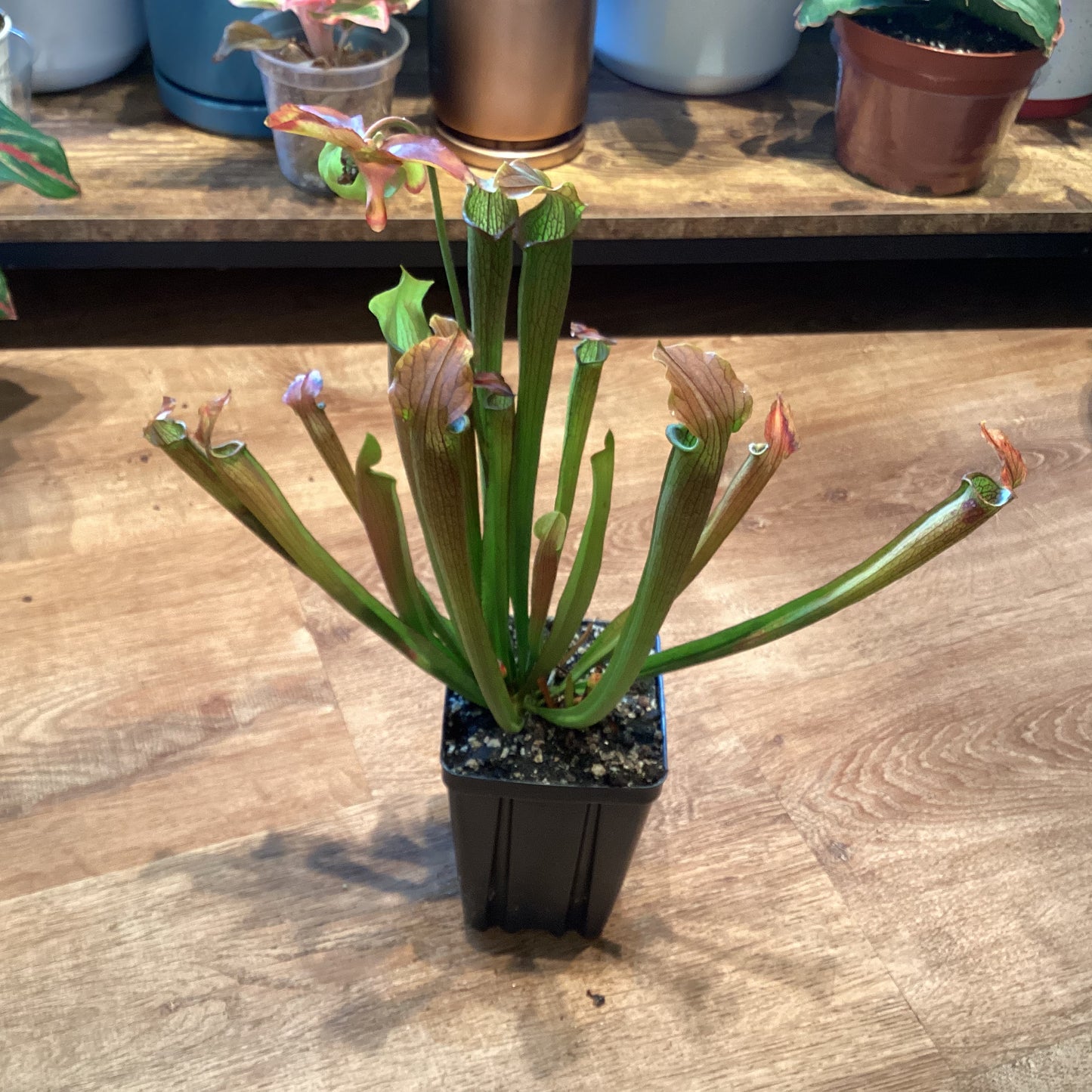
Sarracenia rubra ssp. viatorum is one of the lesser-known gems of the pitcher plant world. Native to a limited region of the Florida Panhandle, this subspecies is compact and graceful, with slender, gently arching pitchers that carry a subtle, earthy red blush and a sweet, slightly spicy fragrance—especially noticeable in warm weather.
This plant doesn’t shout for attention like some of its taller cousins, but its refined form and localized rarity make it a favorite among collectors. It’s also a great choice for smaller outdoor bog setups or compact container gardens.
Light: Full sun—6–8+ hours daily for best color, scent, and growth.
Temperature: Thrives in temperate climates (50–90°F). Hardy down to light frosts.
Humidity: Prefers moderate to high humidity but is fairly adaptable when well-watered.
Water: Always keep the plant moist. Best grown standing in 1–2 inches of distilled, rain, or reverse-osmosis water. Never use tap water unless it’s extremely pure (such as San Francisco’s Hetch Hetchy supply).
Potting mix: A standard carnivorous plant mix—peat moss and perlite or sand, with no fertilizer or compost.
Fertilizer: None. This plant gets its nutrients from catching insects.
Dormancy (important!):
Like all temperate Sarracenia, S. rubra ssp. viatorum requires a winter dormancy period. In late fall, pitchers will begin to brown and die back as the plant prepares to rest. During dormancy (typically November to February), reduce watering slightly (keep the soil just damp) and keep the plant in a cool location between 35–55°F. In early spring, remove old growth to encourage fresh pitchers.
How to grow Sarracenia rubra ssp. viatorum indoors:
This plant is best grown outdoors or in a greenhouse. While it can be kept indoors under strong grow lights with adequate airflow, it still needs a proper winter dormancy period in cool conditions to stay healthy long term.
How to grow Sarracenia rubra ssp. viatorum outdoors in the Bay Area:
This species thrives in outdoor container bogs or in-ground plantings in full sun. In coastal areas, humidity is generally sufficient; in drier inland zones, place near other moisture-loving plants or in partially sheltered spots to help retain ambient humidity. During winter, dormancy can be encouraged naturally outdoors, but consider sheltering the plant from excessive rain or frost if needed.
Bloom season: Early spring
Dormant period: Winter (Nov–Feb)
Pet safe: Yes
Difficulty: Intermediate. Compact, rewarding, and easy to grow outdoors with proper dormancy.
Share