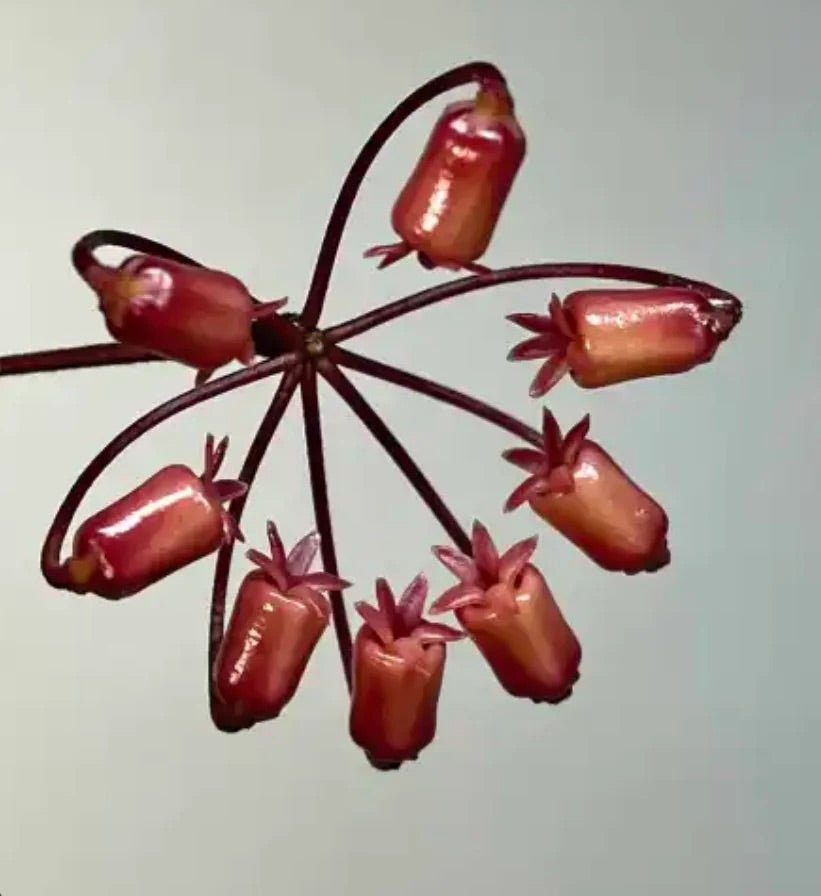
Hoya insularis
Hoya insularis
Couldn't load pickup availability
Hoya insularis is a rare, island-native species prized for its elegant, threadlike leaves and surreal, starburst blooms. Unlike its more common relatives, this species thrives in bright gentle light and brings a distinctly airy, ethereal presence to any Hoya collection.
Description
Hoya insularis is an unusual species originating from the islands of the Philippines, where it grows as an epiphyte in coastal forests. Its long, narrow, and slightly twisted leaves give it a refined, almost minimalist silhouette—perfect for collectors drawn to more understated foliage. When mature, it produces clusters of tiny, fuzzy, pale yellow to peach flowers with a spicy-sweet fragrance. The blooms are short-lived but spectacular, often appearing multiple times a year under ideal conditions.
How to Grow Indoors
Provide bright gentle light for best growth and flowering—an east or west window is ideal. This species appreciates warm, stable temperatures and moderate humidity but is less demanding than many tropical Hoyas once established. Use a chunky, free-draining substrate (such as orchid bark, perlite, and a bit of coco coir or peat) to mimic its natural epiphytic habitat. Water thoroughly when the top third of the mix is dry, but allow it to breathe between waterings. Fertilize lightly during the growing season with a balanced orchid or foliage fertilizer diluted to half strength.
How to Grow Outdoors (San Francisco Bay Area)
In protected areas of San Francisco, Hoya insularis can thrive outdoors year-round if shielded from cold winds and winter rain. Choose a bright, sheltered patio or covered porch with good airflow. Avoid direct midday sun, which can scorch the fine leaves. Bring indoors if temperatures drop below 50°F. Hetch Hetchy tap water is generally safe for Hoyas in the Bay Area.
Blooming
Blooms appear on mature vines and return on the same peduncles year after year—avoid trimming these off after flowering. With consistent warmth and light, Hoya insularis may bloom several times a year.
Pet Safety
Pet safe (non-toxic to cats and dogs, according to ASPCA).
Origin
Philippines (likely endemic to coastal or island forest habitats)
Share