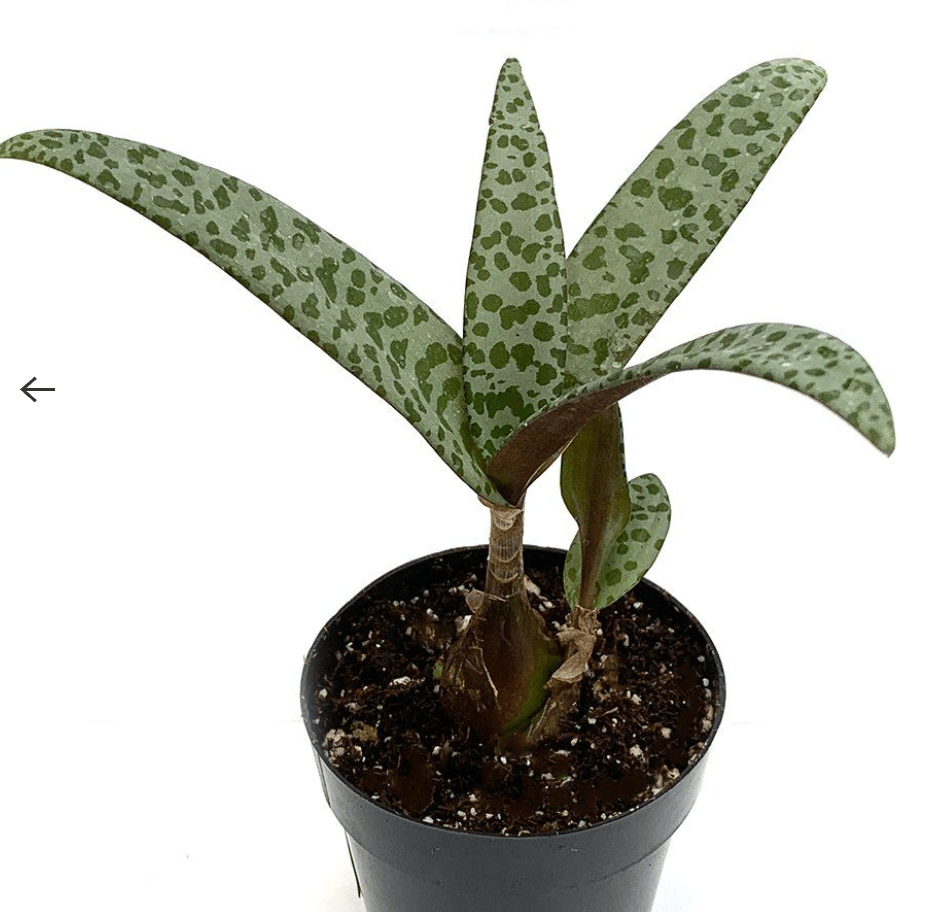
Scilla violacea (Silver Squill)
Scilla violacea (Silver Squill)
Couldn't load pickup availability
A small yet tough and hardy species, the silver squill (Ledebouria socialis or Scilla violacea or Leopard Lily) hails from the dry savannas of South Africa. This perennial is known for being a colorful and eye-catching houseplant. It has silvery leaves with green leopard spots, as well as unique teardrop-shaped bulbs that form above the ground. The silver squill also has the ability to store moisture in its purple, bulb-like stems during times of drought.
One of the most widely cultivated bulbs, silver squills are closely related to the hyacinth and are most often sold as a houseplant. However, they can be grown as a ground cover or even in xeriscape gardens in regions with warmer climates.
Though it resembles a succulent and possesses the same drought tolerance, the silver quill isn't technically this type of plant. The silver squill is a geophytic species of a bulbous perennial plant. You can expect its structurally unique leaves to grow in a lance shape and contain both silver spots and purple on the underside. Its flowers will grow during spring, displaying pink stems and small green flowers.
Silver squill plants are considered particularly easy to care for. However, they will require a winter rest period, either in a cooler area of your home or in certain states (with an agricultural zone of 10 to 11).
Since the entire plant only grows to be about 6 to 10 inches tall, silver squills are easy to grow both inside and outdoors in areas with limited space. A rosette will form from the foliage out of its bulbs.
The silver squill will require some access to bright sun (for at least three to four hours per day), but it should remain indirect. It can also adapt to the shade and is often found growing in closed evergreen woodland.
Share