The Plant Lady SF
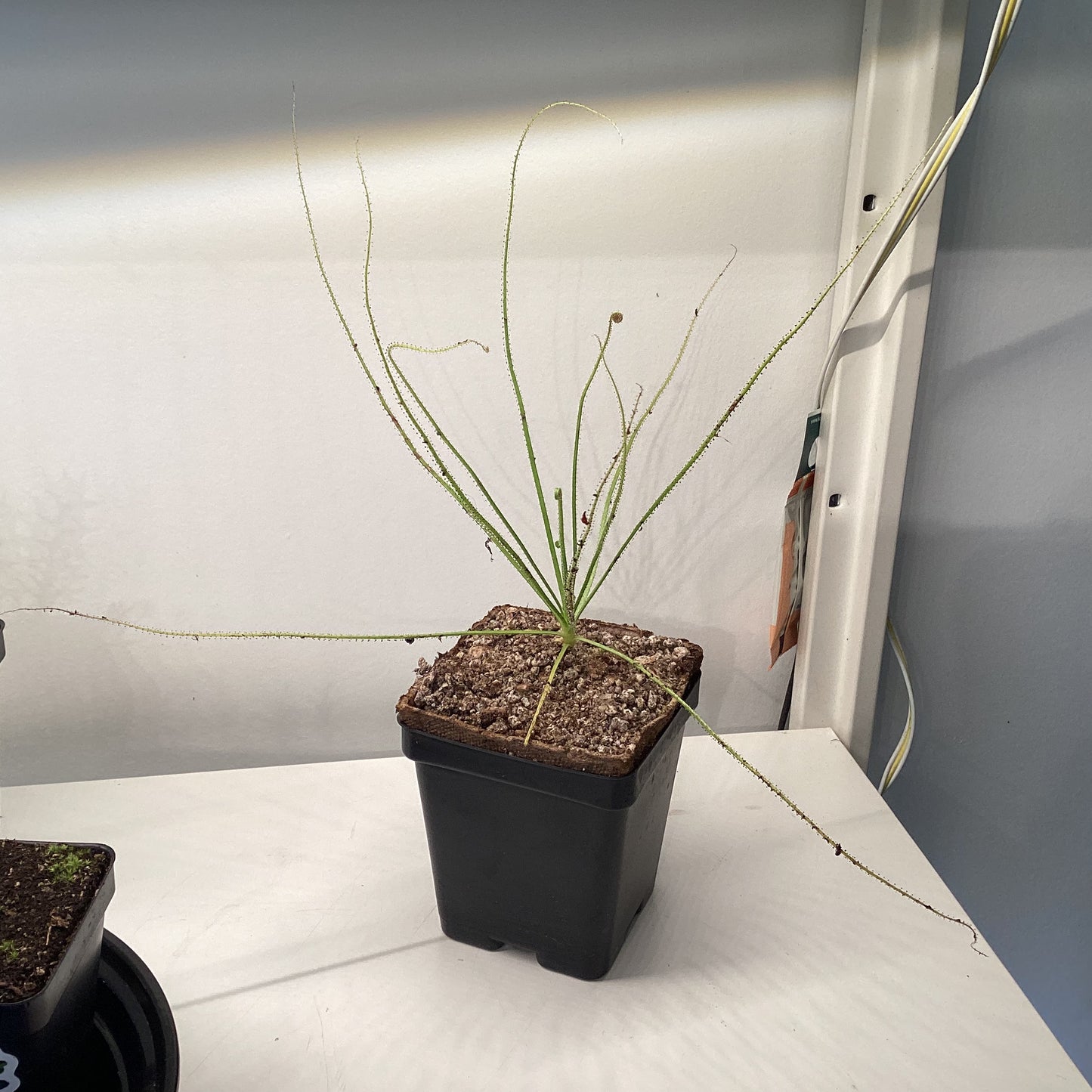
Drosophyllum lusitanicum
Drosophyllum lusitanicum
Couldn't load pickup availability
Drosophyllum lusitanicum (sometimes called Dewey Pine) is a carnivorous plant native to the coastal regions of Portugal, southwestern Spain, and parts of Morocco. It inhabits sunny, open habitats with sandy or rocky soils and experiences a Mediterranean climate—hot, dry summers and cool, damp winters. Despite its common name, it is not a pine but a distant relative of sundews (Drosera). It is the sole species in its genus and is rarely encountered in cultivation.
Distinguishing Features
-
Long, narrow, spirally arranged leaves covered with glistening mucilage to trap insects.
-
Grows in much drier conditions than most carnivorous plants.
-
Produces clusters of bright yellow, five-petaled flowers in late spring or summer.
-
Naturally adapted to nutrient-poor soils and relies on captured insects for nutrition.
Cultivation Notes
Light: Requires full sun to thrive. Indoors, provide the brightest possible location or high-intensity grow lighting.
Temperature: Optimal range is 60–85°F (16–29°C); protect from frost.
Watering: Very different from most Drosera—does not tolerate constant saturation. Allow the top layer of soil to dry before watering again. Avoid standing water.
Soil: Use a sandy, well-draining, low-nutrient medium (e.g., 2 parts sand, 1 part perlite, 1 part peat or coco coir).
Humidity: Prefers low to moderate humidity; stagnant, damp air increases risk of rot.
Container: Best grown in unglazed terra cotta pots for improved drainage and aeration.
Repotting
This species resents root disturbance. If repotting is unavoidable, move the entire root ball intact into a pre-prepared pot containing its new soil. Avoid breaking or separating the roots.
Feeding
Outdoors, it will capture prey naturally. Indoors, feed small dried insects occasionally if no natural prey is available. Do not fertilize.
Flowering
Blooms occur in late spring to summer, often alongside active insect trapping. Flowers are lightly fragrant and held above the foliage on slender stems.
Share