The Plant Lady SF
Piper 'Silver Flecks'
Piper 'Silver Flecks'
Couldn't load pickup availability
Overview
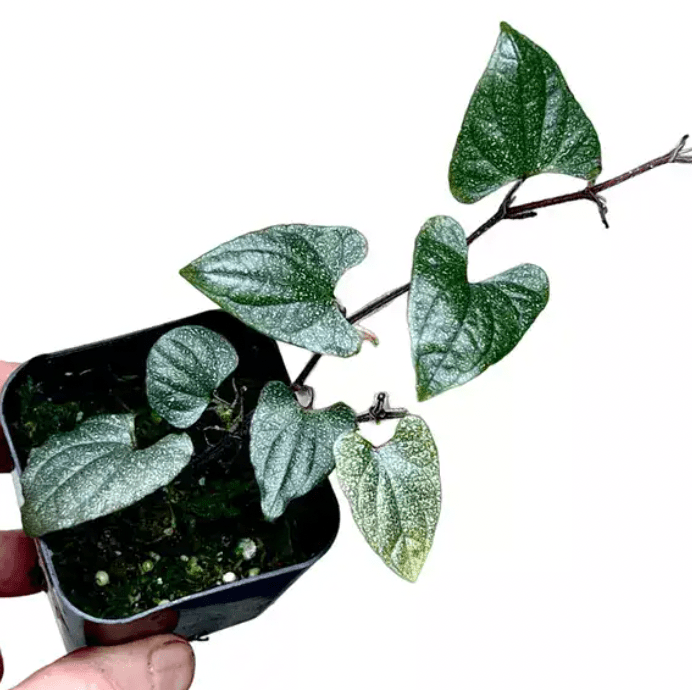
Piper ‘Silver Flecks’ is a rare ornamental cultivar in the Piper genus, which includes the well-known black pepper plant (Piper nigrum). Grown primarily for its striking foliage rather than culinary use, this cultivar features deep green, heart-shaped leaves speckled with shimmering silver markings. Its trailing or climbing habit makes it well-suited for hanging baskets, trellises, or as a decorative tabletop specimen.
Distinguishing Features
-
Heart-shaped leaves with irregular silver flecking or mottling.
-
Semi-woody stems that may climb if given support.
-
Grows as a vining tropical plant, typically compact indoors.
-
Textured, leathery foliage that stands out in mixed plantings.
Cultivation Notes
Light: Thrives in bright gentle light; tolerates medium light but with slower growth. Avoid prolonged direct sun, which may burn the leaves.
Temperature: Prefers warm, stable conditions (65–80°F / 18–27°C). Sensitive to cold; keep above 60°F (16°C).
Watering: Keep soil evenly moist but not waterlogged. Allow the top inch to dry between waterings. Use rainwater, distilled, or Hetch Hetchy tap water when possible.
Humidity: Benefits from moderate to high humidity; growth slows in dry air. A humidifier or grouping with other plants can help indoors.
Soil: Loose, well-draining mix such as aroid soil with added perlite and bark for aeration.
Fertilizer: Feed monthly during active growth with a diluted, balanced fertilizer.
Repotting & Maintenance
-
Repot every 1–2 years to refresh soil and support steady growth.
-
Prune stems to maintain shape and encourage bushier growth.
-
Can be trained to climb a moss pole or allowed to trail freely.
Bloom Notes
As with most ornamental Piper species, flowering indoors is rare and generally insignificant compared to the foliage. Small, spadix-like inflorescences may occur in ideal conditions but are not the primary ornamental feature.
Share