The Plant Lady SF
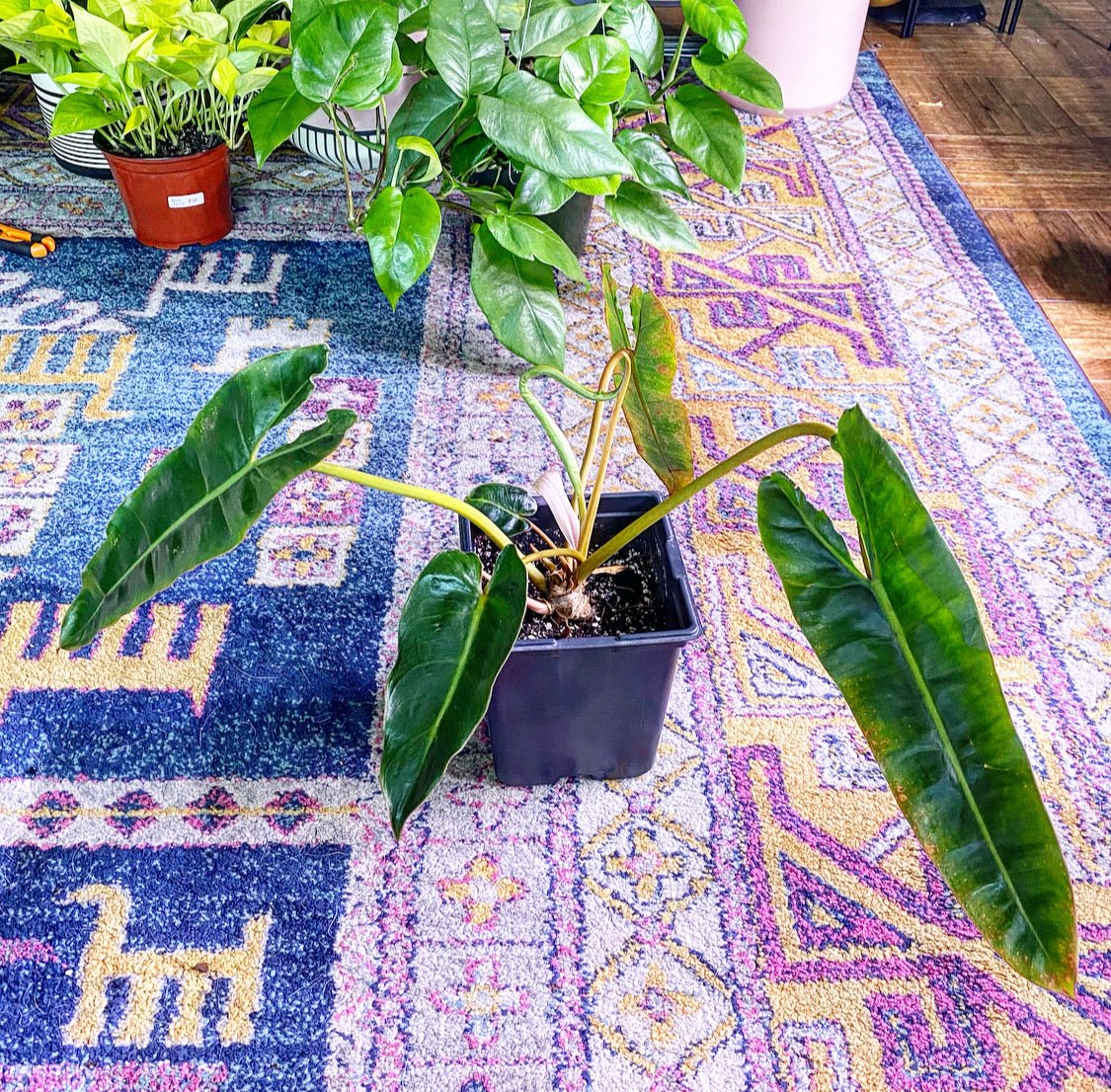
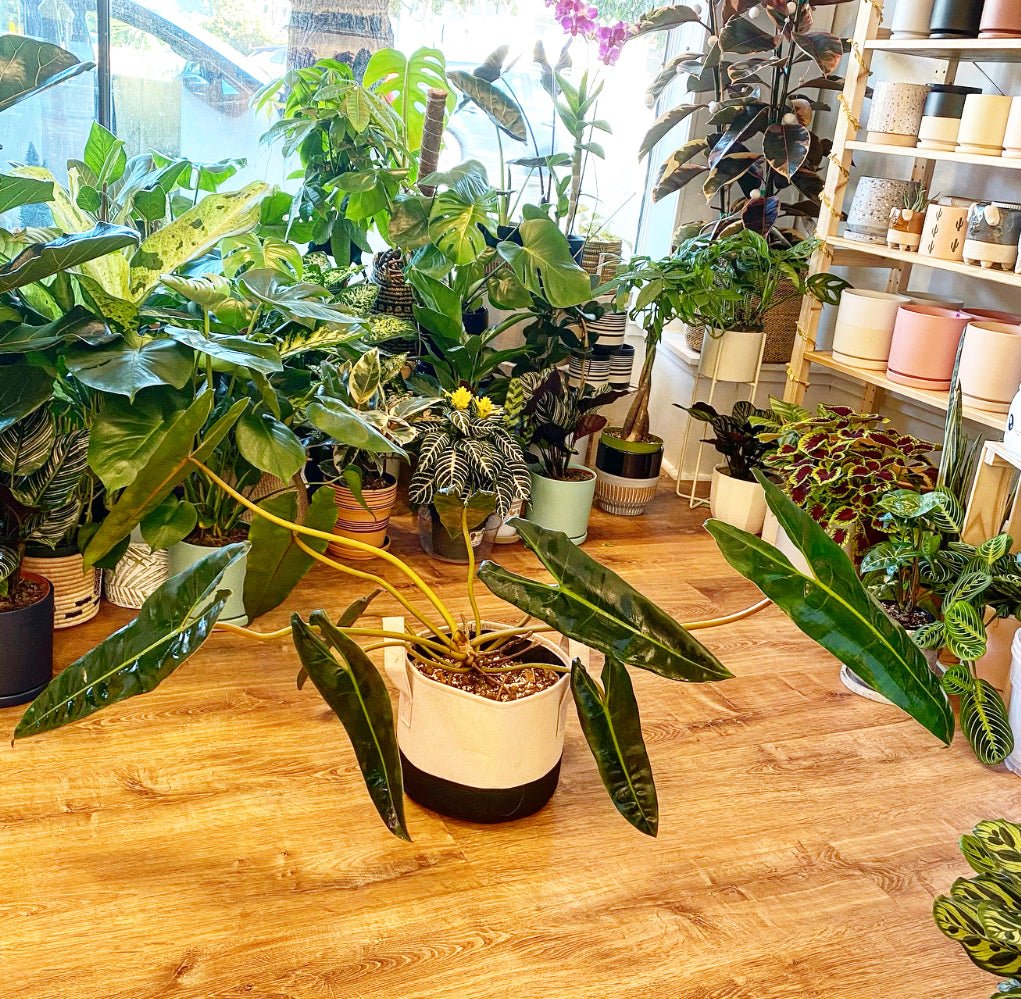
Philodendron billietiae
Philodendron billietiae
Couldn't load pickup availability
These sought-after Philos have bright orange petioles (stems) and stiff, elongated green leaves when mature. They are fast growing, easy care, medium-light tolerant, and can provide some serious visual drama in your home.
Description
Native to the rainforests of French Guiana, Brazil, and Suriname, Philodendron billietiae is a climbing species celebrated for its narrow, undulating leaves that can reach over two feet long in maturity. The most striking feature: its bright, glossy orange petioles that contrast dramatically with the deep green foliage. As it matures, this philodendron develops a beautifully architectural presence—its leaves stretching outward in bold, asymmetric planes that look almost sculpted.
How to Grow Indoors
Provide bright gentle light for best growth and color. Philodendron billietiae appreciates warmth, humidity, and space to climb—offer a moss pole or plank to support vertical growth. Use a chunky, well-draining mix (a blend of orchid bark, perlite, and coco coir works beautifully). Water when the top inch or two of soil is dry; this species dislikes sitting in water but also shouldn’t dry out completely. Feed monthly during spring and summer with a balanced, diluted fertilizer to encourage lush foliage.
How to Grow Outdoors (San Francisco Bay Area)
In coastal parts of the Bay Area, Philodendron billietiae can thrive outdoors in bright shade or filtered sunlight, provided it’s protected from cold and wind. Avoid direct afternoon sun and bring indoors if temperatures dip below 55°F. Hetch Hetchy tap water is generally safe for philodendrons, though rainwater or filtered water may enhance growth over time.
Blooming
Mature plants may produce inflorescences typical of philodendrons—spadix and spathe structures—but it’s grown primarily for its striking foliage. The blooms are subtle and infrequent in indoor conditions.
Pet Safety
Not pet safe — philodendrons contain calcium oxalate crystals and should be kept out of reach of cats and dogs.
Origin
French Guiana, Brazil, and Suriname
Discovered by horticulturist Frieda Billiet, for whom the species is named.
Share