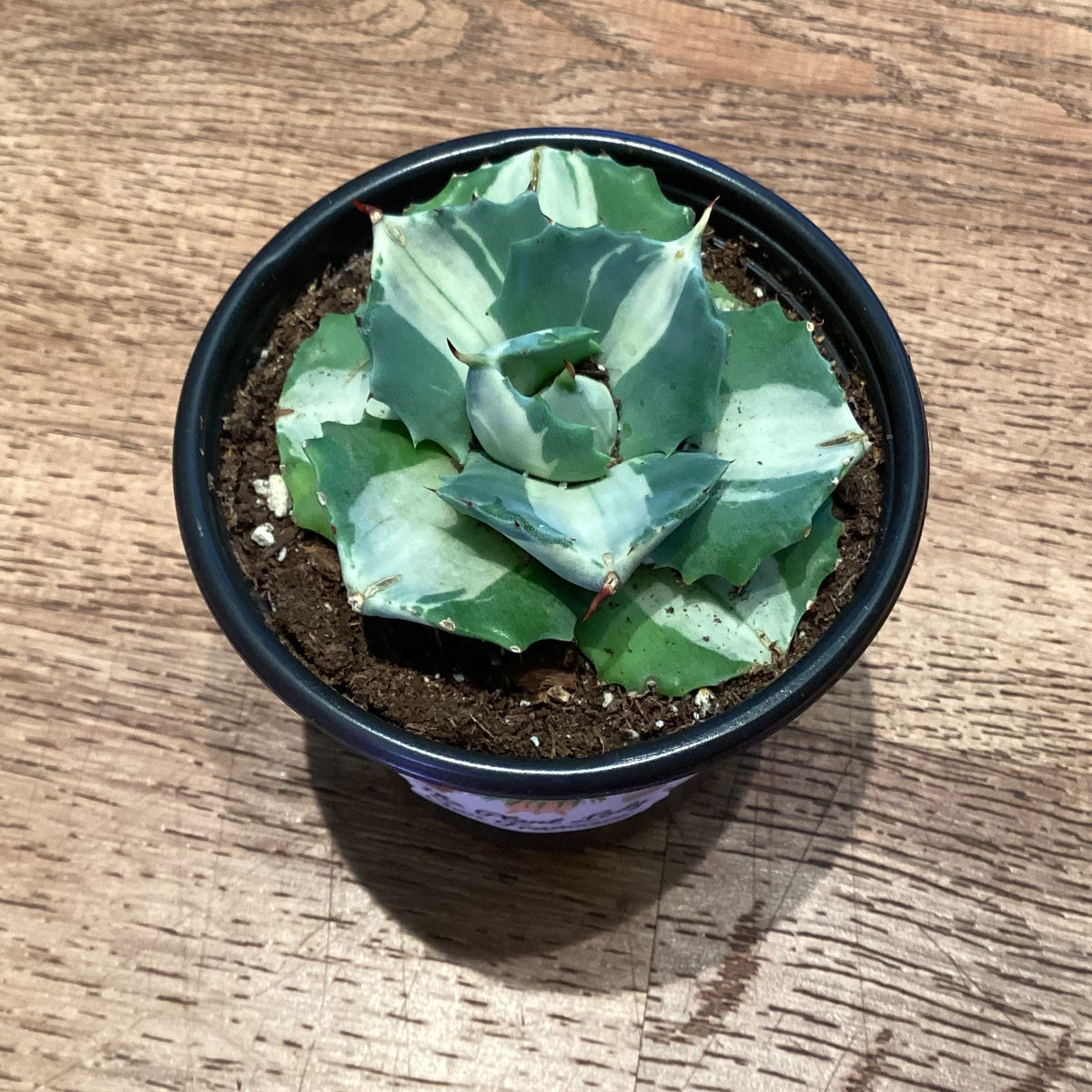
Agave ‘Ohi Raijin Shiro Nakafu’
Agave ‘Ohi Raijin Shiro Nakafu’
Couldn't load pickup availability
Agave ‘Ohi Raijin Shiro Nakafu’ is a miniature collector’s agave with creamy white leaf centers, blue-green margins, and striking dark teeth. Its tightly arranged rosette delivers the sculptural presence of a much larger agave in a small package, perfect for a sunny container display or a carefully curated succulent collection.
Light: Provide very bright light with several hours of direct sun, introducing stronger exposure gradually. Indoors, choose a sunny south- or west-facing window or a strong grow light. Outdoors, morning sun is a good starting point; protect newly acquired plants from intense inland afternoon sun until acclimated.
Water: Allow the substrate to dry throughout before watering thoroughly, then let excess water drain completely. Water much less frequently during cool weather or periods of slow growth. Avoid leaving water trapped between tightly clustered leaves.
Humidity: No added humidity is needed. Ordinary household air is suitable. In foggy San Francisco, Daly City, or Half Moon Bay, prioritize airflow and quick drainage, especially outdoors. Keep it out of humid terrariums.
Soil: Use a gritty, fast-draining succulent mix with plenty of pumice, perlite, or other mineral material. A blend of roughly equal parts cactus soil and pumice is a practical starting point, adjusted for how quickly it dries in your conditions. Always use a pot with drainage.
Temperature: Warm conditions support growth. For a prized container specimen, protect from frost and move to shelter when freezing temperatures are forecast. Outdoor growing is possible in mild Bay Area locations, but shelter from prolonged winter rain is advisable because cold, wet substrate increases the risk of rot. Published cold-hardiness estimates vary.
Growth Habit: A slow-growing, miniature rosette-forming succulent. Individual rosettes are often approximately 4 inches across, while an established colony becomes wider as offsets accumulate. Leave pups attached for a clustered display or separate established offsets carefully.
Fertilizer: Feed sparingly during active growth with a diluted cactus or succulent fertilizer, following the product’s instructions. Skip feeding during cool periods when growth has slowed. Heavy fertilization is unnecessary.
Flowers: Flowering is a long-term possibility rather than an annual event. Agaves generally flower after many years, and most are monocarpic: the flowering rosette declines afterward, while established offsets can continue growing. This plant is collected primarily for its foliage and form.
Pest Care: Inspect tightly packed leaf bases and offsets for mealybugs and scale. Check roots when repotting if growth stalls unexpectedly. Avoid persistent moisture around the crown, and handle carefully to protect both the spines and your hands.
Pet Safety: Do not treat this agave as pet-safe. Cultivar-specific toxicity information is limited, but its sharp teeth and terminal spines can cause injury, and agave sap can be irritating. Position it away from pets and children, and wear gloves when dividing or trimming plants. Contact a veterinarian if a pet chews the plant or is injured by a spine.
Share