Light
Bright gentle light, with several hours of direct sun if possible. A south- or west-facing window is ideal. Insufficient light leads to weak, stretched growth.
Water
Water deeply, then allow the soil to dry out completely. During winter or low-light periods, reduce watering significantly. This plant prefers to err on the dry side.
Soil
Very fast-draining soil is essential. Use a cactus/succulent mix amended with pumice or perlite. Never allow it to sit in wet soil.
Temperature
Prefers warmth. Keep above 50°F (10°C). Avoid cold drafts.
Humidity
No special requirements. Average indoor humidity is fine.
Fertilizer
Optional. If feeding, use a diluted cactus fertilizer during active growth only (spring–summer).
Growth Habit
Slow to moderate. Can eventually reach impressive heights indoors given strong light and patience.
How to Grow Outdoors
(San Francisco–specific)
Alluaudia procera can be grown outdoors in San Francisco only in very warm, protected microclimates or as a seasonal outdoor plant.
-
Best suited to a sunny, south-facing wall or enclosed patio
-
Must be protected from prolonged cold, wind, and winter rain
-
Container growing is strongly recommended so it can be moved indoors during colder months
In most of the Bay Area, this is best treated as a houseplant that enjoys summer vacations outdoors.
🌸 Blooming
Rare in cultivation. Mature plants may produce small, inconspicuous flowers, but this species is grown almost entirely for its form rather than blooms.
🐾 Pet Safety
Pet safety not confirmed — use caution.
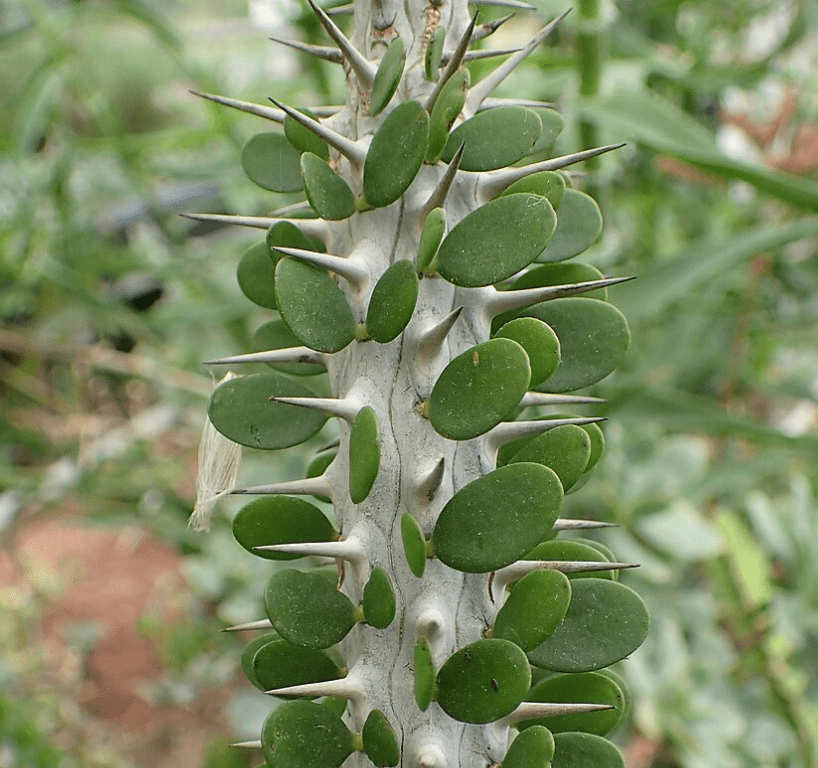
Spines are extremely sharp and can cause injury. As with many spiny succulents, ingestion may cause irritation. Keep well out of reach of pets and children.
⚠️ Notes & Tips
-
Handle with care: the spines are no joke
-
Leaf drop is normal during drought or low light—don’t panic
-
Excellent choice for collectors who enjoy caudiciforms, euphorbias, and desert oddities