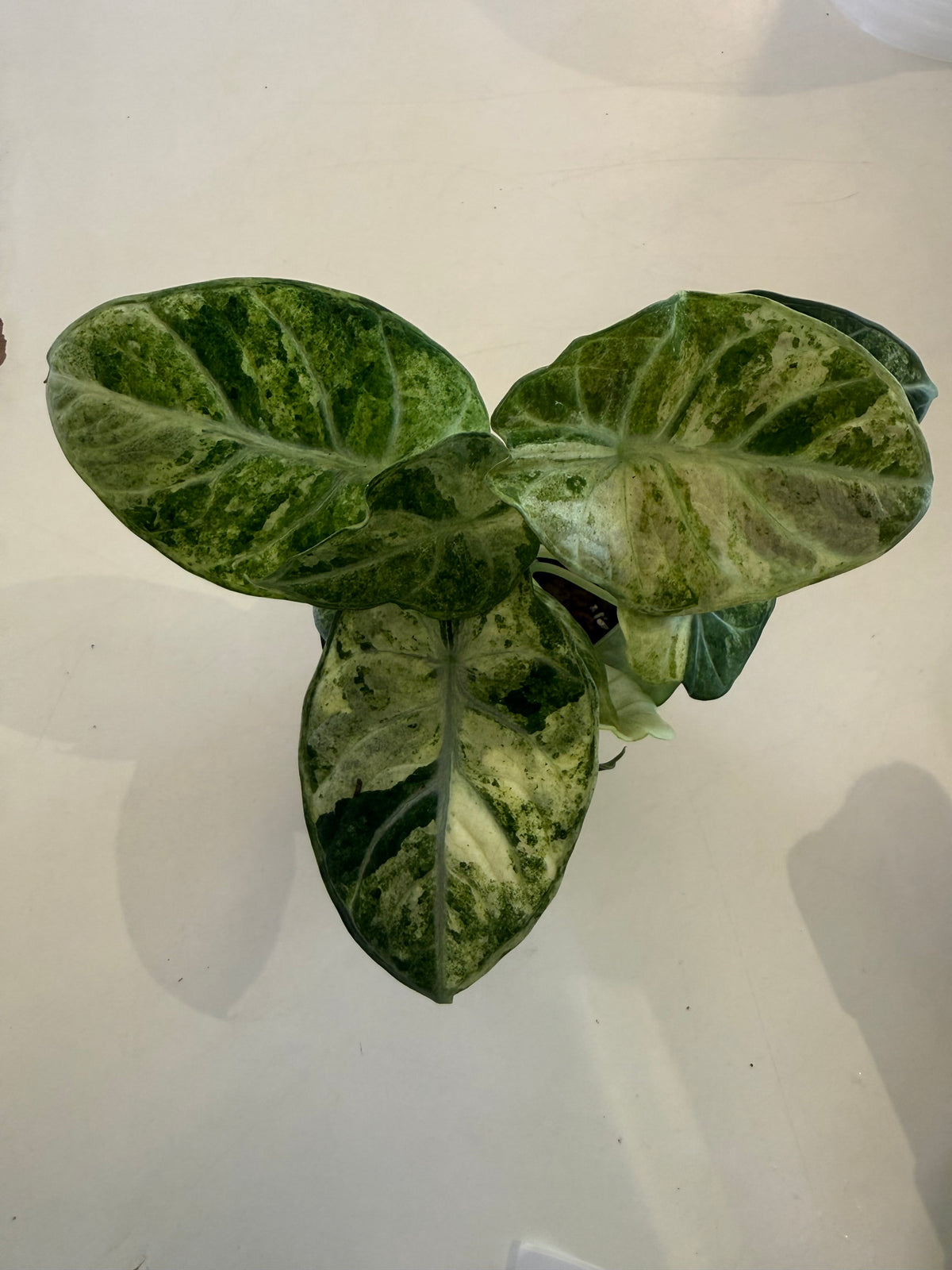
Alocasia "Ninja Tricolor" variegated
Alocasia "Ninja Tricolor" variegated
Couldn't load pickup availability
Variegated Alocasia ‘Ninja Tricolor’ pairs the compact, velvety foliage of a jewel Alocasia with unpredictable splashes of cream, pale green, and deeper emerald. Every new leaf develops its own pattern, creating a miniature collector plant with extraordinary texture, contrast, and presence.
Our variegated Alocasia are root established, non-imported, and acclimated to our shop's ambient humidity.
Light: Provide abundant, bright, gentle light to support the cream and mint variegation. An east-facing window, filtered south- or west-facing exposure, or a quality grow light is ideal. Avoid harsh direct sun, which can scorch the pale sections, but do not place it in low light, where growth may weaken and variegation can become less pronounced.
Water: Water thoroughly when the upper 1 to 2 inches of substrate feel dry, then allow all excess water to drain. Keep the root zone lightly and consistently moist during active growth, but never saturated. Hetch Hetchy tap water is generally suitable. Reduce watering during cool, slow-growing periods.
Humidity: Aim for approximately 55 to 75 percent humidity with steady, gentle airflow. San Francisco’s coastal humidity may be sufficient in a protected indoor position. In warmer or more climate-controlled homes in Oakland, San Jose, and inland parts of the Bay Area, a humidifier or greenhouse cabinet may help prevent crisp variegated margins. Avoid pebble trays.
Soil: Use a highly aerated but moisture-retentive mixture, such as indoor potting soil or coco coir amended generously with fine orchid bark, perlite or pumice, and a small amount of horticultural charcoal. Jewel-type Alocasias are particularly vulnerable to rot in dense, compacted soil.
Temperature: Maintain temperatures between 65 and 82°F. Protect the plant from cold windows, air-conditioning vents, and temperatures below 60°F. It is not a reliable outdoor plant in the Bay Area except during warm, sheltered periods when nights remain consistently mild.
Growth Habit: A compact, corm-forming Alocasia that grows as a low rosette rather than producing the large, upright silhouette associated with many elephant ears. Individual plants may also produce offsets and small corms around the base.
Variegation: Every leaf is different, and the balance of green and pale tissue can change over time. Leaves with very little green may be especially delicate and short-lived. Avoid removing greener leaves simply because they are less dramatic, as they provide the plant with essential photosynthetic energy. Variegation is not guaranteed to appear equally on every new leaf.
Fertilizer: Feed lightly but regularly during active growth with a balanced fertilizer at one-quarter to one-half strength every three to four weeks. Flush the substrate periodically to limit fertilizer-salt accumulation. Reduce or pause feeding when growth slows.
Seasonal Behavior: Growth may slow considerably during the Bay Area’s cooler, darker months, and the plant may occasionally shed older leaves. This is not necessarily true dormancy. Keep the corm warm, reduce watering in proportion to slower growth, and avoid leaving inactive roots in cold, wet soil.
Flowers: Mature plants may produce a pale green or cream aroid inflorescence composed of a spathe and spadix. Flowering is secondary to the foliage. The inflorescence may be left in place or removed if the plant is small and conserving energy is the priority.
Pest Care: Inspect frequently for spider mites, thrips, and mealybugs, especially along the leaf undersides and recessed veins. Variegated tissue shows pest damage quickly. Isolate new plants, maintain airflow, and treat infestations promptly.
Pet Safety: Not pet-safe. Like other Alocasias and related members of the Araceae family, this plant contains irritating calcium oxalate crystals. Chewing may cause intense oral discomfort, drooling, pawing at the mouth, vomiting, swelling, and difficulty swallowing. Keep it securely out of reach of cats, dogs, and children, and contact a veterinarian promptly if ingestion occurs.
Share