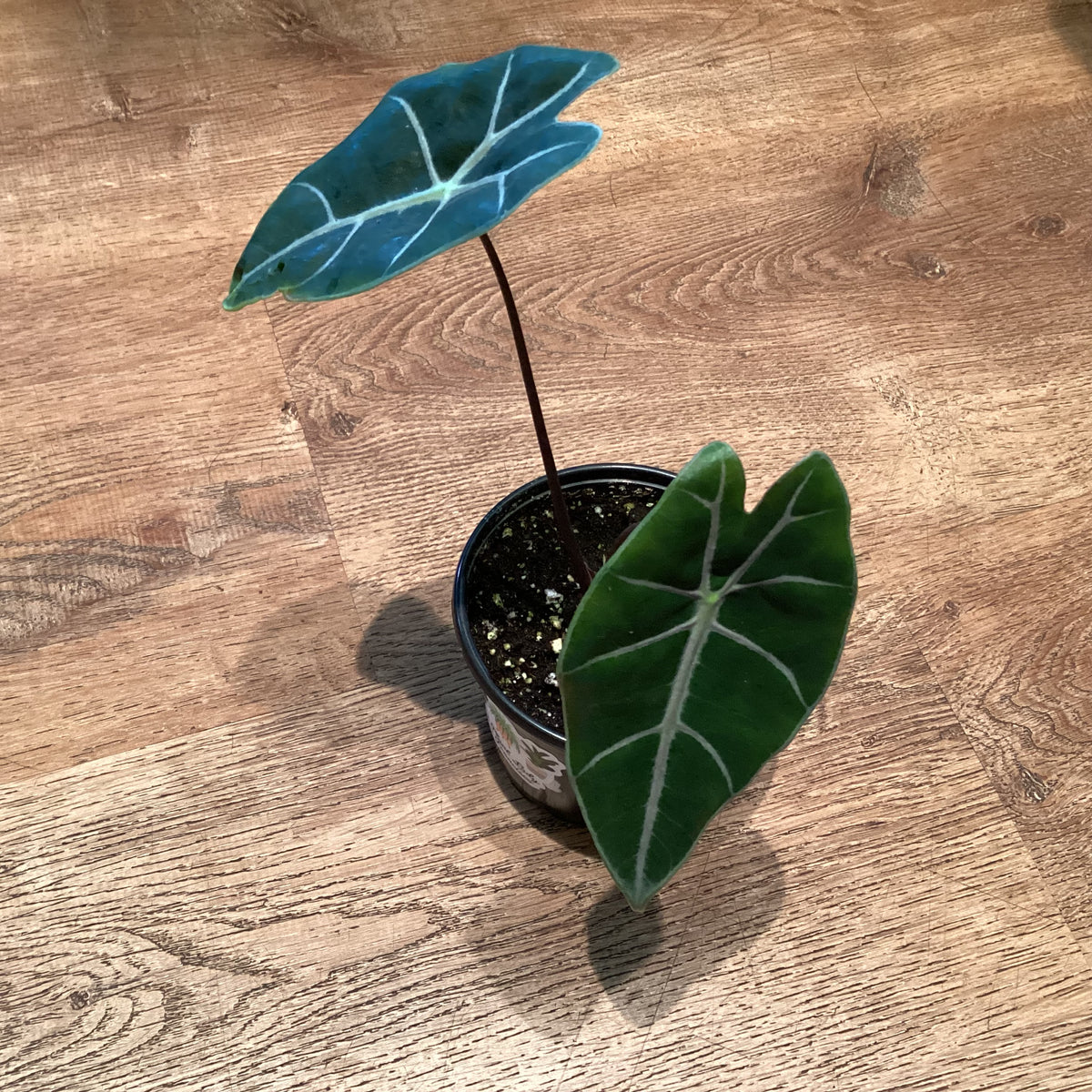
Alocasia longiloba ‘Purple Vein’
Alocasia longiloba ‘Purple Vein’
Couldn't load pickup availability
Alocasia longiloba ‘Purple Vein’ is a striking collector Alocasia with elongated, arrow-shaped leaves traced in violet-purple venation. Dark petioles and richly colored leaf undersides deepen the effect, giving the plant a moody, almost iridescent presence. Its narrow silhouette is dramatic without requiring the space of a giant elephant ear.
Light: Provide bright, gentle light, such as an east-facing window or a position near a filtered south- or west-facing window. Sufficient light supports strong growth and richer coloration, but intense direct afternoon sun can bleach or scorch the leaves. Rotate the plant periodically to maintain balanced growth.
Water: Keep the growing medium lightly and consistently moist during active growth. Water thoroughly when the upper 1–2 inches begin to dry, then allow all excess water to drain. Avoid both prolonged saturation and complete drought. Reduced water use during cool, dark weather is normal, so adjust according to the plant rather than following a fixed schedule.
Humidity: Aim for approximately 55–75% humidity with steady air circulation. Coastal San Francisco homes may naturally provide much of what it needs, while heated interiors and warmer parts of Oakland or San Jose may require a humidifier. Persistently dry air can contribute to crisp margins and make spider-mite outbreaks more likely.
Soil: Use a loose, moisture-retentive but fast-draining aroid mixture. Coco coir or quality potting mix combined with fine orchid bark, perlite or pumice, and a small amount of horticultural charcoal works well. The root system appreciates oxygen, so avoid dense peat-heavy soil and oversized pots.
Temperature: Maintain approximately 65–85°F, with protection from temperatures below 60°F. Keep it away from cold windows, exterior doors, and heating vents. It may enjoy a sheltered Bay Area patio during warm weather, but should return indoors before cool autumn nights.
Growth Habit: This is an upright, corm-forming Alocasia that produces individual leaves from a central base. Its narrow blades create a taller, more architectural profile than many compact jewel Alocasias. Healthy plants may form offsets and secondary corms over time. It can temporarily shed older leaves after shipping, repotting, or another abrupt environmental change.
Fertilizer: Feed regularly but lightly while the plant is actively producing leaves. Use a balanced fertilizer at approximately one-quarter to one-half strength every two to four weeks, applying it only to moist soil. Periodically flush the pot to prevent fertilizer salts from accumulating.
Dormancy: Growth may slow substantially during the Bay Area’s cooler, darker months, and the plant may lose one or more leaves. Reduce watering when growth pauses, but do not allow a living corm to remain bone-dry for an extended period. Warmth and supplemental light can help maintain active growth through winter.
Pest Care: Inspect the leaf undersides and the junctions between petioles regularly for spider mites, thrips, and mealybugs. Spider mites are especially common on Alocasia and are easiest to control when detected before leaves become stippled or webbed.
Pet Safety: Not pet-safe. Like other Alocasias, this plant contains insoluble calcium oxalate crystals. Chewing it can cause intense irritation of the mouth, tongue, and lips, drooling, vomiting, and difficulty swallowing in cats and dogs. Keep it securely away from pets and small children. See the ASPCA’s Alocasia toxicity guidance.
Share