Amesiella monticola
Amesiella monticola
Couldn't load pickup availability
Amesiella monticola
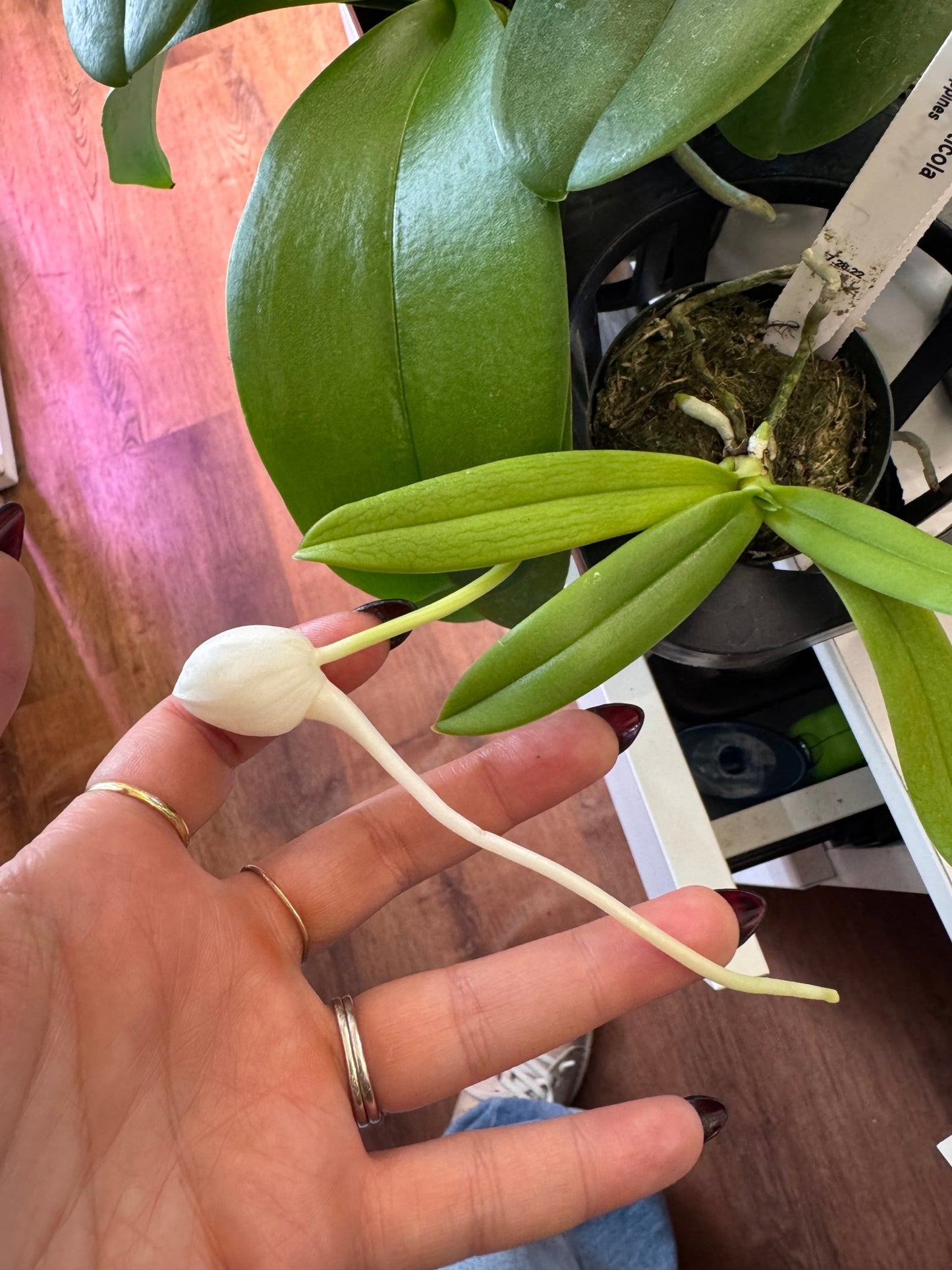
Amesiella monticola is a miniature orchid with an outsized place in botanical history. Native to the Philippines, this enchanting species produces pristine white flowers with long, slender nectar spurs and a clean, almost ethereal form.
Its fame comes not only from its beauty, but from its role in one of the most elegant predictions in evolutionary biology. Observing orchids with extraordinarily long nectar spurs, Charles Darwin hypothesized that a pollinating insect with an equally extraordinary proboscis must exist—even though none had yet been found. Years later, a moth with an exceptionally long proboscis was discovered, confirming his prediction and cementing orchids like Amesiella as living proof of coevolution in action.
The flowers are often fragrant at night, releasing a soft, sweet scent designed to guide nocturnal pollinators. It’s a species that rewards close attention—best appreciated up close, where its proportions and details truly shine.
Why We Love It
Refined and storied. A miniature orchid that carries one of the most beautiful scientific “I told you so” moments in history.
Blooming
Blooms typically appear late winter through spring, producing elegant, starry white flowers. Fragrance is most noticeable in the evening and at night.
How to Grow Indoors
-
Light: Bright gentle light; avoid harsh direct sun
-
Water: Keep evenly moist but never soggy; do not allow to dry completely
-
Humidity: Prefers higher humidity, ideally 60–80%
-
Temperature: Warm to intermediate; avoid cold drafts
-
Potting: Best grown mounted or in a very fine, airy mix
-
Water quality: In San Francisco and other areas using Hetch Hetchy water, tap water is generally safe; otherwise, use distilled or low-mineral water
How to Grow Outdoors (San Francisco Bay Area)
Not recommended for year-round outdoor growing. This species is best kept indoors where warmth, humidity, and moisture can be carefully controlled.
Share