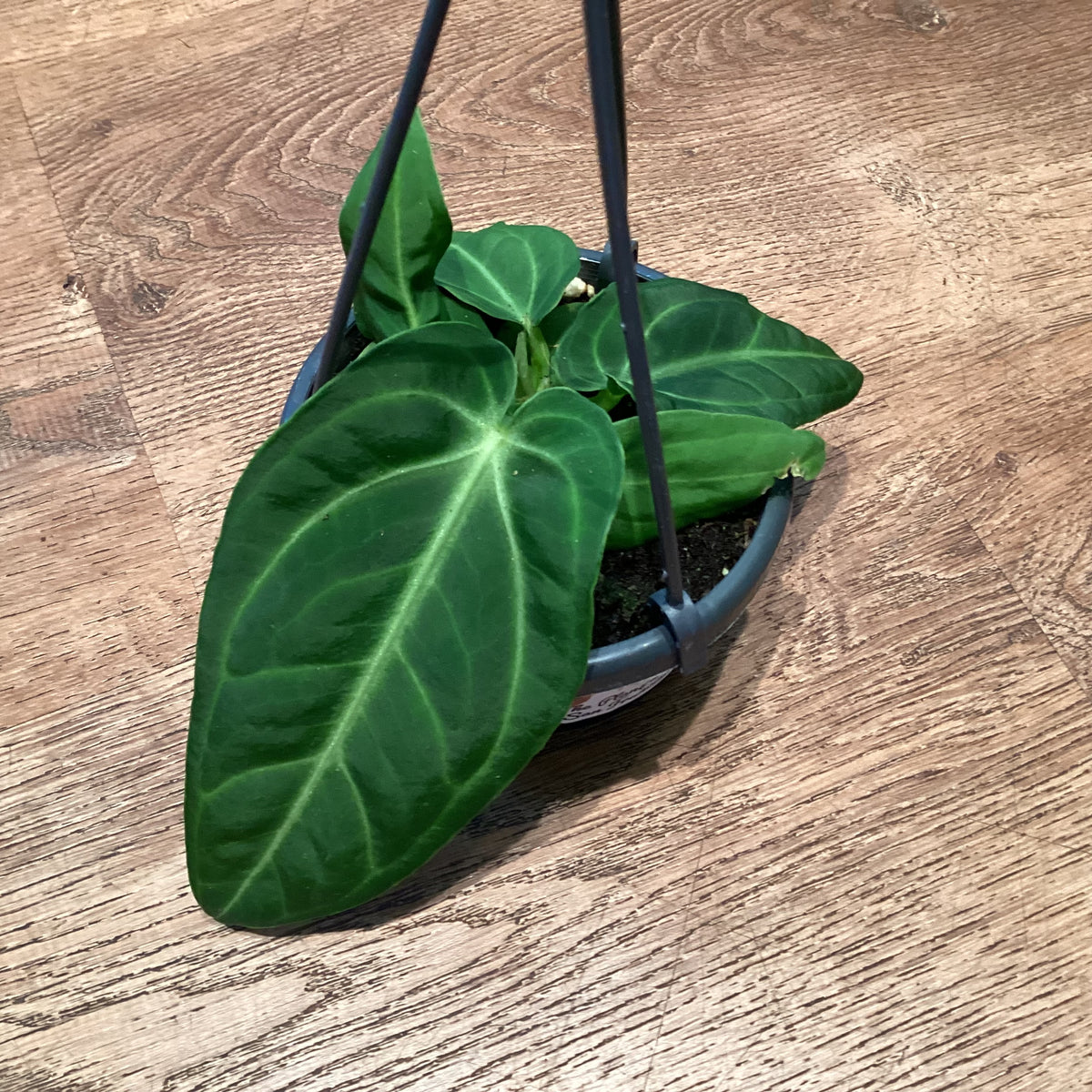
Anthurium villenaorum
Anthurium villenaorum
Couldn't load pickup availability
Anthurium villenaorum is a compact Peruvian Anthurium with elongated, dark green leaves, subtle corrugation, and elegant pale venation. Its upright foliage has the presence of a larger collector Anthurium while remaining unusually manageable indoors. Vigorous roots and a relatively compact growth habit make it a rewarding species for growers moving into more specialized Anthuriums.
Light: Provide bright, gentle light. An east-facing window or a position near a filtered south- or west-facing window is ideal. Avoid intense direct sun, which can bleach or scorch the dark foliage. Insufficient light produces slower growth, smaller leaves, and elongated petioles.
Water: Keep the growing medium lightly and consistently moist, allowing the surface to begin drying before watering thoroughly. Do not allow the root ball to remain saturated or become completely dry. The thick roots appreciate a steady supply of moisture combined with excellent airflow. San Francisco’s Hetch Hetchy water is generally suitable, although filtered or low-mineral water may help prevent deposits on the leaves and substrate.
Humidity: Aim for approximately 60–80% humidity for the cleanest foliage and smoothest leaf emergence. Established plants may adapt to moderate household humidity if watering remains consistent. Coastal San Francisco conditions are often favorable, while heated rooms and warmer, drier parts of Oakland or San Jose may require supplemental humidity. Pair elevated humidity with gentle air circulation.
Soil: Use a chunky but moisture-retentive aroid mixture. Fine orchid bark, coco coir or quality potting mix, perlite or pumice, and a small amount of chopped sphagnum create a useful balance of moisture and oxygen. Avoid both dense conventional soil and an excessively coarse mixture that dries before the roots can absorb sufficient water.
Temperature: Maintain approximately 65–82°F. Protect the plant from temperatures below 58°F, cold windows, exterior drafts, and abrupt environmental changes. It may enjoy a sheltered Bay Area patio during warm weather, but cool nights make year-round outdoor cultivation unreliable.
Growth Habit: Anthurium villenaorum is a compact epiphytic species with relatively short internodes and an upright presentation. It does not require a tall climbing pole, but maintaining lightly moist sphagnum around an exposed stem can encourage additional roots and support larger foliage. Its manageable size is one of its strongest qualities as an indoor collector Anthurium.
Fertilizer: Feed regularly but lightly during active growth. Apply a balanced fertilizer at approximately one-quarter strength every two to four weeks, or use a very dilute solution more frequently. Periodically flush the potting medium with plain water to prevent fertilizer salts from accumulating around the roots.
Flowers: Mature plants may produce slender aroid inflorescences consisting of a narrow spathe and spadix. The flowers are less visually prominent than the foliage but can be retained for pollen collection or controlled hybridization. Remove an inflorescence only if the plant is small, stressed, or unable to support the additional energy demand.
Pest Care: Inspect new leaves, petioles, and leaf undersides regularly for thrips, spider mites, scale, and mealybugs. Thrips can permanently scar an emerging leaf before it unfurls. Stable humidity, clean foliage, and early intervention help preserve the plant’s smooth surface.
Pet Safety: Not pet-safe. Like other Anthuriums, this plant should be treated as containing insoluble calcium oxalate crystals. Chewing can cause intense oral irritation, drooling, vomiting, and difficulty swallowing in cats and dogs. Keep it securely away from pets and small children. See the ASPCA’s Anthurium toxicity guidance.
Share