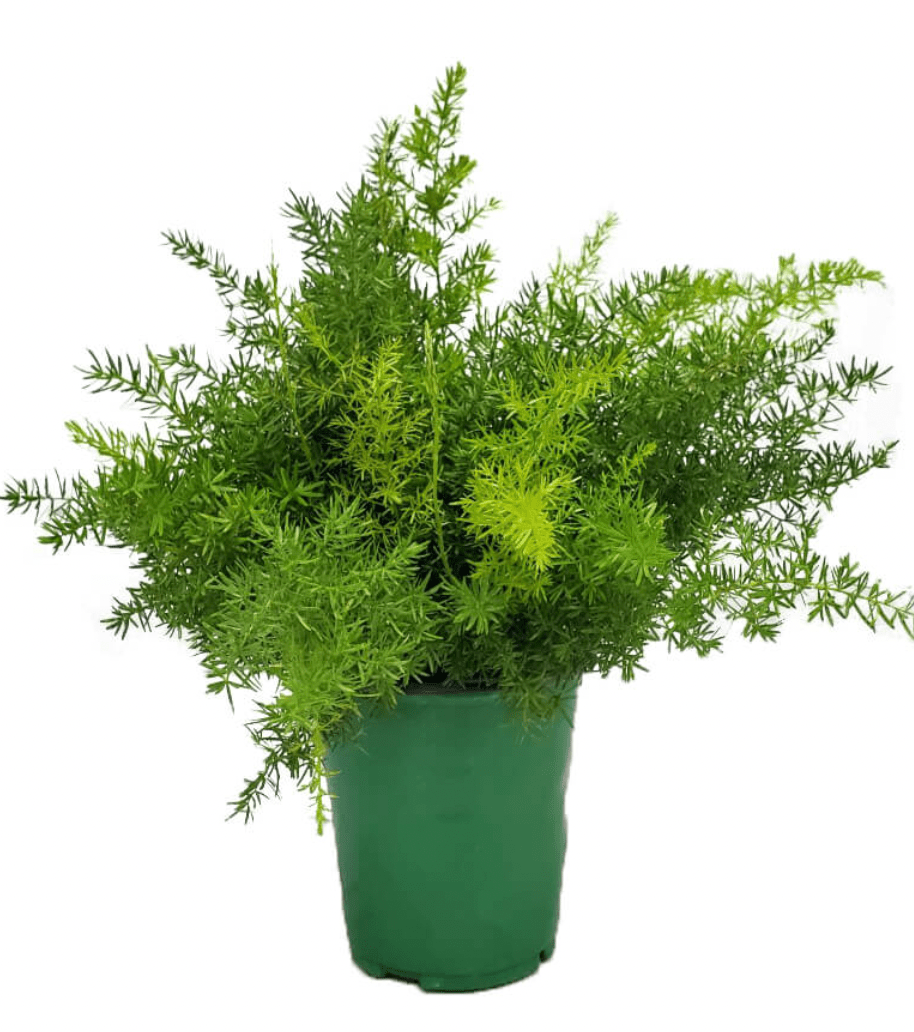
Asparagus aethiopicus (Asparagus Fern)
Asparagus aethiopicus (Asparagus Fern)
Couldn't load pickup availability
Often called “Asparagus Fern” (though it’s not a true fern), Asparagus aethiopicus is a vigorous, bright green plant known for its fine, needle-like foliage and sprawling, trailing habit. It adds softness and texture to indoor and outdoor spaces alike, and thrives with minimal fuss. In the right conditions, it can produce small white flowers followed by clusters of red berries—though it’s usually grown for its lush foliage.
This plant is incredibly adaptable and quick to grow, making it a popular choice for hanging baskets, window boxes, and outdoor planters.
Care at a Glance
Light: Bright light to partial sun; tolerates lower light but grows best in bright conditions
Water: Allow top inch of soil to dry before watering; more frequent watering in brighter light
Humidity: Adaptable, but prefers moderate humidity
Soil: Well-draining potting mix with good aeration
Temperature: 60–85°F; protect from frost
Growth Habit: Spreading and trailing; excellent in hanging planters or as ground cover
Blooms: Tiny white flowers followed by red berries, mainly outdoors or in strong light
How to grow Asparagus aethiopicus indoors:
This plant grows well indoors with bright gentle light and regular watering. Let the top inch of soil dry out between waterings, and trim occasionally to keep the shape tidy. It adapts well to typical household humidity and temperature. Use a well-draining soil mix and give it room to spread or trail. Though often labeled as non-toxic in stores, it’s mildly irritating if ingested—so best kept away from pets and children.
How to grow Asparagus aethiopicus outdoors in the Bay Area:
Thrives outdoors in pots or ground plantings in mild, frost-free areas. Great for hanging baskets or as a soft, trailing filler in mixed planters. Provide bright gentle light to partial sun and keep evenly moist during active growth. In colder areas, bring indoors or protect during winter—this plant is not frost-hardy. Can become invasive in some climates, but generally stays well-behaved in pots and controlled spaces here.
Pet safe: Mildly toxic – best kept out of reach of pets and small children
Difficulty: Easy and fast-growing—ideal for beginners or those who love lush texture
Share