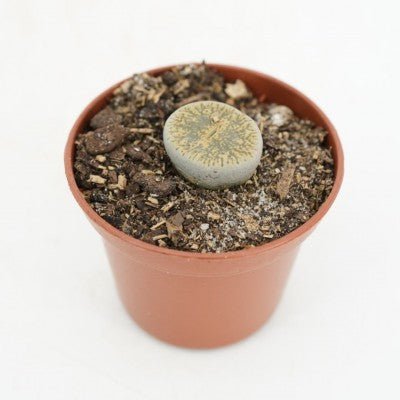
Assorted Lithops
Assorted Lithops
Couldn't load pickup availability
Description
Lithops, often called “living stones” or “pebble plants,” are miniature succulents that have evolved an extraordinary disguise: they look just like the rocks around them. Native to the arid regions of southern Africa, these plants blend into their surroundings to avoid herbivores and survive harsh desert climates.
Each Lithops consists of two fused succulent leaves split by a central fissure, from which a new leaf pair (or occasionally a daisy-like flower) will emerge. Their patterns and colors — speckled, veined, or striated in shades of grey, brown, green, and pink — vary widely by species and mimic the exact gravel they evolved among. This remarkable camouflage, paired with their tiny size and unusual seasonal growth cycle, makes them a collector's favorite.
Care
-
Light: Bright, direct sun is essential. Aim for 4–5 hours of full sun daily (south- or west-facing window). Without strong light, they will stretch, lose coloration, and may rot.
-
Water: Lithops have very specific watering needs:
-
Spring–early summer: Water lightly every 3–4 weeks only if the outer leaves have fully dried up.
-
Mid-summer dormancy (hot weather): Stop watering completely.
-
Fall (flowering/growth period): Resume watering sparingly, about once every 2–3 weeks.
-
Winter: Do not water. Lithops are forming new leaves inside — watering during this time causes rot.
-
-
Soil: Extremely well-draining cactus/succulent mix with added pumice, perlite, or coarse sand. Never use regular potting soil.
-
Pot: Shallow pots with excellent drainage. Terracotta is ideal.
-
Temperature: Prefers 65–85°F. Tolerates brief dips to 40°F, but must be kept dry when cold.
Pet Safety
✅ Pet safe — non-toxic to cats and dogs.
Why We Love It
Playful and mysterious, Lithops are like botanical puzzle pieces — you’ll find yourself checking them constantly to spot tiny changes. Their seasonal rhythm invites patience and observation, and their low water needs make them ideal for a sunny sill or tiny pot collection.
Indoor vs Outdoor
-
Indoor: Best grown indoors in a very sunny location. South-facing windowsills are ideal.
-
Outdoor (Bay Area): Can grow outside spring through early fall in full sun, but must be protected from winter rain and cold. Overwinter indoors in a dry, bright spot.
Dormancy
Lithops have a unique seasonal rhythm:
-
Summer: Dormant; do not water.
-
Fall: Active growth and flowering.
-
Winter: New leaf pair forms, consuming the old — do not water.
-
Spring: Outer leaves shrivel fully; water once the new pair is mature.
Share