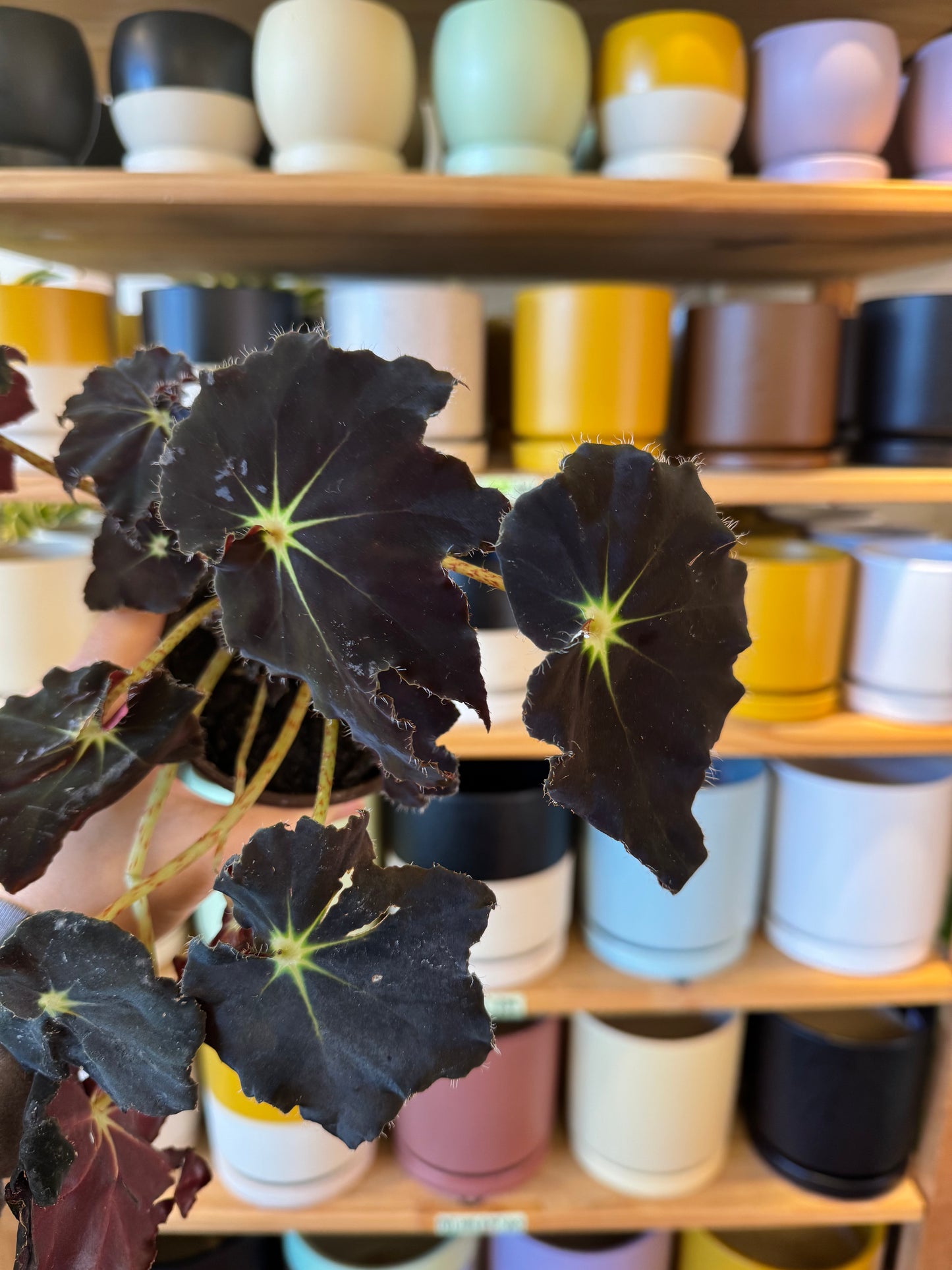
Begonia 'Black Velvet'
Begonia 'Black Velvet'
Couldn't load pickup availability
Begonia ‘Black Velvet’ is a rhizomatous hybrid prized for its dark coloration and angular foliage. Developed by U. U. Stanford in 1967 from ‘Joe Hayden’ crossed with an unknown parent, it offers collectors a documented vintage cultivar with enduring appeal. Its creeping rhizomes gradually create a spreading display, allowing the foliage’s shape, texture, and shifting undertones to take center stage.
Care Overview
Light: Bright, gentle light. An east-facing window or filtered light near a brighter window works well indoors. Protect from strong afternoon sun.
Water: Water thoroughly when the surface of the potting mix begins to dry, then allow excess water to drain. Avoid both prolonged sogginess and letting the entire root ball dry out.
Humidity: Moderate humidity with good airflow. Many homes in San Francisco, Daly City, and Half Moon Bay provide suitable conditions; a humidifier may help in drier Oakland or San Jose homes.
Soil: Use a light, fine-textured potting mix amended with perlite or pumice. Choose a pot with drainage, preferably wider than it is deep, and keep the rhizome near the soil surface.
Temperature: Typical comfortable indoor temperatures suit this plant. Outdoors in San Francisco, choose a sheltered location in bright shade and protect from cold nights, drying wind, and prolonged winter rain.
Growth Habit: A spreading rhizomatous begonia that can eventually spill over the edge of its pot. Propagate through rhizome divisions or leaf cuttings. Growth may slow in winter; reduce watering to match rather than imposing a dry dormancy.
Fertilizer: Feed with a diluted, balanced fertilizer during active growth. Reduce or pause feeding when growth slows.
Flowers: Small pink blooms can appear above the foliage, often in late winter or spring. Flowering varies with light and growing conditions.
Pest Care: Inspect regularly for mealybugs, spider mites, and thrips. Maintain airflow and remove damaged foliage. Test any pest treatment on a small area first, as begonia leaves can be sensitive to sprays.
Pet Safety: Not pet safe. Begonias are toxic to cats and dogs if eaten, with the highest concentration of toxic compounds in their underground parts.
Share