Begonia brevirimosa subsp. exotica
Begonia brevirimosa subsp. exotica
Couldn't load pickup availability
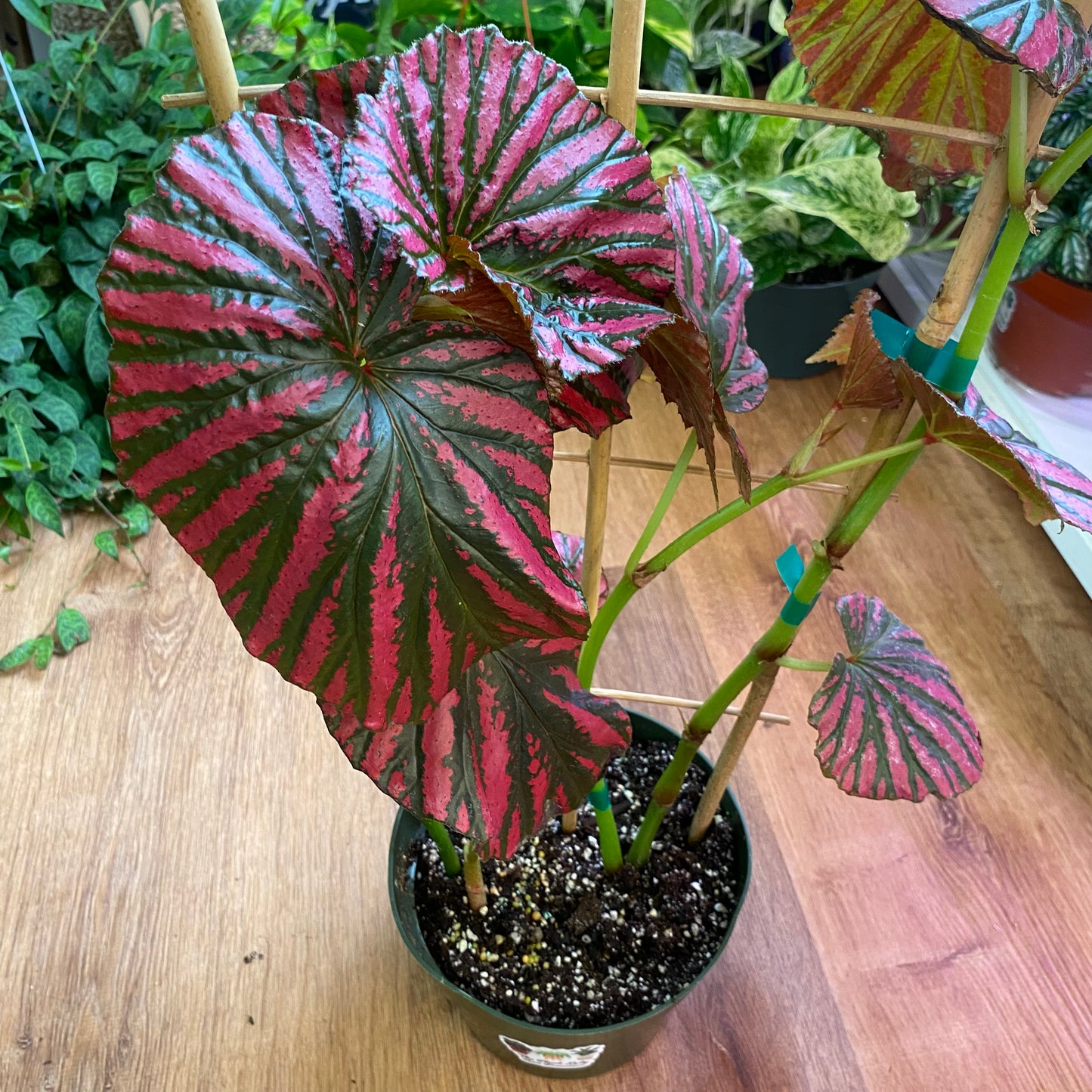
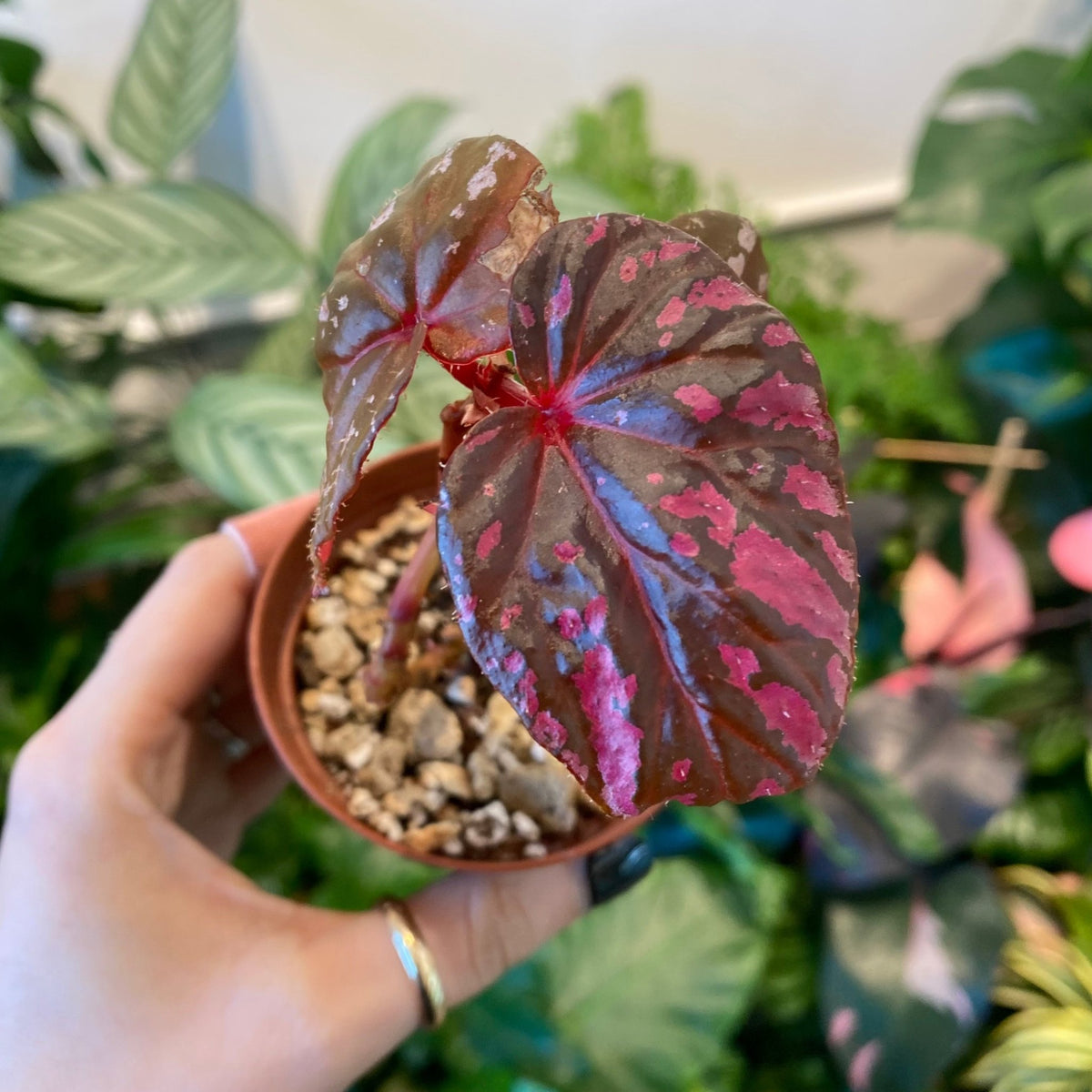
One of the showiest begonias to grow in cultivation, Begonia brevirimosa subsp. exotica is a jaw-dropping foliage plant native to New Guinea. Each leaf is broad, glossy, and deep green-black, dramatically painted with vivid pink metallic striping that seems almost unreal. The plant has an upright, shrubby growth habit.
This subspecies is rare in cultivation and a favorite among collectors for its show-stopping color. While it appreciates a bit of extra care, it can be more forgiving than its appearance suggests.
Light: Bright gentle light is best. Protect from direct sun, which can scorch the leaves.
Temperature: Prefers warm, stable indoor temperatures (65–85°F). Very sensitive to cold—keep away from drafts.
Humidity: Needs high humidity to thrive (60–80%). Essential for leaf health and vibrant color.
Water: Keep the soil evenly moist but never soggy. Water when the top inch feels dry. Avoid letting it dry out completely.
Potting mix: Loose, well-draining mix rich in organic matter. A begonia-specific or aroid mix works well.
Fertilizer: Feed every 4–6 weeks in spring and summer with a diluted balanced fertilizer.
How to grow Begonia brevirimosa subsp. exotica indoors:
Place in a warm, bright area with plenty of humidity and no direct sun. This begonia thrives in a terrarium or with a humidifier nearby. Leaf crisping or fading usually means the air is too dry. Use distilled, filtered, or rainwater to avoid leaf spotting—though in San Francisco, Hetch Hetchy tap water is generally safe.
How to grow Begonia brevirimosa subsp. exotica outdoors in the Bay Area:
Only suited for outdoor growth in protected, frost-free microclimates. If growing outside, choose a bright, shaded patio or covered greenhouse area with high humidity and no direct sunlight. Bring indoors when temperatures drop below 60°F. Best grown in a pot or conservatory setup.
Pet safe: No (keep out of reach of pets and children)
Difficulty: Intermediate to advanced—rewarding for collectors who love dramatic foliage and are comfortable managing humidity.
Prior to its official naming by Tebbitt in 2005, this plant was known as B. brevirimosa "Edinburgh." For further details, Mark Tebbitt's Begonias: Cultivation, Identification, and Natural History is an excellent resource.
Share