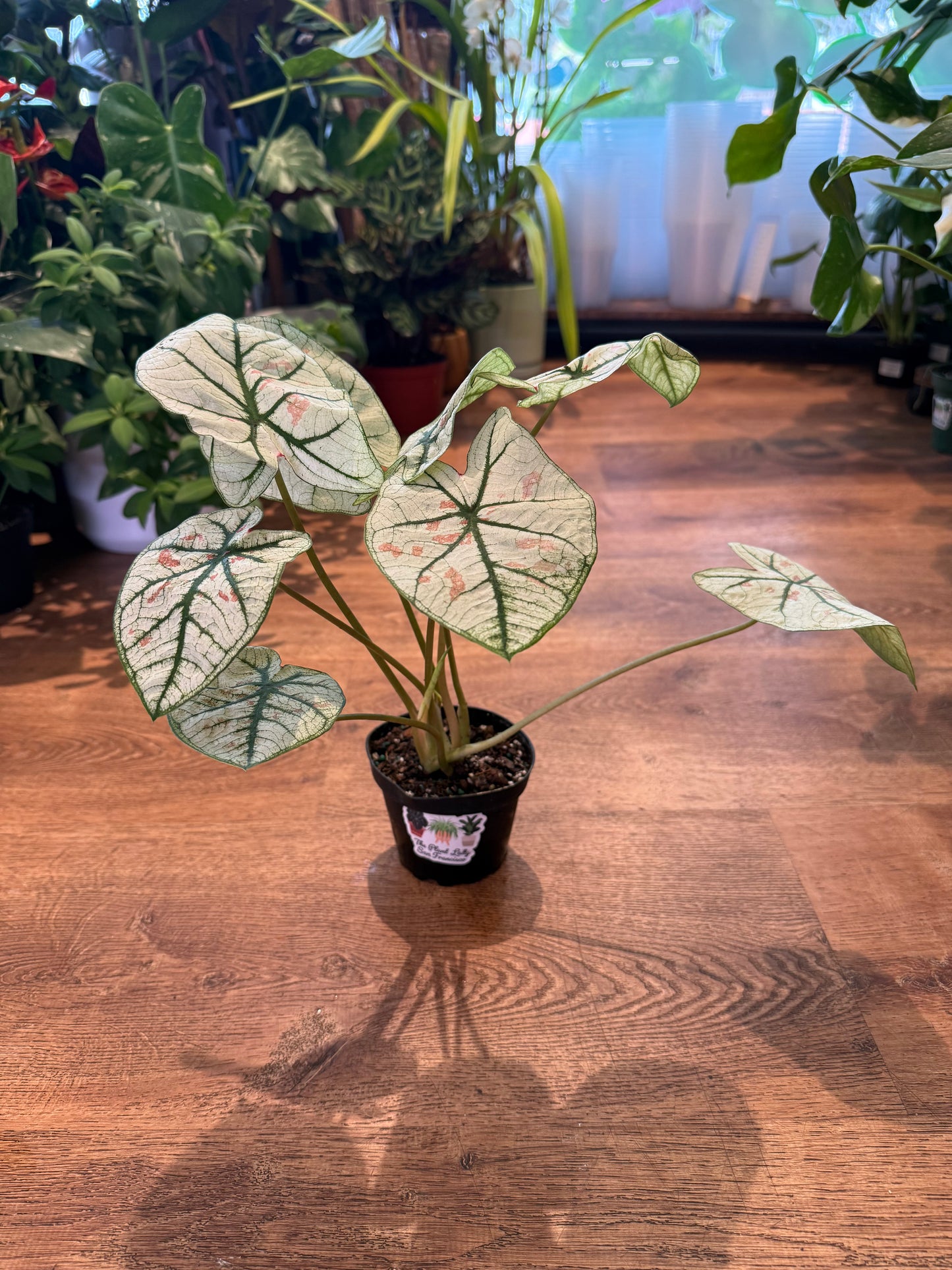
Caladium bicolor 'Snow'
Caladium bicolor 'Snow'
Couldn't load pickup availability
‘Snow’ is a fancy-leaved caladium selected for its pale white blades, contrasting green veins and margins, and occasional blush-pink spotting. Each thin, heart-shaped leaf allows light to pass through the surface, making the plant especially striking when backlit.
Light: Provide abundant, bright, gentle light. A position near an east-facing window or behind a sheer south- or west-facing window helps maintain the pale coloration without scorching the thin leaves. Avoid intense afternoon sun, particularly through glass.
Water: Keep the soil evenly moist while the plant is actively producing leaves, allowing the upper inch to become slightly dry between waterings. Do not leave the tuber in saturated soil. Hetch Hetchy tap water is suitable. Gradually reduce watering when the foliage begins its natural seasonal decline.
Humidity: Average to moderately elevated household humidity, approximately 45 to 65 percent, is usually sufficient. San Francisco, Daly City, and Half Moon Bay homes may already provide adequate ambient humidity. In warmer, drier parts of Oakland, San Jose, and the inland Bay Area, a humidifier can help prevent crisp leaf margins. Avoid pebble trays.
Soil: Use a rich but well-draining mixture, such as indoor potting soil amended with perlite or pumice and fine orchid bark. The mix should retain some moisture while allowing excess water to drain freely around the tuber.
Temperature: Maintain temperatures between 65 and 85°F during active growth. Caladiums strongly prefer warmth and may stall or begin entering dormancy below approximately 60°F. Protect the plant from cold windows, drafts, and Bay Area nighttime temperatures.
Growth Habit: A tuberous, clump-forming plant that sends individual leaves upward on slender petioles. Mature size varies with growing conditions, but ‘Snow’ generally forms a full, upright mound during its active season.
Fertilizer: Feed every four to six weeks during active growth with a balanced fertilizer diluted to half strength. Avoid heavy feeding, which can produce weak growth or contribute to salt accumulation. Stop fertilizing as dormancy begins.
Seasonal Behavior: Caladiums commonly enter dormancy in autumn or winter, even indoors. Yellowing and collapsing foliage do not necessarily indicate that the plant has died. Once the leaves have faded, stop regular watering and allow the tuber to rest in its pot in a warm, mostly dry location. Resume watering when new growth appears, typically as temperatures and daylight increase. Do not keep a dormant tuber cold and wet.
Outdoor Care: ‘Snow’ can be enjoyed outdoors during the Bay Area’s warm season in a sheltered location with morning sun or filtered shade. Bring it indoors before nighttime temperatures regularly fall below 60°F. It is not reliably winter-hardy in San Francisco or Oakland containers.
Flowers: Established plants may produce a small, pale spathe surrounding a central spadix. The inflorescence is much less ornamental than the foliage and may be removed if conserving the tuber’s energy is preferred.
Pest Care: Watch for spider mites, thrips, aphids, and mealybugs, particularly where the petioles emerge from the soil. Good airflow and prompt removal of declining leaves help prevent pest and fungal problems. Cold, overly wet soil is the most serious risk to the tuber.
Pet Safety: Toxic to cats and dogs. Caladiums contain insoluble calcium oxalate crystals that can cause oral irritation, swelling, excessive drooling, vomiting, and difficulty swallowing if chewed. Keep this plant securely away from pets and children. (ASPCA)
Share