

Cephalotus follicularis
Cephalotus follicularis
Couldn't load pickup availability
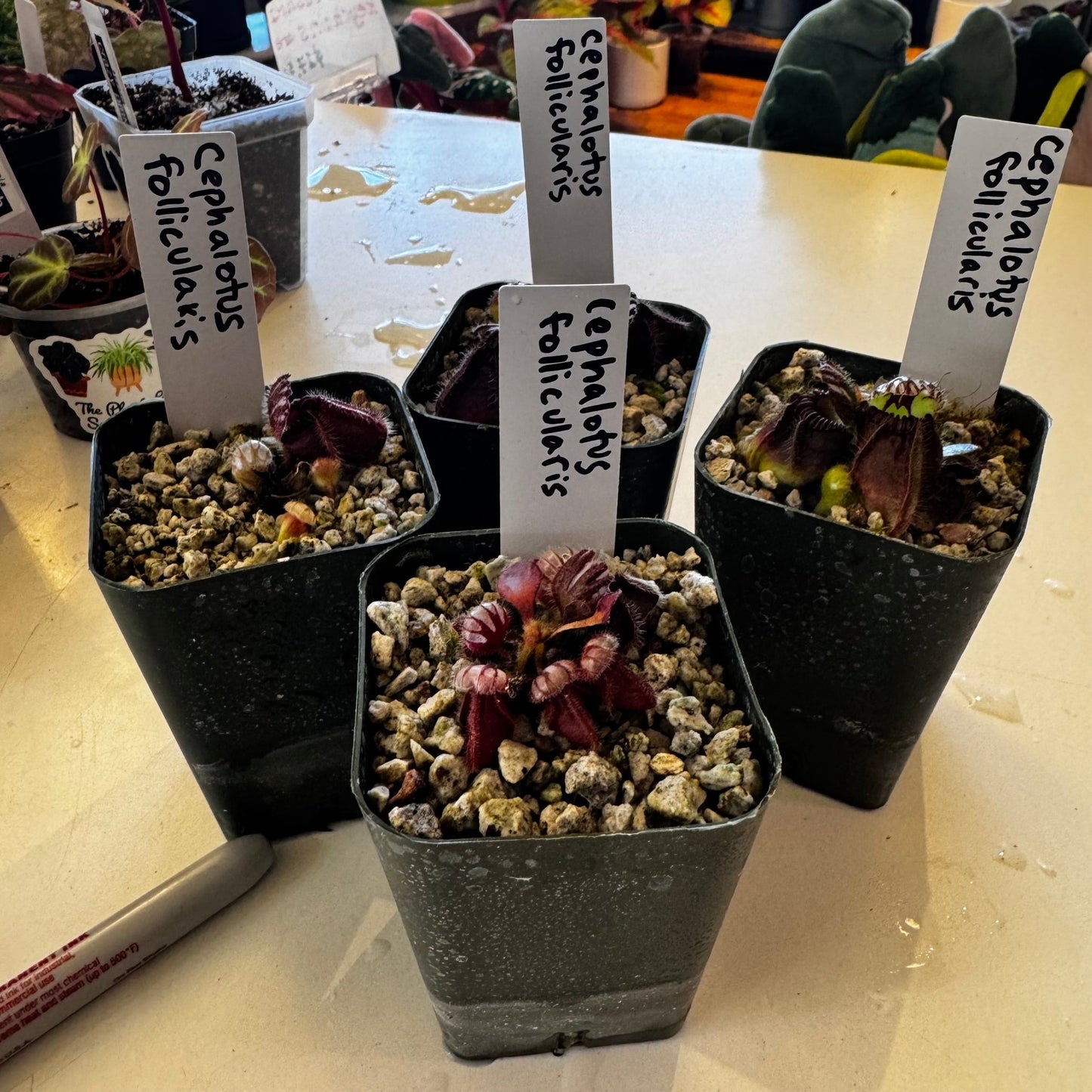
Endemic to a small region of southwestern Australia, Cephalotus follicularis is the only species in its genus, which already places it in rarefied botanical company. Unlike most pitcher plants, Cephalotus produces two distinct leaf types at the same time: flat, photosynthetic leaves and rigid, toothed pitchers that look more reptilian than floral. The exaggerated peristome ribs, translucent “windows,” and deep burgundy coloration under strong light give it a sculptural presence far beyond its modest size.
Light
Bright gentle light is essential. A very bright windowsill with several hours of sun, or strong grow lights, will bring out compact growth and rich coloration. Insufficient light leads to elongated leaves and underdeveloped pitchers.
Water
Keep the medium consistently moist, never soggy. Cephalotus strongly prefers pure water—distilled, reverse osmosis, or rainwater.
San Francisco note: If you’re using Hetch Hetchy water, it is generally safe for Cephalotus, though many collectors still alternate with distilled for extra caution.
Bottom watering is safest. Avoid pouring water directly into the crown.
Soil
An airy, fast-draining carnivorous mix is critical. Many collectors favor combinations of peat moss with perlite, pumice, or sand. The roots are fine and sensitive—this plant dislikes compaction.
Humidity
Moderate humidity (40–60%) is ideal. Cephalotus does not require terrarium-level humidity and often performs better with good airflow than in sealed environments.
Temperature
Prefers cooler conditions than many tropical carnivores. Ideal indoor range is roughly 55–75°F. It tolerates cool nights well and does not enjoy prolonged heat.
Feeding
Pitchers will handle their own feeding indoors if the plant is healthy and occasionally catches fungus gnats. Supplemental feeding is optional and should be extremely conservative.
How to grow Cephalotus outdoors (San Francisco Bay Area)
Cephalotus can be grown outdoors in very mild coastal microclimates with protection from heat and intense afternoon sun.
- Bright morning sun, afternoon shade
- Cool temperatures and strong airflow
- Protection from heavy winter rain
Outdoor growth often results in excellent coloration, but sudden heat spikes can stress or stall the plant.
Cephalotus is slow-growing. New pitchers emerge deliberately, and established plants may only size up gradually over years. This is normal—and part of the appeal. Repotting should be infrequent and gentle; mature specimens strongly resent disturbance.
Flowering typically occurs in spring or early summer, sending up tall, wiry stems with small, understated blooms—an amusing contrast to the dramatic pitchers below.
Share


- 5 stars: 2 (100%)
- 4 stars: 0 (0%)
- 3 stars: 0 (0%)
- 2 stars: 0 (0%)
- 1 star: 0 (0%)
Cephalotus follicularis
Really cool carnivorous plant that i never heard of. Love that there are so many cool ones out there that are accessible. Thanks!