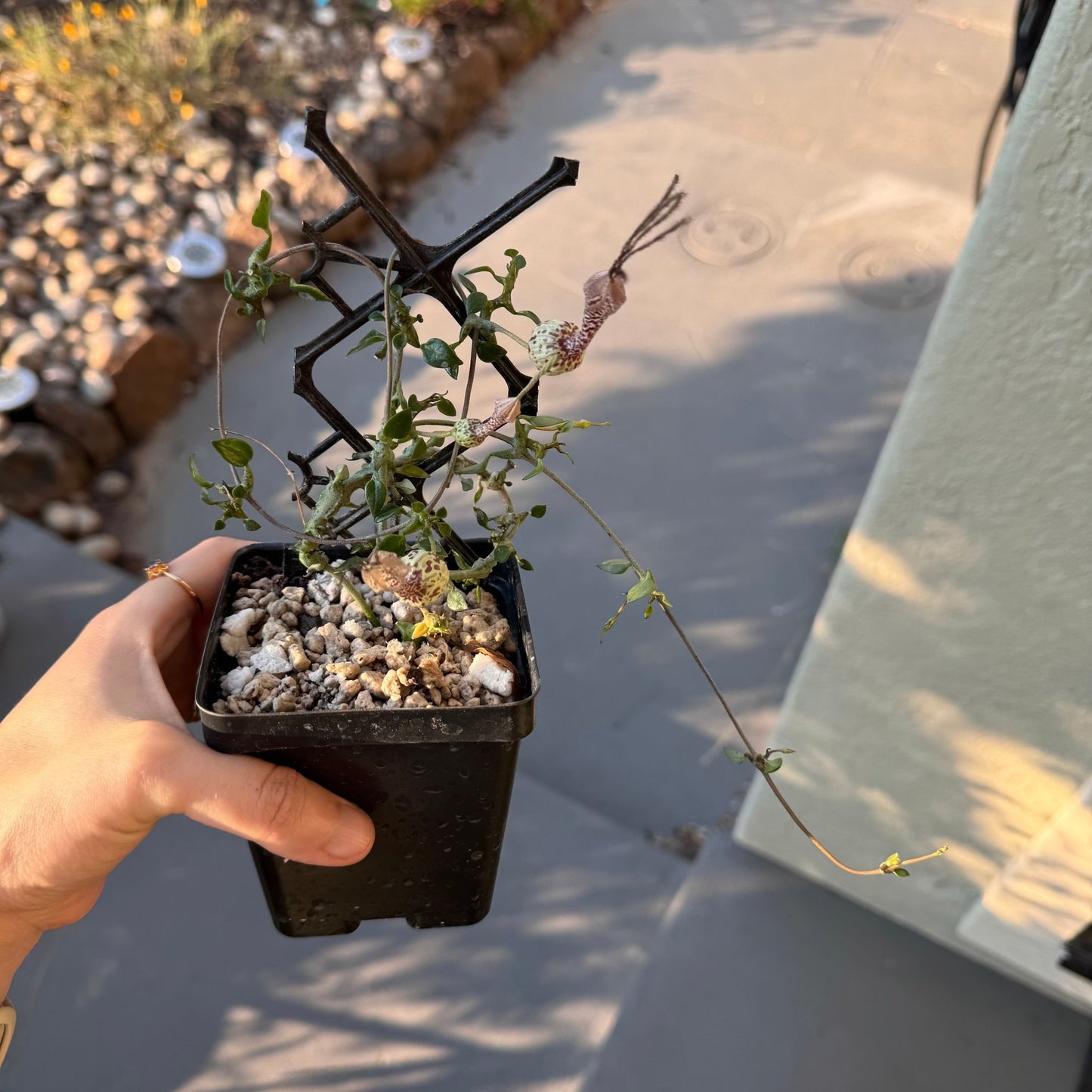
Ceropegia simoneae
Ceropegia simoneae
Couldn't load pickup availability
Ceropegia simoneae
A seldom-seen treasure for serious collectors
Ceropegia simoneae is an exceptionally rare species in cultivation, native to Madagascar and almost never offered for sale. This delicate, vining succulent bears slender stems with sparse, narrow leaves and produces the most extraordinary flowers—lantern-like blooms in shades of creamy white and soft pink, each with intricate striping and a uniquely flared form.
Its unusual floral structure evolved for specialized pollination, making each bloom as fascinating as it is beautiful. Due to its rarity, it’s highly sought-after among collectors of unusual and endangered species.
Light: Bright gentle light is best. Can tolerate some direct morning sun, but protect from harsh midday rays.
Temperature: Warmth-loving (65–85°F). Avoid temperatures below 55°F.
Humidity: Prefers moderate humidity (40–60%), with good airflow to prevent rot.
Water: Allow the soil to dry between waterings. Water sparingly in winter during dormancy.
Soil: Very well-draining cactus or succulent mix.
Fertilizer: Feed lightly during the growing season with diluted succulent fertilizer.
How to grow Ceropegia simoneae indoors:
Provide bright, warm conditions and excellent drainage. This species dislikes overwatering and will do best in a small pot that allows the soil to dry between waterings. Flowers may appear in summer with strong light and a steady care routine. Use distilled or filtered water if your tap water is mineral-heavy—San Francisco’s Hetch Hetchy water is generally safe.
How to grow Ceropegia simoneae outdoors in the Bay Area:
Only suitable for outdoor growing in protected, frost-free areas. A covered patio, greenhouse, or sunny windowsill outside works well in summer, as long as the plant is protected from cold nights and rain. Bring indoors when temperatures drop below 55°F.
Pet safe: Yes (based on ASPCA guidelines)
Difficulty: Intermediate. Easy to grow once established, but tricky to find and slower to propagate.
Share