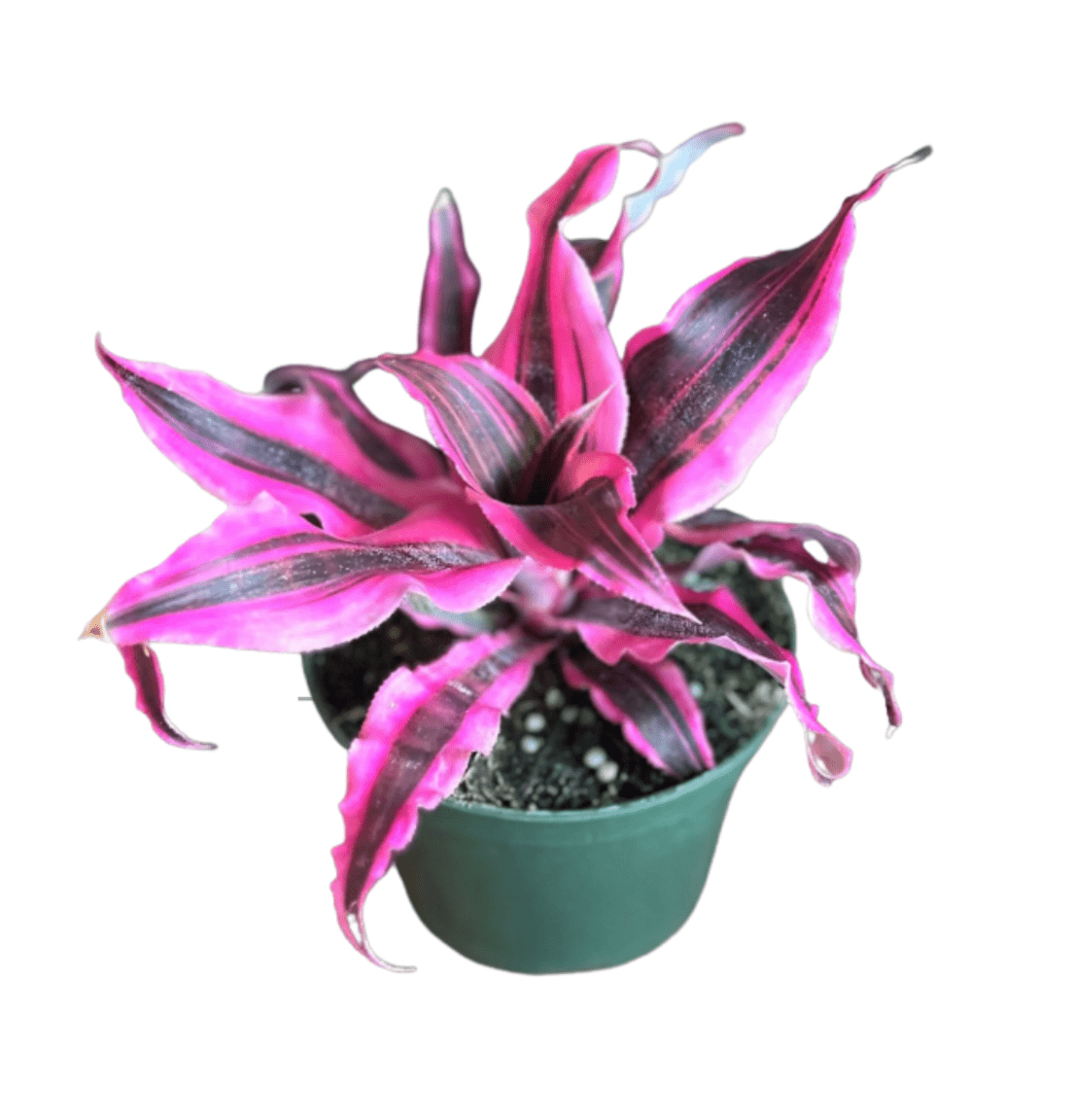
Cryptanthus 'Red Baron'
Cryptanthus 'Red Baron'
Couldn't load pickup availability
Cryptanthus ‘Red Baron’ is a vibrant earth star bromeliad known for its flat, star-shaped rosette of deep red to crimson leaves, often with subtle striping or scalloped edges. This compact terrestrial species stays low to the soil, spreading slowly over time and forming colorful clusters that look like living flowers.
Unlike many bromeliads, Cryptanthus grow in soil rather than as epiphytes, making them excellent candidates for terrariums, dish gardens, or bright windowsills. 'Red Baron' adds intense color and sculptural texture with almost no effort.
Light: Thrives in bright gentle light. Can tolerate medium light, but colors are most vibrant in higher light. Avoid harsh direct sun.
Temperature: Prefers warm indoor conditions (65–85°F). Protect from temperatures below 55°F.
Humidity: Enjoys moderate to high humidity (50–70%), but adapts well to household conditions with regular care.
Water: Keep soil lightly moist. Water when the top inch feels dry, and avoid letting it fully dry out or become soggy.
Soil: Well-draining bromeliad or cactus mix with added organic matter.
Fertilizer: Light feeding every 4–6 weeks during the growing season with a diluted balanced fertilizer.
How to grow Cryptanthus ‘Red Baron’ indoors:
Perfect for bright windowsills or as a statement in small containers and terrariums. Provide good airflow and don’t let water sit at the crown for too long. Use distilled or filtered water if possible—Hetch Hetchy tap water is generally safe. Remove older rosettes once they die back and let pups fill in naturally.
How to grow Cryptanthus ‘Red Baron’ outdoors in the Bay Area:
Outdoors, this plant thrives in protected, frost-free microclimates. Place in a spot with bright gentle light or filtered shade—like a covered porch or patio. Not frost tolerant, so bring inside when temps drop below 55°F. Great in containers or tucked into tropical ground-level displays during warmer months.
Pet safe: Yes (based on ASPCA guidelines)
Difficulty: Easy. Colorful, compact, and nearly care-free with the right light and moisture.
Share