Dieffenbachia 'Tropic Marianne'
Dieffenbachia 'Tropic Marianne'
Couldn't load pickup availability
Description
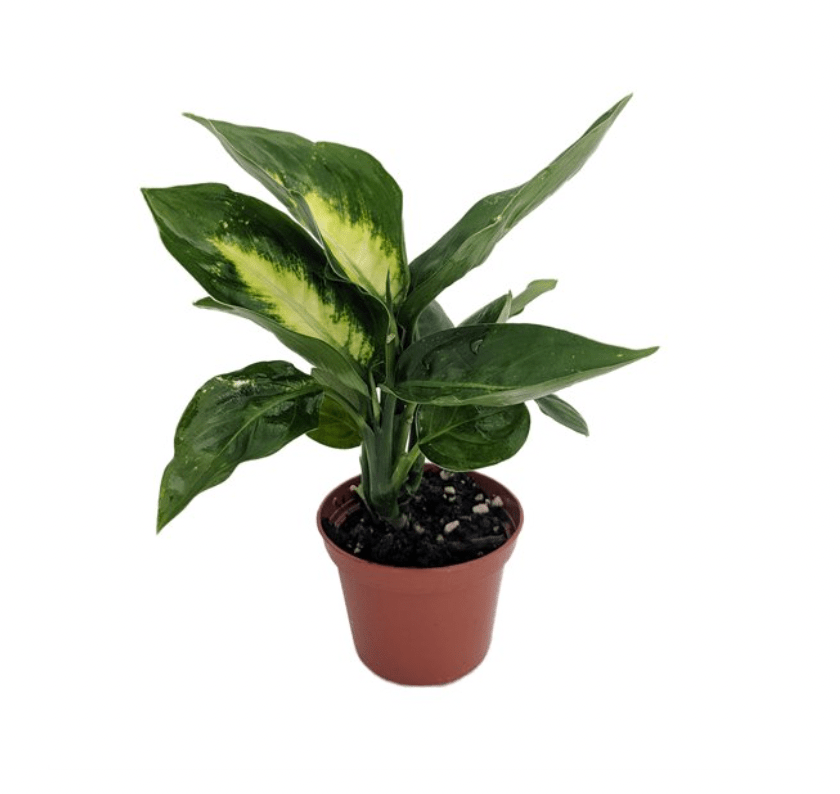
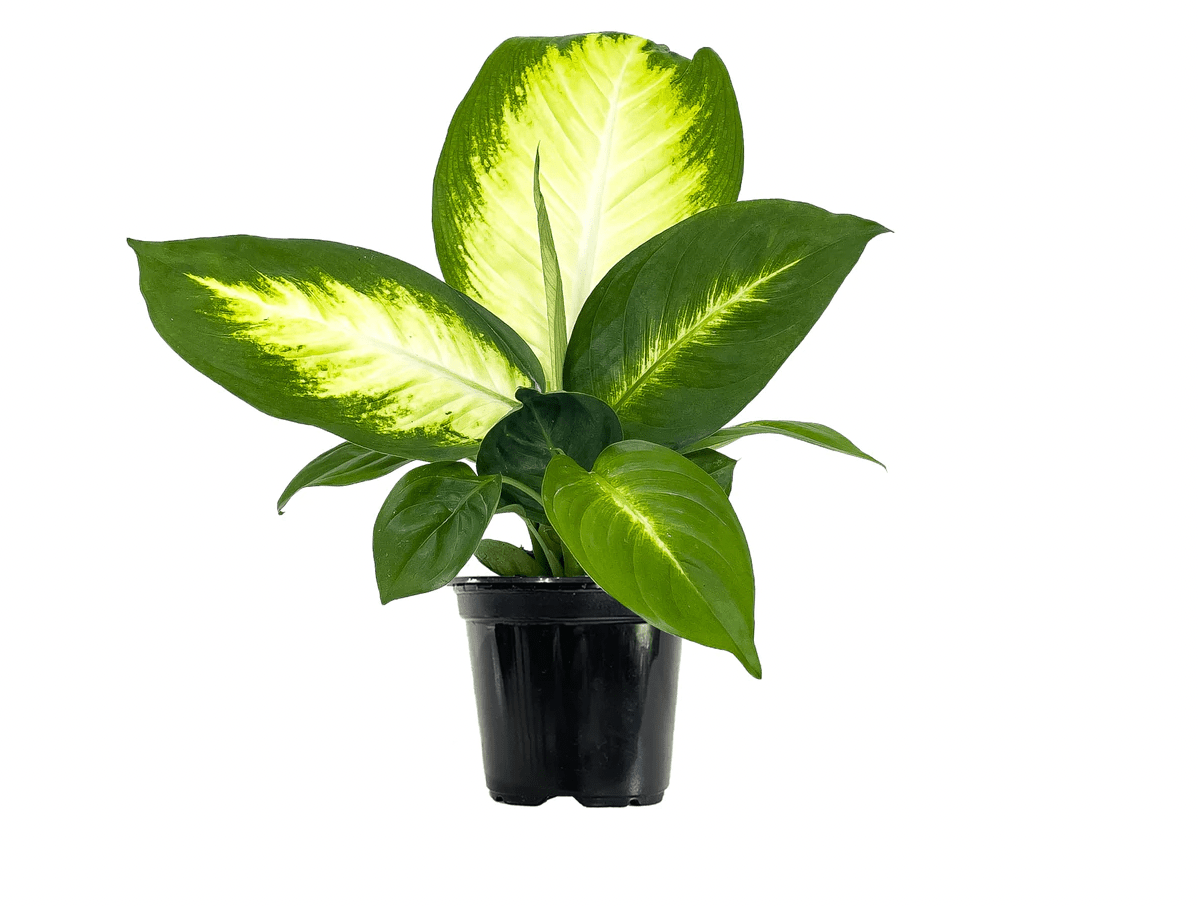
Dieffenbachia seguine ‘Tropic Marianne’ is a widely cultivated selection recognized for its luminous, two-toned foliage. The large, broadly ovate leaves feature a pale chartreuse to cream central zone sharply contrasted by deep green margins, creating a dramatic, almost hand-painted appearance. This cultivar remains compact and symmetrical compared to older, taller Dieffenbachia forms, making it one of the most stable and enduring selections in the genus.
Botanical Interest
Like other members of Dieffenbachia, ‘Tropic Marianne’ belongs to the Araceae family—relatives of Philodendron and Anthurium—and originates from a lineage of tropical understory plants native to Central and South America. Its striking variegation is the result of a mutation affecting chlorophyll concentration along the midrib and leaf lamina. The pattern is stable across generations of vegetative propagation, which has contributed to its popularity among growers and its frequent use in hybridization programs.
In mature specimens, the plant develops a short, cane-like stem and may produce inflorescences typical of the family: a pale spadix partially enclosed by a greenish-white spathe. These rarely appear indoors but reveal its close relationship to other aroids.
Growing Conditions (Indoors)
-
Light: Prefers bright gentle light to maintain color contrast; too little light can dull the variegation. Avoid harsh direct sun.
-
Water: Keep soil evenly moist but not saturated. Allow the upper inch to dry slightly between waterings.
-
Humidity: Average Bay Area humidity is generally sufficient, though moderate humidity encourages larger leaf size.
-
Temperature: Ideal range is 65–80°F. Protect from temperatures below 60°F.
-
Soil: Use a well-aerated aroid mix with bark, perlite, and organic matter for proper drainage and root health.
Growth Habit
A self-heading variety that typically reaches 2–3 feet in height indoors, forming dense clusters of leaves from a central crown. With age, it can produce short canes, which may be pruned to encourage basal regrowth.
Pet Safety
Not pet safe. Contains calcium oxalate crystals that can cause oral irritation if ingested.
Notes
‘Tropic Marianne’ represents a milestone in modern Dieffenbachia breeding—valued for its compact form, uniform variegation, and resilience in interior conditions. It remains one of the most recognizable cultivars in horticulture, bridging ornamental appeal with botanical interest.
Share