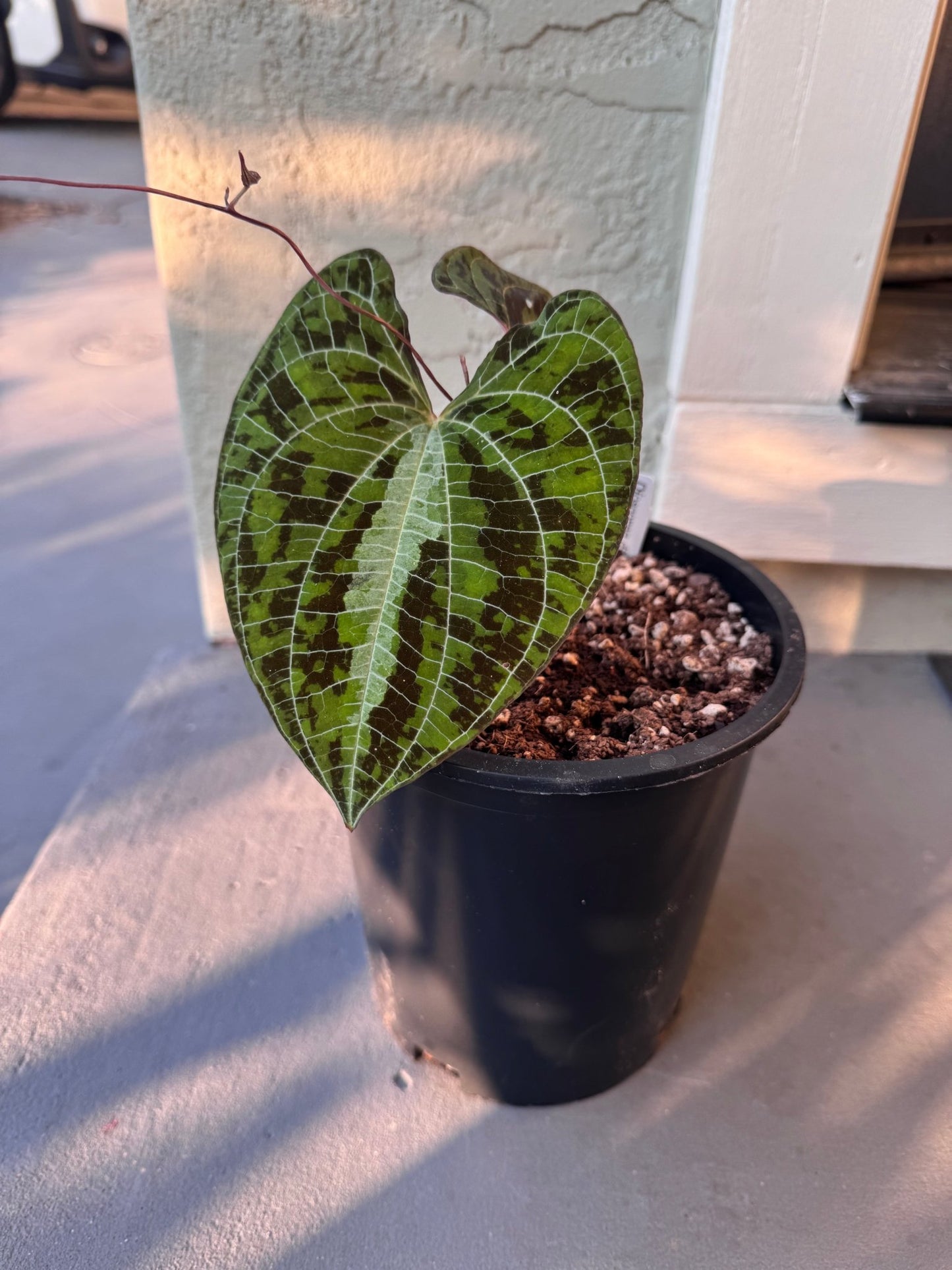
Dioscorea discolor
Dioscorea discolor
Couldn't load pickup availability
Dioscorea discolor is a rare and highly ornamental yam species native to Brazil, loved by collectors for its striking foliage. The heart-shaped leaves are velvety with dramatic, shimmering veining in shades of silvery-white, pink, and deep green, often blushing purple beneath. The leaves shift color throughout the season, making the vine dynamic and ever-changing.
Fast-growing in warm conditions, this twining climber can quickly cover a trellis or moss pole with its lush, layered foliage. While it is related to edible yams, D. discolor is grown almost exclusively for its beauty.
Light: Bright gentle light is ideal. Can tolerate some direct morning sun but avoid harsh, prolonged afternoon rays.
Temperature: Warmth-loving (65–85°F). Protect from temperatures below 60°F.
Humidity: Prefers moderate to high humidity (50–70%).
Water: Keep evenly moist during active growth, allowing the top inch of soil to dry between waterings. Reduce water in dormancy when vines die back.
Soil: Rich, well-draining mix with added organic matter.
Fertilizer: Feed every 2–4 weeks during the growing season with a diluted, balanced fertilizer.
How to grow Dioscorea discolor indoors:
Grow in a warm, bright spot with a trellis or moss pole for climbing. Keep the soil lightly moist during the growing season and reduce watering when the vine begins to go dormant. It will regrow from its underground tuber each spring. Use filtered or distilled water if your tap water is hard—San Francisco’s Hetch Hetchy supply is generally fine.
How to grow Dioscorea discolor outdoors in the Bay Area:
Only suitable for warm, frost-free microclimates. Grow in a container so it can be moved indoors when temperatures drop below 60°F. Provide bright gentle light and shelter from wind. In cooler areas, grow as a seasonal patio plant and overwinter the dormant tuber indoors.
Pet safe: Yes (based on ASPCA guidelines)
Difficulty: Intermediate—easy to grow in the right warmth and light, but needs seasonal dormancy care.
Share