Dracula astuta
Dracula astuta
Couldn't load pickup availability
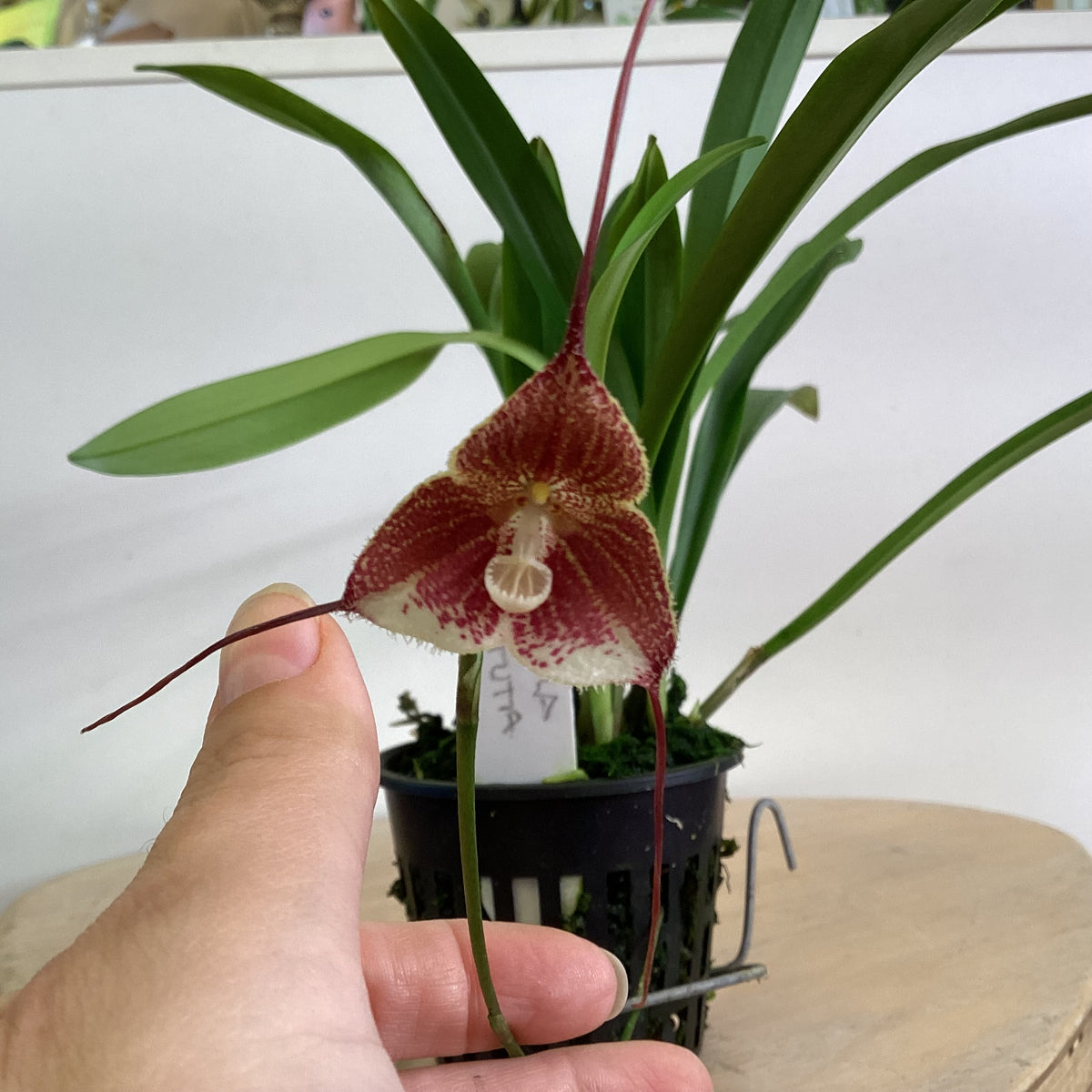
Native to Costa Rica, Dracula astuta is a small epiphytic orchid found at roughly 1,000–1,700 meters elevation. Its flowers spread into a dramatic triangular silhouette, with slender sepal tails that can bring their total length to around eight inches. Closely related to Dracula erythrochaete, it is distinguished by larger, longer-tailed flowers and a larger lip. Flower spikes emerge near the base of the plant and grow outward or downward, producing blooms sequentially rather than opening an entire spray at once.
The flower’s strange architecture belongs to a fascinating evolutionary story. Research in other Dracula species has shown that mushroom-like floral structures and scents attract flies associated with fungi. The ridged lip resembles mushroom gills, turning a seemingly fanciful flower into a remarkably specific invitation to a pollinator. For collectors, D. astuta offers both theatrical flowers and a reason to look closely at every part.
Care Guide
-
Light: Gentle, filtered light or bright shade. Protect the thin leaves from direct afternoon sun.
-
Water: Keep the medium consistently moist, with excellent drainage and air around the roots. Avoid letting it dry completely.
-
Humidity: Aim for approximately 70–85%, paired with steady, gentle airflow. A ventilated orchid cabinet or greenhouse is generally more suitable than an open indoor shelf.
-
Temperature: Favor cool conditions and cooler nights. Protect from prolonged heat, especially when humidity drops.
-
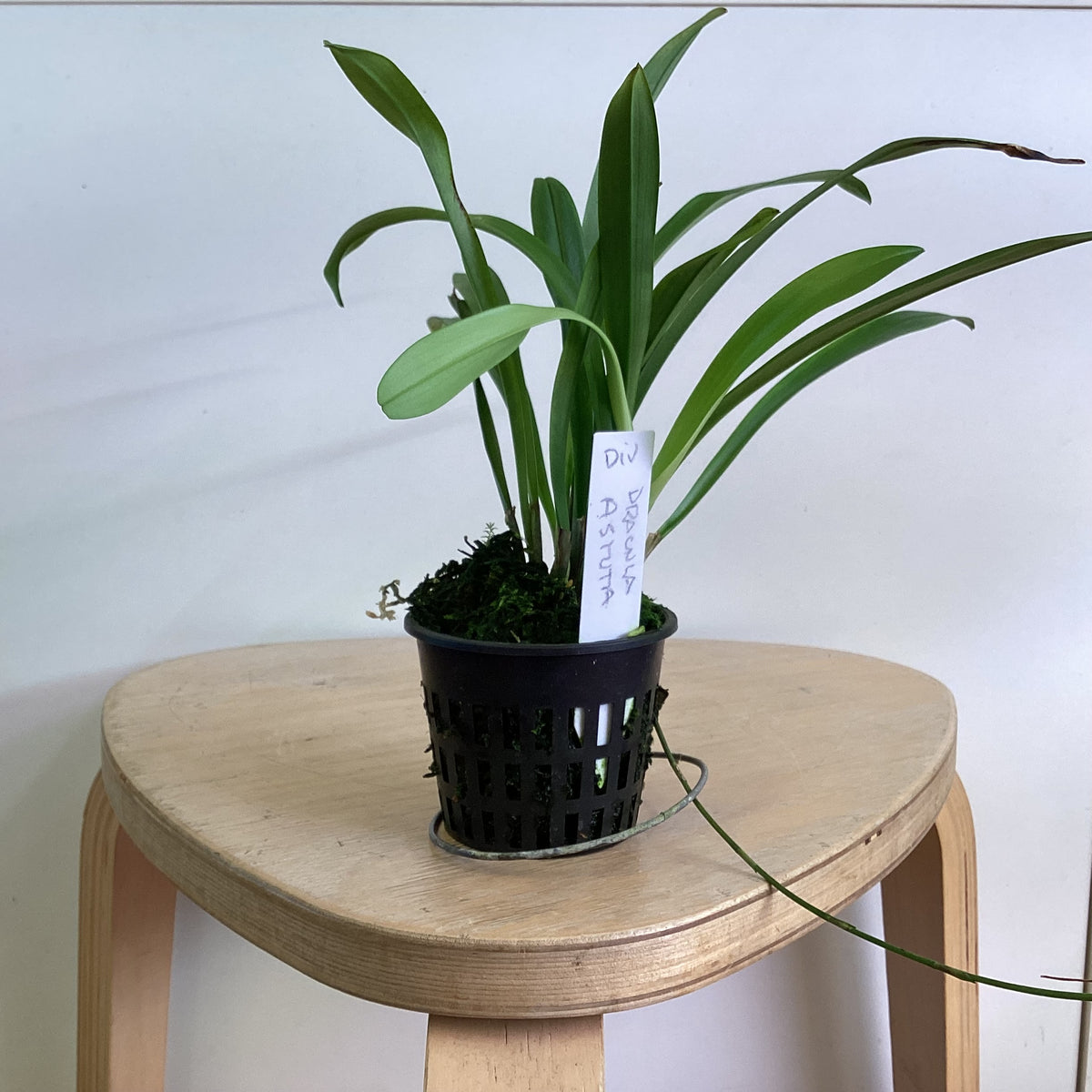
Potting: Use an open mesh pot or slatted basket with a loose, moisture-retentive orchid medium. Leave space underneath for descending flower spikes.
-
Water quality and feeding: Use low-mineral water and a very dilute orchid fertilizer. Hetch Hetchy water may be suitable; check your local supply if mineral buildup develops.
-
Flowering and dormancy: Can bloom at different times throughout the year under suitable conditions. No dry winter rest.
-
Bay Area growing: A sheltered, shaded spot in coastal SF may work if humidity stays high. Drier Oakland conditions usually call for a more controlled growing environment.
Share