

Drosera prolifera
Drosera prolifera
Couldn't load pickup availability
Only available via online order for delivery shipping or pick up. We do not have these in the shop.
Drosera prolifera
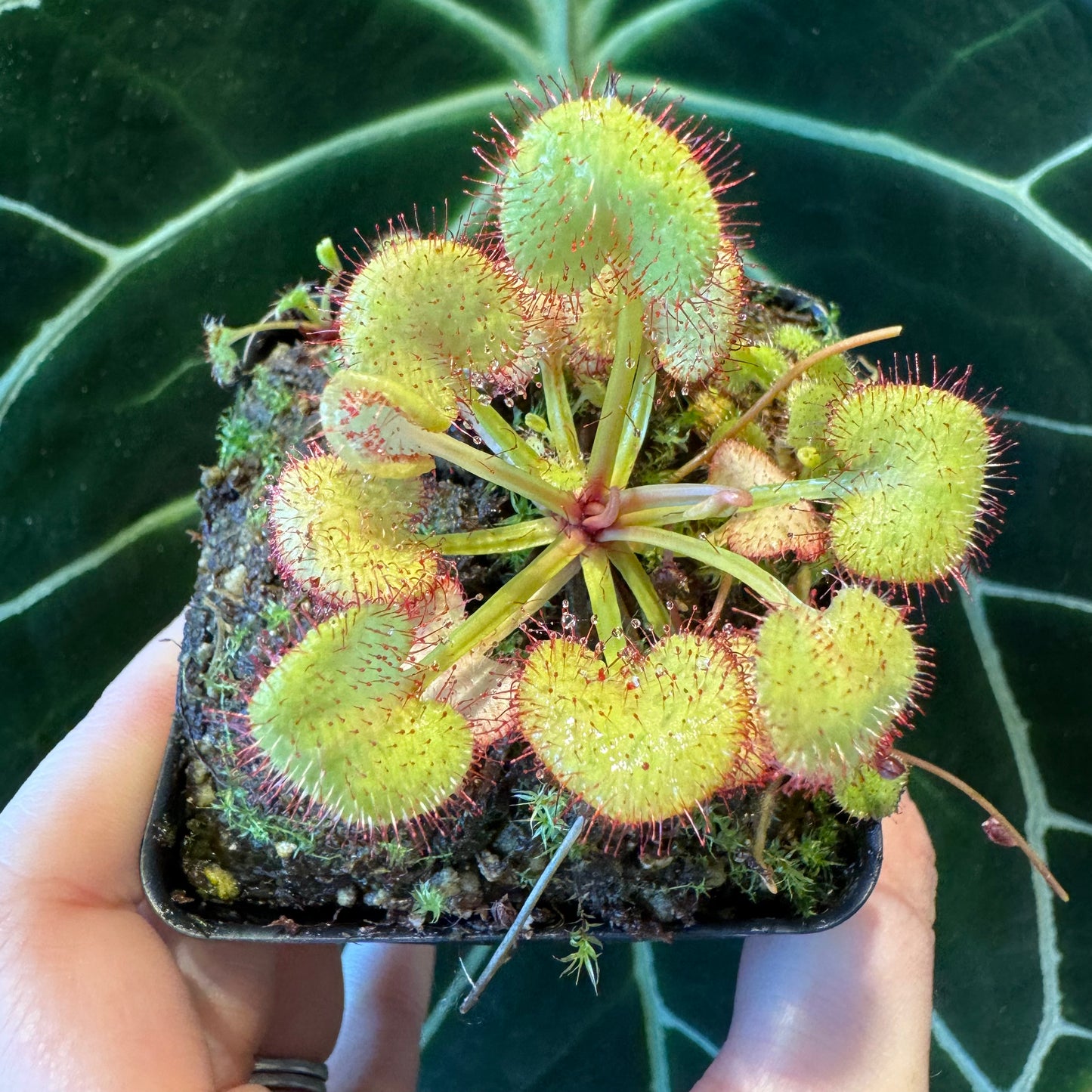
Delicate, enchanting, and a little bit freaky, Drosera prolifera is one of the famed "Three Sisters of Queensland"—a trio of tropical sundews found only in the misty rainforests of northeastern Australia. With its soft, round leaves coated in sticky dew, D. prolifera forms a small, slowly spreading colony that looks like a miniature alien landscape in the best way possible.
This species is known for its ability to self-propagate via plantlets that grow along its flower stalks—hence the name prolifera. Over time, it can create a small, fairy-like grove of sundews if given the right conditions.
Care Guide
-
Light: Bright, filtered light. Unlike with most drosera, you want to avoid harsh direct sun here—this is a true shade-dweller in the wild. Excellent under grow lights.
-
Water: Keep soil consistently moist using only distilled, rain, or reverse osmosis water. Tray method works well.
-
Humidity: High humidity (70%+) is essential. Loves terrariums or enclosed environments.
-
Temperature: Prefers 60–80°F. Keep above 55°F and avoid sudden temperature drops.
-
Soil: Use a very airy carnivorous plant mix—sphagnum moss, perlite, and a bit of sand or orchid bark. Needs excellent drainage and low nutrients.
-
Fertilizer: Never! This species thrives on catching tiny bugs or being left alone.
Blooms
Drosera prolifera produces dainty, soft pink flowers that rise above the foliage, often in pairs or small clusters. It can bloom year-round under stable, terrarium-like conditions, but most commonly flowers during the warmer months. Baby plants often sprout from the flower stalks—an endearing trait that makes propagation almost effortless.
Why We Love It
This is a plant for the terrarium lover, the miniature garden designer, or anyone enchanted by slow-growing, magical ecosystems. Between the jewel-like dew, the shy pink flowers, and the self-replicating growth habit, Drosera prolifera feels like it stepped out of a fairy tale—and into your living room.
Share
- 5 stars: 1 (100%)
- 4 stars: 0 (0%)
- 3 stars: 0 (0%)
- 2 stars: 0 (0%)
- 1 star: 0 (0%)
Drosera prolifera