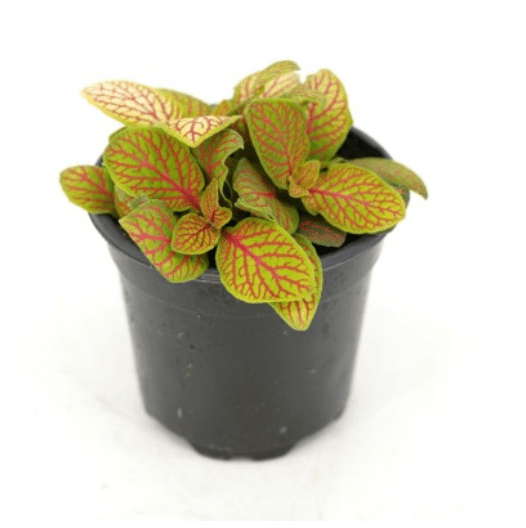
Fittonia albivenis 'Skeleton'
Fittonia albivenis 'Skeleton'
Couldn't load pickup availability
Overview
Fittonia albivenis ‘Skeleton’ is a striking cultivar of the nerve plant, prized for its dark green leaves contrasted with bold, white veins. Native to the understory of tropical rainforests in Peru, Fittonia is a low-growing plant that naturally creeps along the forest floor. ‘Skeleton’ is one of the more dramatic forms, with vein patterns that appear skeletal against the leaf surface.
Distinguishing Features
-
Compact growth habit, usually under 6 inches tall.
-
Dark green leaves with prominent white venation.
-
Dense, spreading form makes it suitable for terrariums, dish gardens, or as a tabletop accent.
-
Known for its dramatic “fainting” behavior when leaves wilt quickly from lack of water, then revive once watered.
Cultivation Notes
Light: Thrives in bright gentle light to medium light; avoid direct sun, which can scorch leaves. Can adapt to lower light but will grow more slowly.
Temperature: Prefers warm, stable conditions (65–80°F / 18–27°C). Avoid drafts and cold air.
Watering: Requires consistently moist soil; never allow to fully dry out. Use distilled, rainwater, or Hetch Hetchy tap water if available.
Humidity: High humidity is essential. Ideal for terrariums or bathrooms, or grow near a humidifier. Leaves may crisp at the edges in dry air.
Soil: Loose, peat- or coir-based houseplant soil with added perlite for aeration.
Fertilizer: Feed lightly during the growing season with a balanced, diluted fertilizer once a month.
Repotting & Maintenance
-
Repot annually or when roots fill the container, using fresh mix to maintain soil structure.
-
Pinch back tips to encourage fuller growth.
-
Easily propagated from stem cuttings.
Bloom Notes
Produces small, white to reddish spike-like flowers, though they are inconspicuous compared to the foliage. Often trimmed off to conserve the plant’s energy for leaf growth.
Share