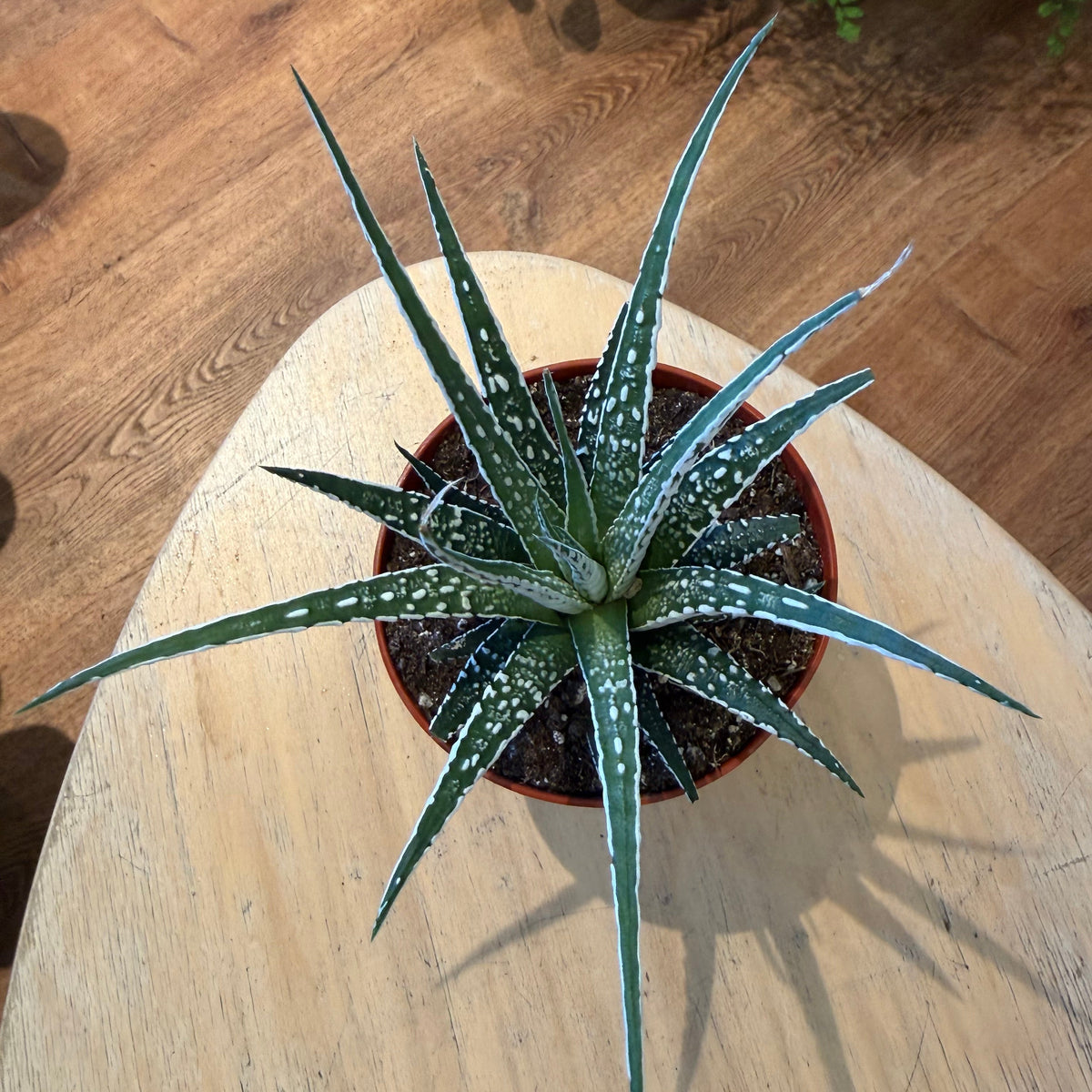
Haworthia attenuata
Haworthia attenuata
Couldn't load pickup availability
Haworthia attenuata is a little succulent with a lot going for it: sharply pointed green leaves, raised white stripes, and a compact rosette that looks like a miniature desert sculpture. It’s also one of the few succulents that tolerates lower light, making it a particularly good fit for indoor growing. Add in its pet-safe status, and you have an easygoing choice for anyone who loves desert plants but doesn’t have a sun-drenched windowsill.
Please note: Those white markings aren’t just color—they’re raised bumps called tubercles, giving the leaves a wonderfully tactile, beaded texture. In attenuata, these bumps occur on both leaf surfaces, a useful distinction from the similar Haworthia fasciata, whose inner leaf surfaces are smooth. Over time, the plant produces offsets around its base, gradually building a little colony of striped rosettes.
Now botanically classified as Haworthiopsis attenuata, this South African species remains widely known by its former name. Its tolerance for partial shade helps explain why it adapts to indoor life more comfortably than many sun-hungry succulents.
Care Guide
-
Light: Bright gentle light is ideal, but tolerates lower light than most succulents. A spot near an east-facing window works well. Avoid a dark corner, and protect from harsh afternoon sun.
-
Water: Let the soil dry completely, then water thoroughly and allow excess water to drain. In lower light, it will dry more slowly and need less frequent watering.
-
Soil: Use a fast-draining cactus and succulent mix with added pumice or perlite. A pot with drainage is essential.
-
Humidity: Ordinary household humidity is perfect. No misting or enclosed terrarium needed.
-
Temperature: Comfortable at typical indoor temperatures. Protect from frost.
-
Fertilizer: A light application of cactus fertilizer during active growth is plenty.
-
Growth habit: Small, slow-growing rosettes that gradually form clusters. Offsets can be separated once they have developed their own roots.
-
Pet safety: Pet safe! Haworthias are considered non-toxic to cats and dogs.
Share