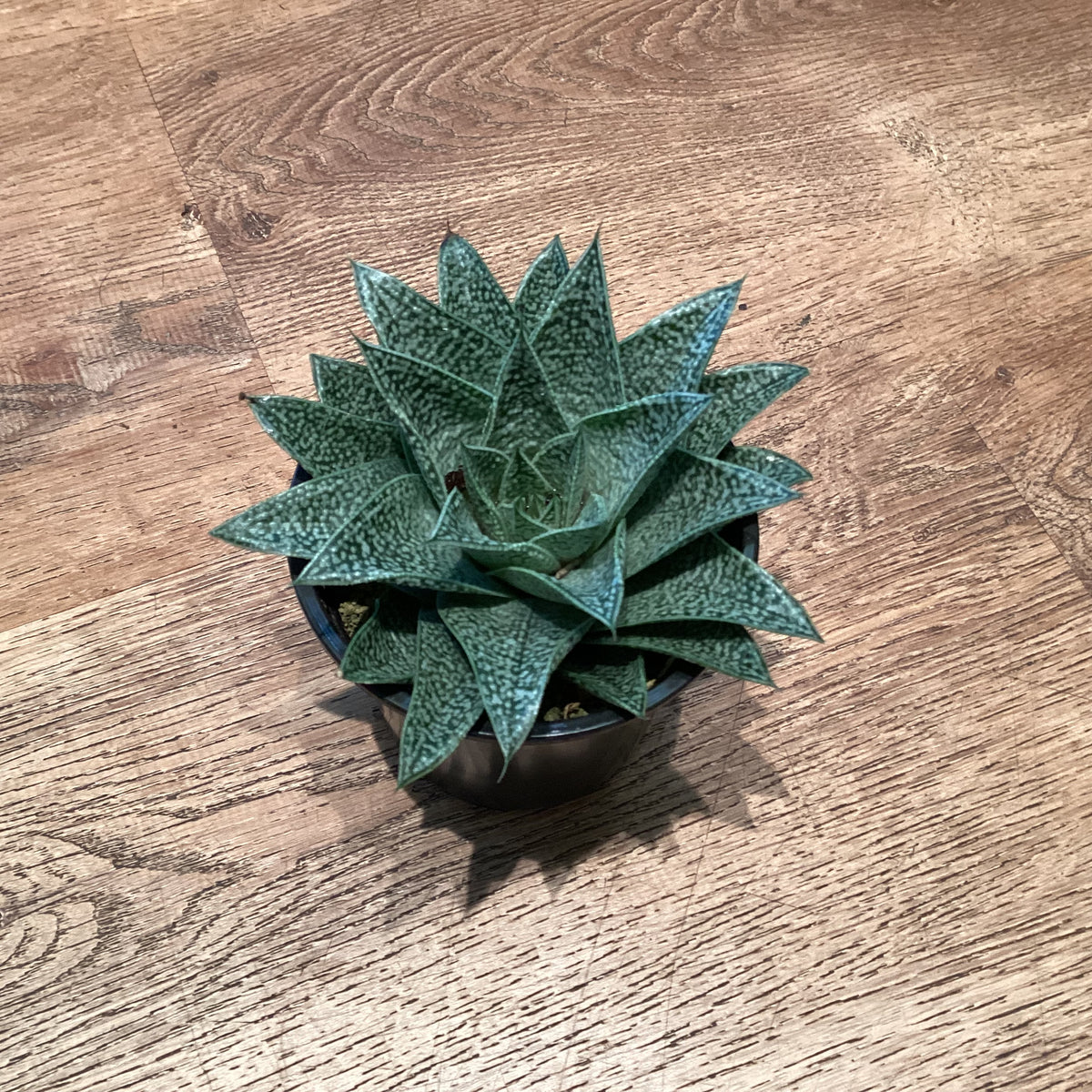
Haworthia ‘Robin’
Haworthia ‘Robin’
Couldn't load pickup availability
Haworthia ‘Robin’ is a compact succulent with a tidy rosette of thick, tapering leaves and pronounced architectural texture. Its
Light: Provide bright, gentle light with several hours of mild morning or late-afternoon sun. An east-facing window is ideal. A filtered south- or west-facing window also works well. Too little light causes elongated, open growth, while intense midday sun can bleach or scorch the foliage. Acclimate the plant gradually whenever increasing its exposure.
Water: Water thoroughly, then allow the growing medium to dry completely before watering again. Empty any saucer or decorative cachepot after watering. The plant may need water every two to four weeks during active growth and considerably less during cool, dark, or dormant periods. Always evaluate the soil and leaf firmness rather than following a fixed schedule.
Humidity: Normal household humidity is appropriate. Haworthias do not require a humidifier and generally perform best with dry air and good circulation. San Francisco’s naturally moderate humidity is suitable as long as the potting medium drains quickly.
Soil: Use a gritty, fast-draining succulent mixture with a high proportion of pumice, perlite, lava rock, or coarse mineral material. Standard potting soil alone retains too much moisture. A shallow pot with an unobstructed drainage hole is preferable, and unglazed terracotta can be useful in cool or humid interiors.
Temperature: Maintain approximately 55–80°F. Haworthias tolerate cool nights better than many tropical succulents but should be protected from frost and prolonged temperatures below approximately 45–50°F. Shelter outdoor plants from winter rain and the hottest inland afternoon sun.
Seasonal Growth: Haworthias often grow most actively during the milder temperatures of fall and spring, with slower growth during intense summer heat or the darkest part of winter. In San Francisco’s mild climate, growth may continue for much of the year. Reduce watering whenever the plant is resting or using moisture slowly.
Growth Habit: ‘Robin’ remains compact and develops as a low rosette. Mature plants may produce offsets around the base, gradually forming a cluster. These can be left attached for a fuller specimen or separated once they have developed their own roots.
Fertilizer: Feed sparingly. Apply a cactus or succulent fertilizer diluted to approximately one-quarter strength once or twice during active growth. Excess fertilizer can produce weak growth and damage the roots.
Flowers: Mature plants may send up slender stems carrying small white or pale flowers. The blooms are understated but characteristic of the genus. The stalk can be removed after flowering or left until it dries naturally.
Pet Safety: Considered pet-safe. Haworthias are generally regarded as non-toxic to cats and dogs, and the ASPCA lists zebra Haworthia as non-toxic. Cultivar-specific testing is not available, and chewing any plant material may still cause mild digestive upset.
restrained scale and graphic symmetry make it an excellent choice for a sunny windowsill, desktop, or small ceramic pot. Slow-growing and drought tolerant, it delivers collector appeal without demanding complicated care.
Share