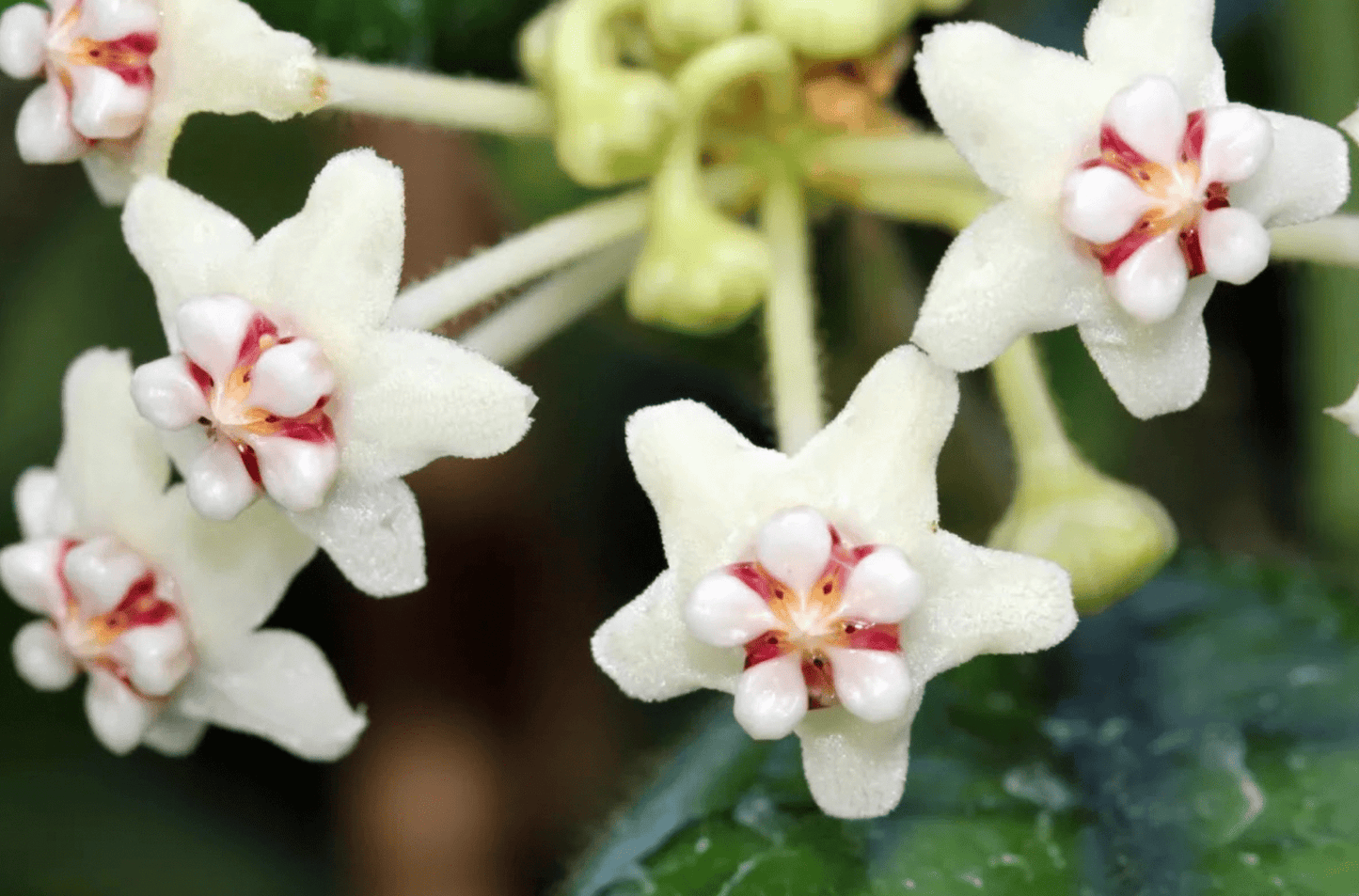
Hoya globulosa
Hoya globulosa
Couldn't load pickup availability
Hoya globulosa is a climbing epiphyte or lithophyte native from the Himalayas through southern China and Indochina. Its finely pubescent leaves develop prominent dark venation, undulating edges, and long pointed tips, creating a level of texture rarely seen among more familiar Hoyas. Mature plants may produce pendent, spherical umbels of cream to pale yellow flowers with pinkish centers. Its imposing foliage, montane origins, and relative scarcity make it especially appealing to collectors of unusual species Hoyas.
Care Overview
Give Hoya globulosa bright, gentle light, including filtered morning sun, while protecting its textured foliage from intense afternoon exposure. Water thoroughly once the potting mix is mostly dry, then allow all excess water to drain. Use a coarse, highly aerated epiphytic mix and avoid oversized pots, as its roots are sensitive to prolonged moisture. This montane species appreciates moderate humidity, good air circulation, and cooler nights than many lowland tropical Hoyas. Average coastal San Francisco humidity is generally sufficient, while plants in warmer, drier parts of Oakland or San Jose may benefit from supplemental humidity. Provide a trellis or other support for its vigorous climbing vines, and avoid removing long searching stems before they have had an opportunity to produce leaves. Mature plants may bloom during the warmer growing season. Leave old peduncles intact, as Hoyas can flower repeatedly from the same structures. Hoyas are generally treated as pet safe, although the ASPCA listing specifically covers Hoya carnosa rather than H. globulosa. Its milky sap may still cause mild irritation, so discourage pets and children from chewing it. Kew taxonomy ASPCA pet-safety information
Small naming note: Hoya globulosa is the currently accepted botanical name. Hoya villosa, which remains common in collector circles and the nursery trade, is treated by Kew as a synonym.
Share