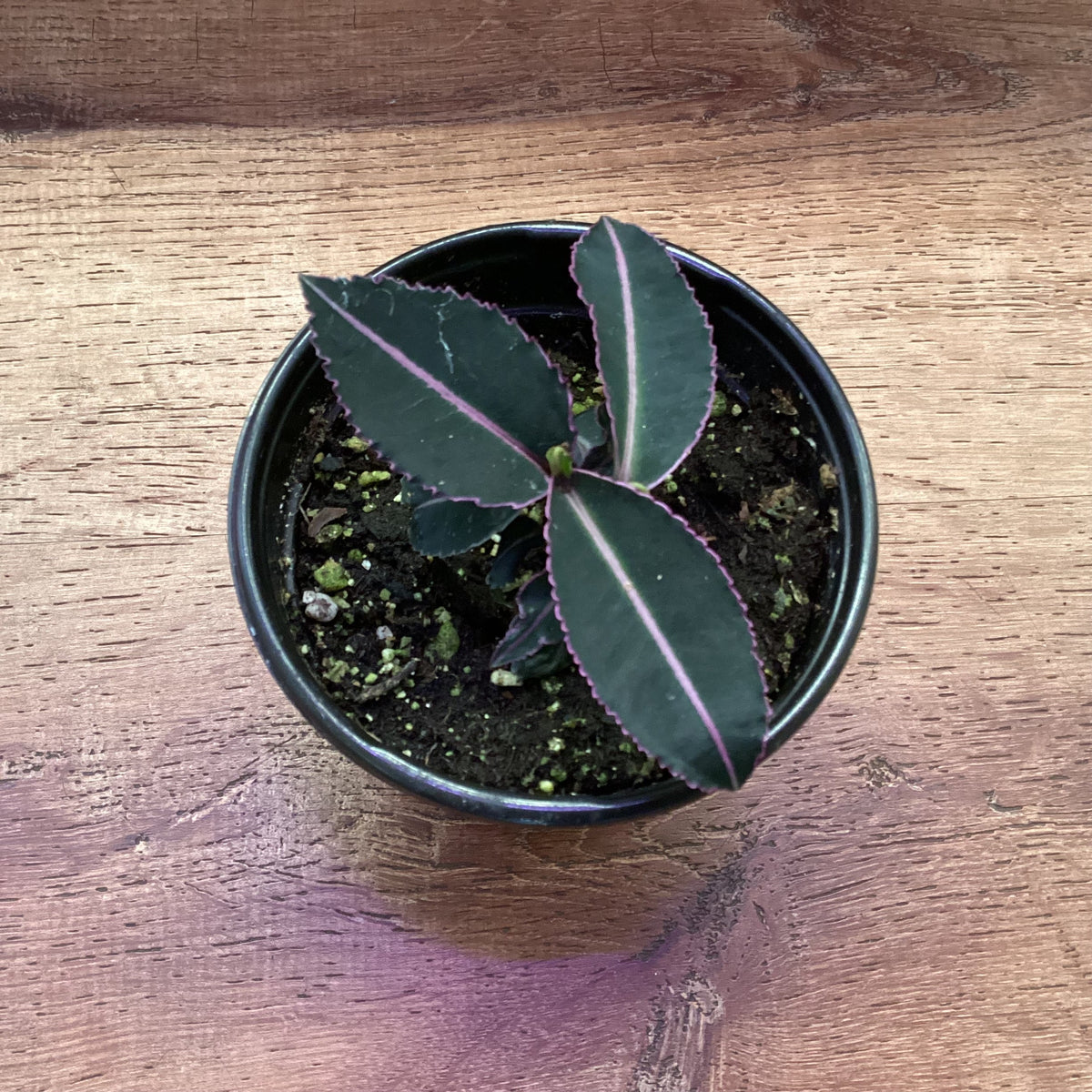
Labisia pumila ‘Electric Pink’
Labisia pumila ‘Electric Pink’
Couldn't load pickup availability
Labisia pumila ‘Electric Pink’ is a jewel-like tropical understory plant with dark, sculptural foliage illuminated by vivid pink venation. Its low, compact growth makes it especially striking in a terrarium, greenhouse cabinet, or intimate tabletop display. Rare in cultivation and intensely graphic, this is a true collector plant for growers who can provide consistently warm, humid conditions.
Light: Provide medium to bright, gentle light with no harsh direct sun. Labisia naturally grows beneath a tropical forest canopy, and its thin, highly pigmented leaves scorch easily. Bright filtered light helps preserve vivid pink coloration, but increasing light beyond that point can bleach or damage the foliage.
Water: Keep the growing medium evenly and consistently moist, but never saturated. Do not allow the root zone to dry completely. Water when the surface is beginning to feel slightly less damp, then let excess water drain. Distilled, rain, reverse-osmosis, or another low-mineral water source is preferable. San Francisco’s Hetch Hetchy water may be suitable, but watch for mineral deposits on the foliage or growing medium.
Humidity: High and stable humidity is essential. Aim for at least 60%, with 70–85% preferred for pristine growth. This plant is best suited to an enclosed terrarium, greenhouse cabinet, or controlled propagation environment rather than an open household shelf. Typical coastal Bay Area humidity may help, but it is rarely consistent enough indoors by itself. Supplemental humidity will almost certainly be necessary in Oakland, San Jose, and warmer inland areas. Pair high humidity with gentle air circulation to reduce fungal and bacterial problems.
Soil: Use a fine-textured, moisture-retentive medium that remains airy around the roots. A mixture of fine orchid bark, high-quality coco coir or peat-free potting mix, chopped sphagnum, and perlite works well. Avoid coarse Hoya-style mixes, heavy conventional soil, and any container without drainage.
Temperature: Maintain approximately 68–82°F, with minimal fluctuation. Protect the plant from temperatures below 60°F, cold windows, air-conditioning vents, and sudden changes in environment. It is not suitable for year-round outdoor cultivation in the Bay Area.
Growth Habit: Labisia is a slow-growing, terrestrial understory plant with a compact, low profile. It may gradually form a broader clump or produce growth from short underground stems, but it does not climb or trail. Its controlled proportions make it particularly valuable for terrariums and planted display cases.
Feeding: Fertilize sparingly during active growth with a balanced fertilizer diluted to approximately one-quarter strength. Apply to already-moist soil and occasionally flush the medium with low-mineral water to prevent salt accumulation. Excess fertilizer can burn the fine roots and leaf margins.
Acclimation: Avoid moving a newly acquired plant directly from high greenhouse humidity into ordinary household air. Reduce humidity gradually over several weeks if open-room cultivation is the goal. Sudden humidity loss can cause curled leaves, crisp margins, or stalled growth. Labisia cultivation guidance consistently emphasizes stable warmth, moisture, and elevated humidity.
Pet Safety: Pet toxicity has not been adequately established for Labisia pumila, and the species does not appear in the ASPCA toxic and non-toxic plant database. However orchids are generally considered to be pet safe.
Share