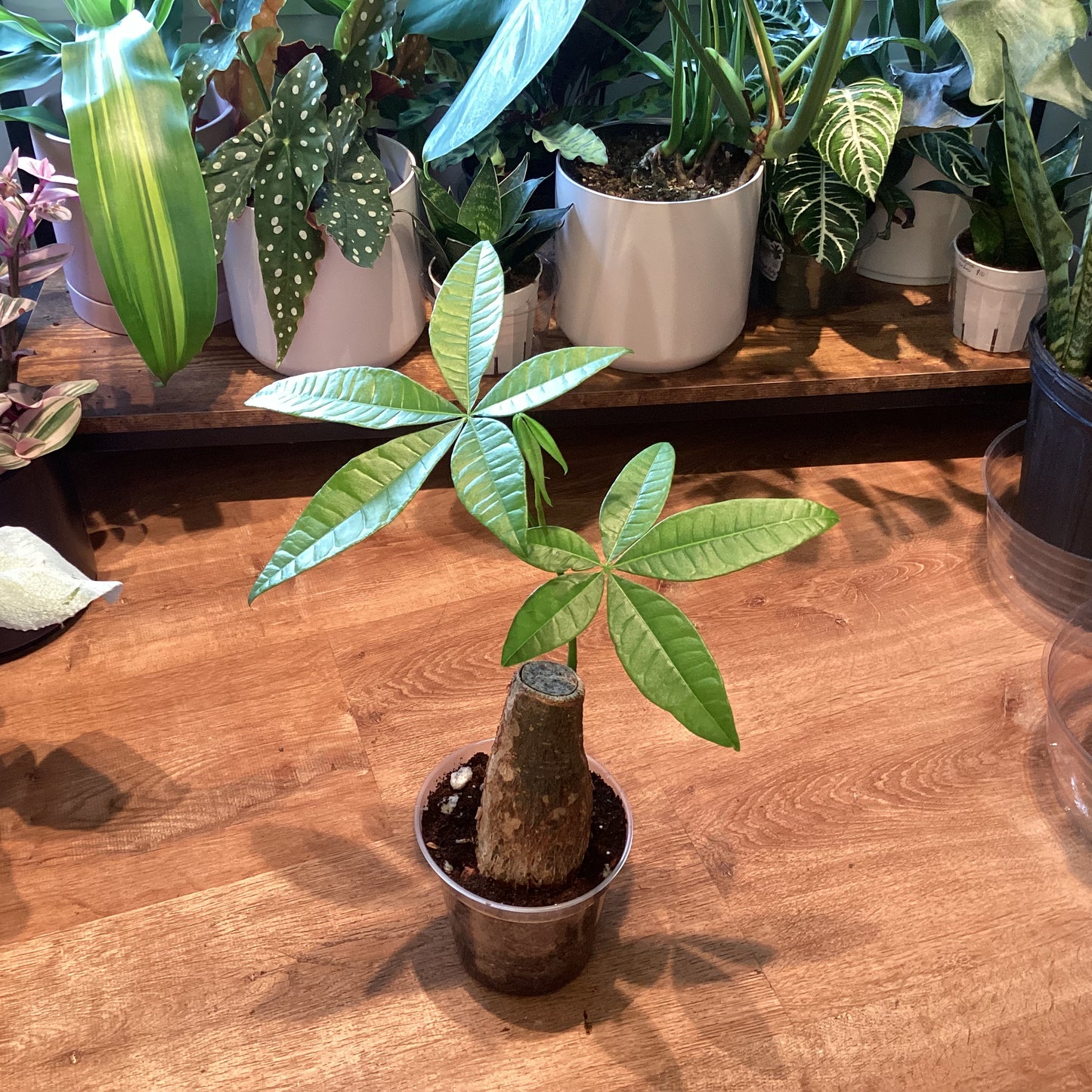
Pachira aquatica (Money tree) stump form
Pachira aquatica (Money tree) stump form
Couldn't load pickup availability
Commonly sold as Pachira aquatica, the stump-form Money Tree emphasizes the plant’s substantial trunk and branching structure. “Stump” describes its nursery-grown presentation rather than a separate cultivar: a shortened trunk produces leafy shoots that gradually develop into a canopy. Collectors who enjoy sculptural plants can refine its proportions through selective pruning, allowing the contrast between mature wood and fresh foliage to become the centerpiece.
Care Overview
Light: Bright, gentle light supports a full canopy and healthy growth. Place near an east-facing window or in filtered light from a brighter exposure. Acclimate gradually to mild direct sun, and avoid harsh afternoon sun.
Water: Allow roughly the upper quarter to third of the potting mix to dry before watering thoroughly. Drain completely and empty the saucer or cachepot. The thick trunk does not make this a desert succulent; avoid both constant saturation and prolonged, complete dryness.
Humidity: Moderate household humidity usually works well. Coastal homes in San Francisco, Daly City, and Half Moon Bay often provide suitable conditions. A humidifier may help in drier Oakland or San Jose homes, especially during heating season. Keep away from drying vents.
Soil: Use a moisture-retentive but freely draining houseplant mix amended with perlite or pumice. Choose a container with drainage, and keep the trunk at its existing planting depth rather than burying it further.
Temperature: Warm indoor conditions are ideal, approximately 65–85°F. Protect from cold drafts and abrupt environmental changes. Outdoors in San Francisco, choose a sheltered spot during warm weather and bring indoors when nights become chilly.
Growth Habit: A woody tropical tree maintained in a compact stump form. New shoots can lengthen considerably, so prune selectively during spring or active growth to maintain a balanced canopy. Its small size is maintained through cultivation rather than permanent dwarfing. Growth may slow in winter, but it does not require a dry dormancy.
Fertilizer: Feed with a diluted, balanced houseplant fertilizer during active growth, following the product’s directions. Reduce or pause feeding when growth slows, and avoid fertilizing a dry root ball.
Flowers: Mature trees can produce large, showy flowers with long stamens, but flowering is uncommon indoors and should not be expected from a compact stump specimen.
Pest Care: Inspect leaf undersides, shoot tips, and branch junctions for spider mites, mealybugs, and scale. Yellowing leaves can also indicate watering problems. A soft trunk or persistent decline warrants checking for root or stem rot.
Pet Safety: Pet friendly. The ASPCA lists Pachira aquatica as non-toxic to cats and dogs, although eating plant material can still cause digestive upset.
Share