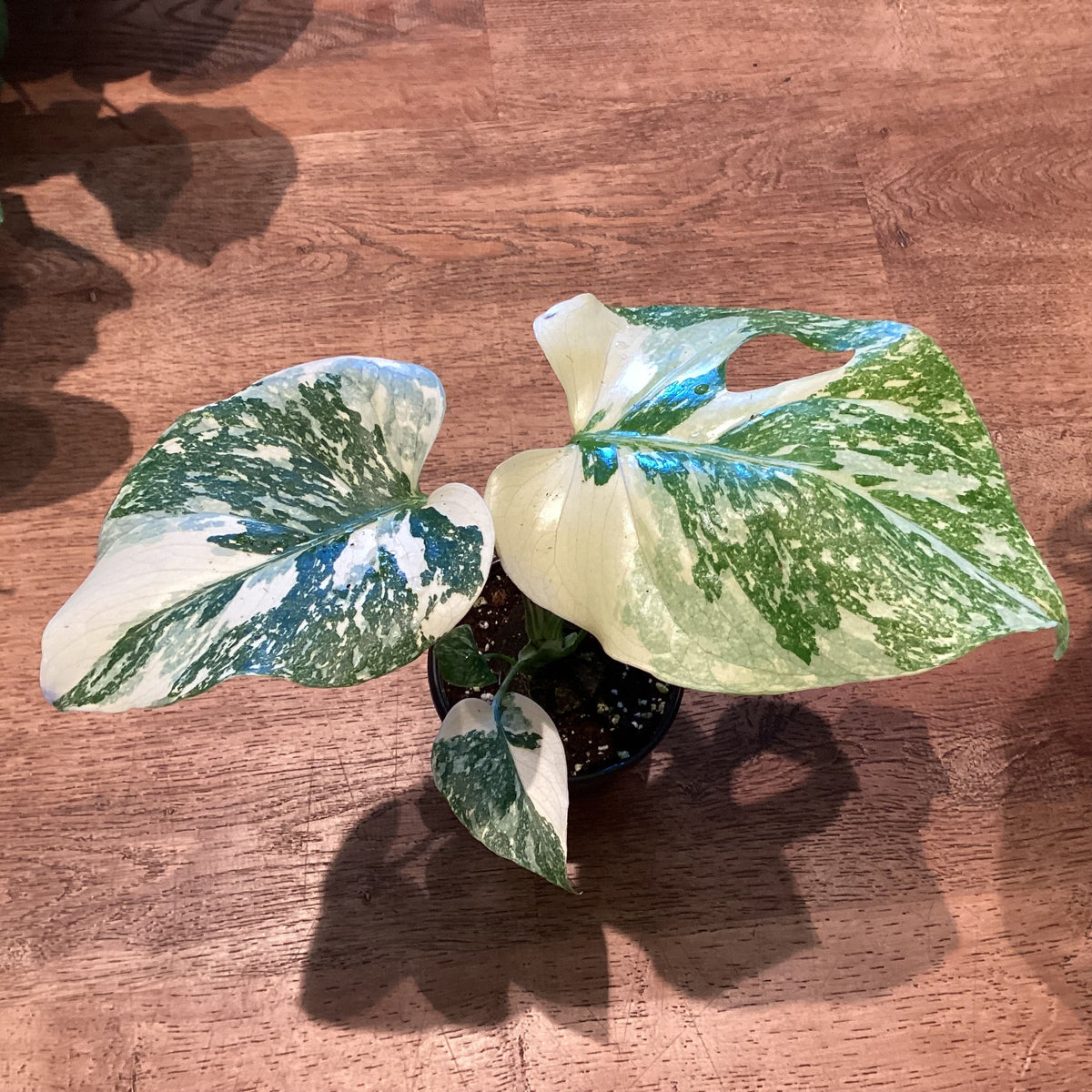
Monstera ‘Creme Brulee’
Monstera ‘Creme Brulee’
Couldn't load pickup availability
‘Crème Brûlée’ is a trade name used for selections of Monstera deliciosa ‘Thai Constellation’ valued for their extra creamy/high coloration and striking variegation. It belongs to the Araceae family and shares the climbing habit and mature leaf structure of other Thai Constellations. Its collector appeal rests in the individual plant’s pattern: fine speckling, marbling, and larger cream sectors can combine beautifully across the foliage. There is some dispute about this online, so please note that we describe it as a Thai Constellation selection rather than a separate species or an independently verified genetic novelty.
Light: Provide bright, gentle light near an east-facing window, behind a sheer curtain at a brighter window, or under a suitable grow light. Variegated foliage benefits from good light, but pale sections can scorch in strong direct sun.
Water: Water thoroughly once approximately the upper quarter of the substrate has dried. Let excess water drain completely. Avoid keeping the root ball constantly saturated, particularly during cool Bay Area winters.
Humidity: Moderate household humidity is generally workable, with approximately 50 to 65 percent a useful target for foliage quality. Many coastal Bay Area homes will need no additional humidification. In drier Oakland or San Jose homes, consider a humidifier if indoor air is persistently dry.
Soil: Use an airy, moisture-retentive aroid mix with orchid bark, perlite or pumice, and coco coir or potting soil. Choose a pot with drainage and avoid substantially oversizing it when repotting.
Temperature: Aim for approximately 65 to 85°F. Protect from cold drafts and temperatures below 60°F. Indoor cultivation is the most reliable Bay Area choice; any outdoor placement should be sheltered, warm, and protected from harsh sun.
Growth Habit: A substantial climbing plant, not a miniature Monstera. Provide a sturdy pole or trellis as it grows. Juvenile leaves may be entire; larger leaves develop splits and internal openings as the plant matures under suitable conditions.
Fertilizer: Feed lightly with a balanced houseplant fertilizer during active growth, following the product’s dilution instructions. Reduce feeding when growth slows. Additional fertilizer will not reliably increase variegation.
Flowers: Mature plants can produce spathe-and-spadix inflorescences, but flowering is uncommon indoors. This selection is grown primarily for its foliage, with no dependable household blooming season.
Pest Care: Inspect leaf undersides, petiole junctions, and emerging growth for thrips, mites, scale, and mealybugs. Wipe leaves gently to remove dust and isolate affected plants promptly. Brown patches alone do not establish a pest diagnosis.
Pet Safety: Toxic to cats and dogs. Monstera deliciosa contains insoluble calcium oxalates that can cause mouth irritation, drooling, vomiting, and difficulty swallowing if chewed. Keep it away from pets and contact a veterinarian if ingestion occurs.
Share