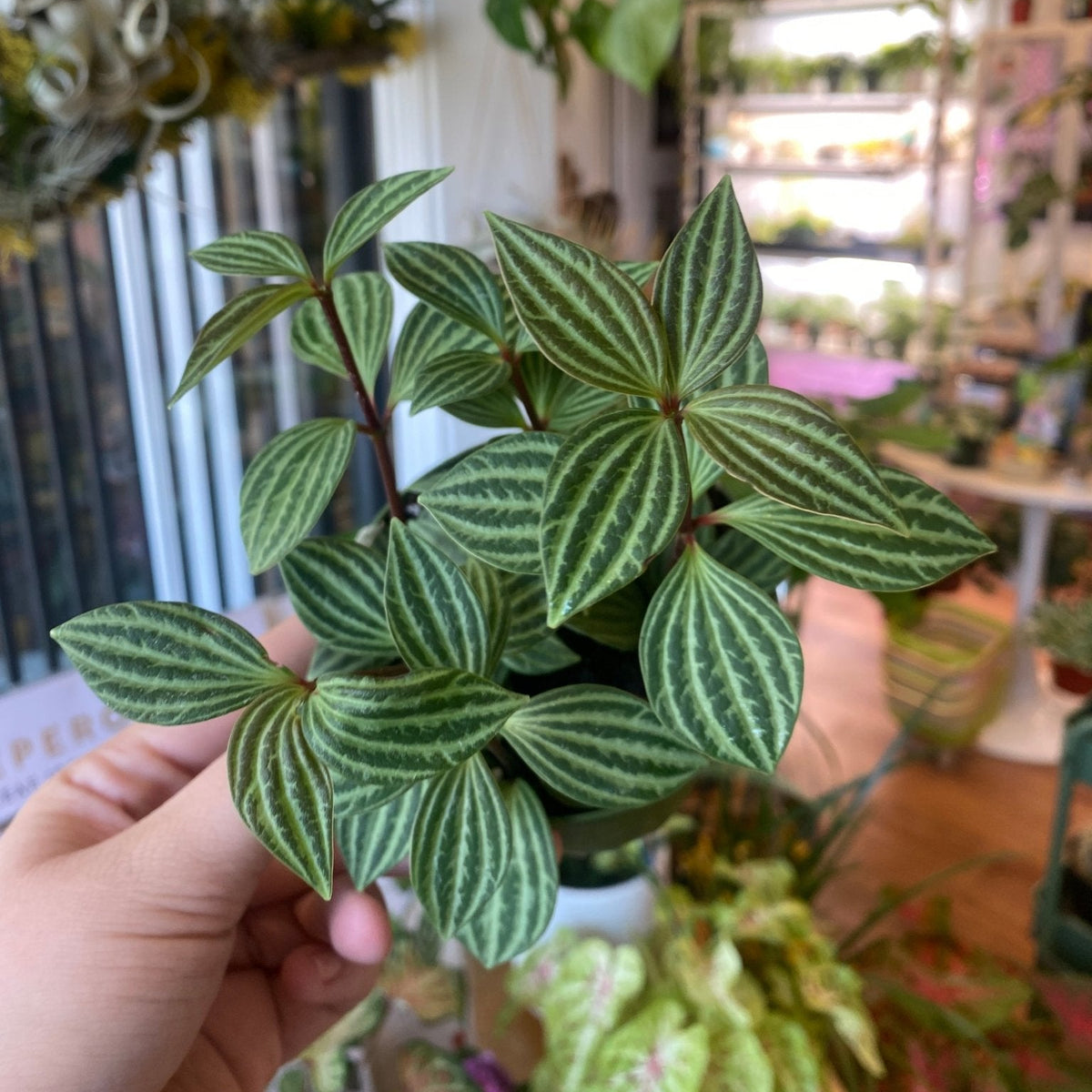
Peperomia puteolata
Peperomia puteolata
Couldn't load pickup availability
Light: Provide medium to bright, gentle light. An east-facing window or a position near a filtered south- or west-facing window encourages compact growth and strong leaf markings. Avoid harsh direct afternoon sun, which may scorch the foliage. Low light can produce stretched stems and wider spaces between leaves.
Water: Allow approximately the upper half of the potting mix to dry before watering thoroughly. Its semi-succulent leaves and stems store some moisture, making overwatering more dangerous than brief dryness. Never allow the pot to remain in standing water. Hetch Hetchy tap water is suitable.
Humidity: Average household humidity is generally adequate, although moderate humidity supports especially fresh growth. San Francisco, Daly City, and Half Moon Bay homes should rarely require additional humidity. A humidifier may be helpful in heated or air-conditioned spaces in Oakland, San Jose, and warmer inland areas, but this species does not require a greenhouse cabinet. Avoid pebble trays.
Soil: Use a loose, fast-draining mixture, such as indoor potting soil blended generously with perlite or pumice and fine orchid bark. Its fine roots benefit from moisture retention, but they deteriorate quickly in dense, airless soil. A relatively small pot with a drainage hole is ideal.
Temperature: Maintain temperatures between 60 and 80°F. Protect the plant from cold drafts and prolonged temperatures below 55°F. Outdoor summer placement is possible in a sheltered, shaded Bay Area location, but bring the plant indoors before cool autumn nights.
Growth Habit: Young plants are upright to spreading, while mature stems arch and trail approximately 12 to 24 inches. Pinching the growing tips encourages branching and a fuller plant. Long stems can be trimmed and propagated easily from cuttings containing at least one healthy node.
Fertilizer: Feed every four to six weeks during active growth with a balanced fertilizer diluted to half strength. Reduce feeding during the cooler, darker months when growth naturally slows.
Flowers: Mature plants may produce slender, upright flower spikes typical of the genus Peperomia. The tiny flowers lack showy petals, and the pale green spikes are subtle compared with the patterned foliage. Flowering can occur during warm periods of active growth.
Seasonal Behavior: This evergreen tropical species does not require dormancy, but growth may slow during Bay Area winters. Allow the substrate to dry a little more deeply between waterings during cool, low-light periods.
Pest Care: Watch for mealybugs, spider mites, and fungus gnats. Persistent yellowing or soft stems usually indicate excess moisture rather than insufficient water. Good drainage and modest airflow are the best defenses against root and stem rot.
Pet Safety: Peperomias are generally regarded as pet-friendly.
Share