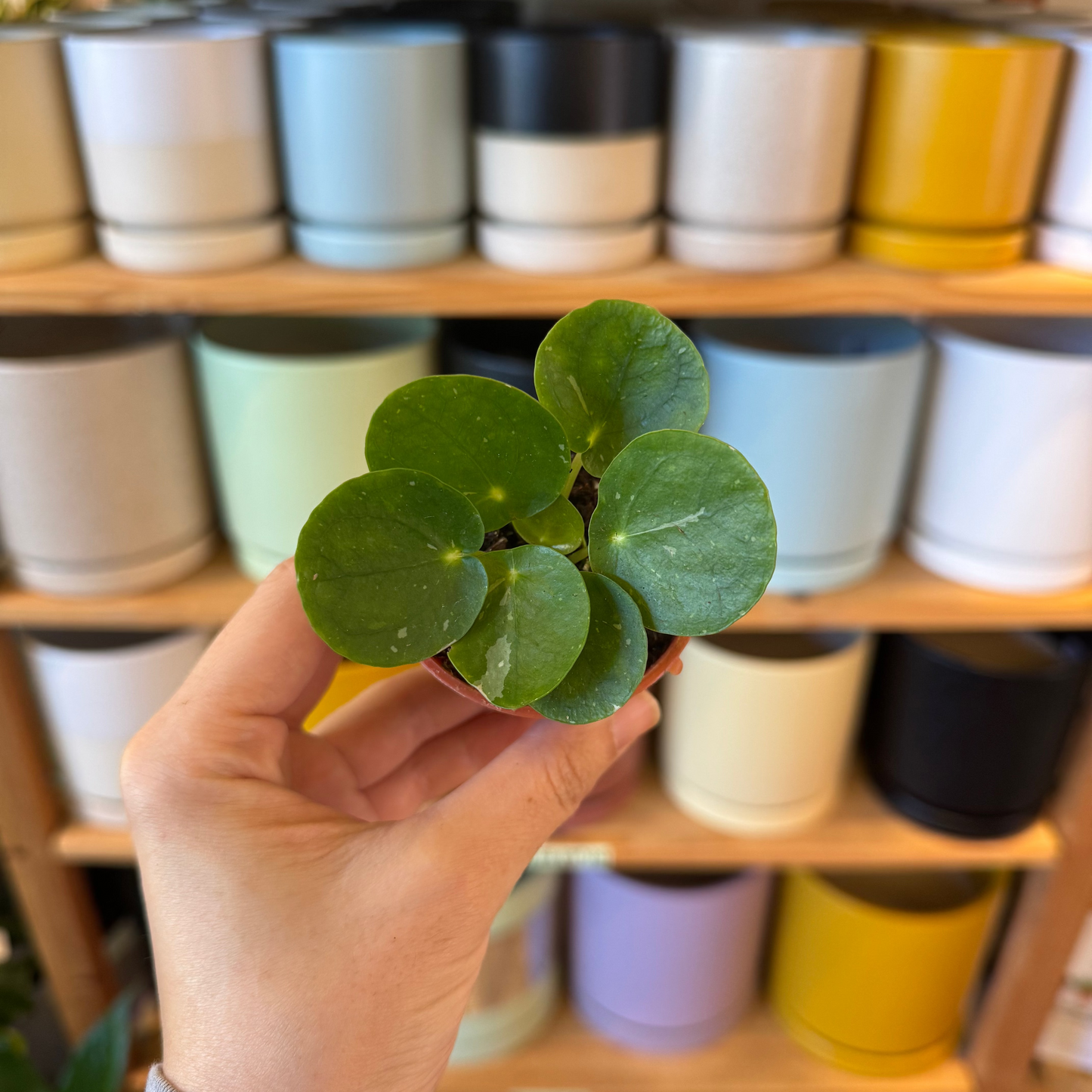
Pilea peperomiodes 'Sugar'
Pilea peperomiodes 'Sugar'
Couldn't load pickup availability
Pilea peperomioides ‘Sugar’ is a named variegated selection in the Urticaceae family, distinguished by delicate pale flecking and marbling that give its foliage a sugar-dusted appearance. Leaves may have slightly irregular outlines, adding character to the familiar rounded form. Generally treated separately from ‘White Splash’, ‘Sugar’ appeals to collectors who appreciate subtle foliage patterns rather than large blocks of contrasting color. The intensity of its markings can vary between leaves and plants.
Care Overview
Light: Bright, gentle light supports compact growth and highlights the pale markings. An east-facing window or filtered light near a brighter exposure works well. Avoid harsh afternoon sun, and rotate the pot regularly for balanced growth.
Water: Allow the top inch or so of the potting mix to dry before watering thoroughly. Let excess water drain completely, and avoid leaving the pot standing in water. Check moisture rather than following a fixed schedule.
Humidity: Typical household humidity is usually sufficient. Homes in San Francisco, Daly City, and Half Moon Bay generally do not need additional humidity for this plant. In especially dry Oakland or San Jose homes, a humidifier is optional rather than essential.
Soil: Use a light, well-draining houseplant mix amended with perlite or pumice. Choose a pot with drainage that is only slightly larger than the root system.
Temperature: Comfortable indoor temperatures suit it well. Protect from frost, cold drafts, and heating vents. Outdoors in San Francisco, choose sheltered bright shade during mild weather and bring indoors before cold nights.
Growth Habit: An upright perennial with rounded leaves held on long stalks around a central stem. Over time, it can develop a miniature tree-like silhouette and produce offsets around its base. Separate established offsets with roots to propagate. Growth may slow in winter, but it does not require a dry dormancy.
Fertilizer: Feed lightly with a diluted, balanced houseplant fertilizer during active growth, following the product’s directions. Reduce or pause feeding when growth slows.
Flowers: Small, inconspicuous pale flowers may appear in clusters, often in spring. Flowering is occasional indoors; this selection is grown primarily for its foliage.
Pest Care: Inspect regularly for mealybugs, spider mites, and scale. Persistent wet soil can encourage fungus gnats and root problems. Natural pale markings should not be confused with new pest damage, which may include stippling, webbing, or distorted growth.
Pet Safety: Generally considered non-toxic to cats and dogs.
Share