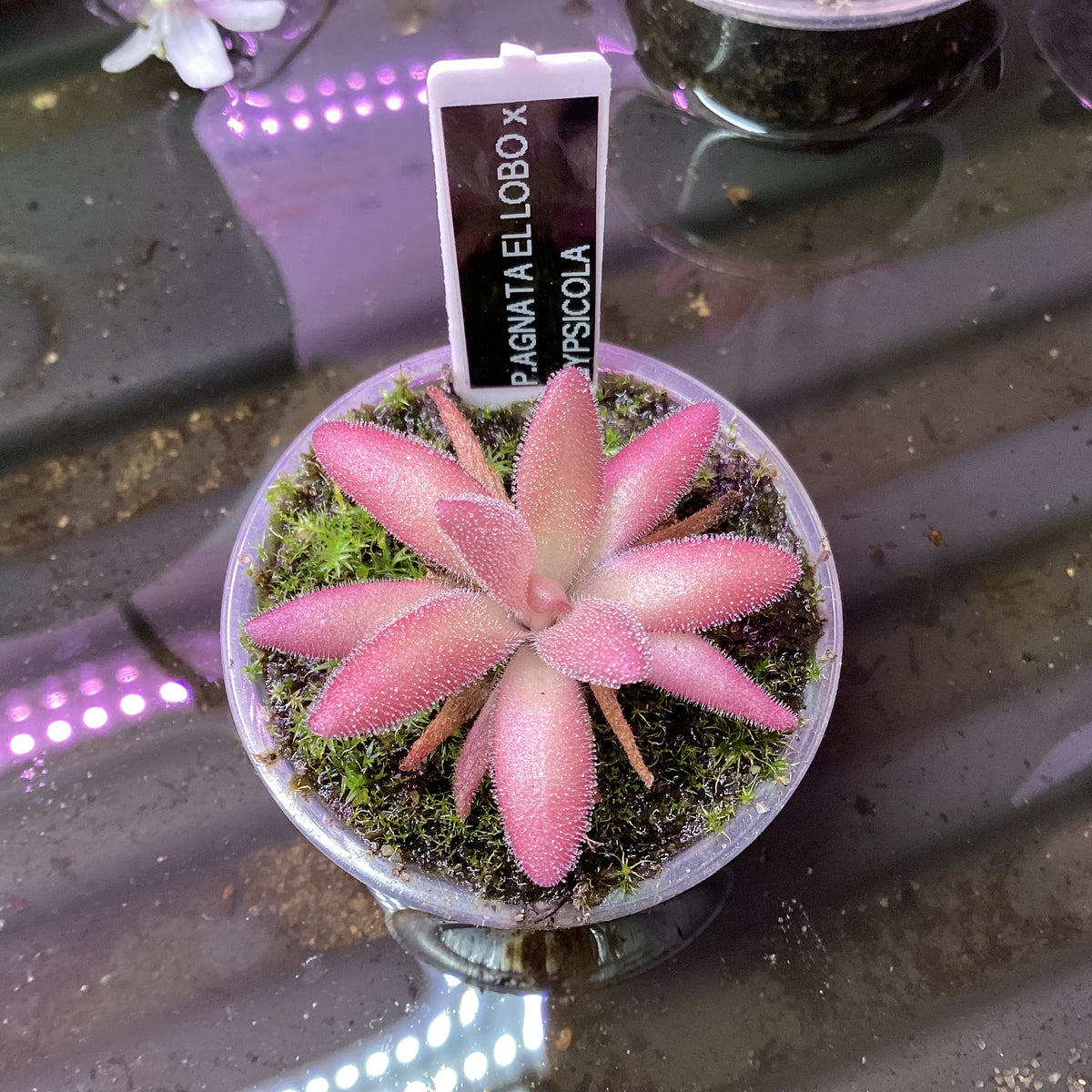
Pinguicula agnata ‘El Lobo’ x gypsicola
Pinguicula agnata ‘El Lobo’ x gypsicola
Couldn't load pickup availability
Pinguicula agnata ‘El Lobo’ × gypsicola
Mexican Butterwort
Pinguicula agnata ‘El Lobo’ × gypsicola is a compact carnivorous butterwort with a colorful rosette that develops yellowish tones and reddish blushes under strong light. Its small scale makes it a charming addition to a bright windowsill or grow-light collection, especially alongside other miniature carnivorous plants.
Created at Rainbow Carnivorous Plants in 2023, this cross is grown from seed, so individual plants can vary in leaf shape, coloration, size, and flowers. Expect a little individuality rather than perfectly identical rosettes. Mature plants are generally around 2–3 inches across, depending on growing conditions.
During its carnivorous growth phase, sticky leaves capture and digest small insects, including adult fungus gnats. It’s a lovely little collector plant with a useful appetite, though catching adults will not eliminate larvae in nearby pots.
Care
Light: Bright gentle light with some mild morning sun, or a suitable grow light. Stronger lighting encourages warmer coloration. Increase exposure gradually and protect from hot afternoon sun.
Water: Keep the medium lightly moist while the plant is producing sticky carnivorous leaves. With an airy butterwort mix, a shallow water tray can work well. If the plant forms a compact rosette of smaller, succulent leaves, reduce watering and allow the tray to dry between refills.
Soil: Use a porous Mexican butterwort mix with mineral ingredients such as pumice, perlite, and sand. Avoid dense, moisture-retentive houseplant soil.
Seasonal growth: This hybrid may enter a succulent resting phase, often in winter. Smaller, less-sticky leaves signal that it needs less water. Adjust care to the plant’s appearance rather than automatically imposing a dry winter rest.
Water quality: Distilled, reverse-osmosis, or clean rainwater is a dependable choice. Avoid softened water.
Bay Area growing: Best grown indoors in a bright window or under a grow light. Provide airflow and protect from frost, cold drafts, and prolonged winter rain if grown outside.
Feeding: Small insects caught on the leaves provide supplemental nutrients. Avoid routine houseplant fertilizer and do not feed human foods.
Flowers: Flower color and timing are not yet consistently documented for this seed-grown cross, so blooms are a surprise rather than a promised color or season.
Share