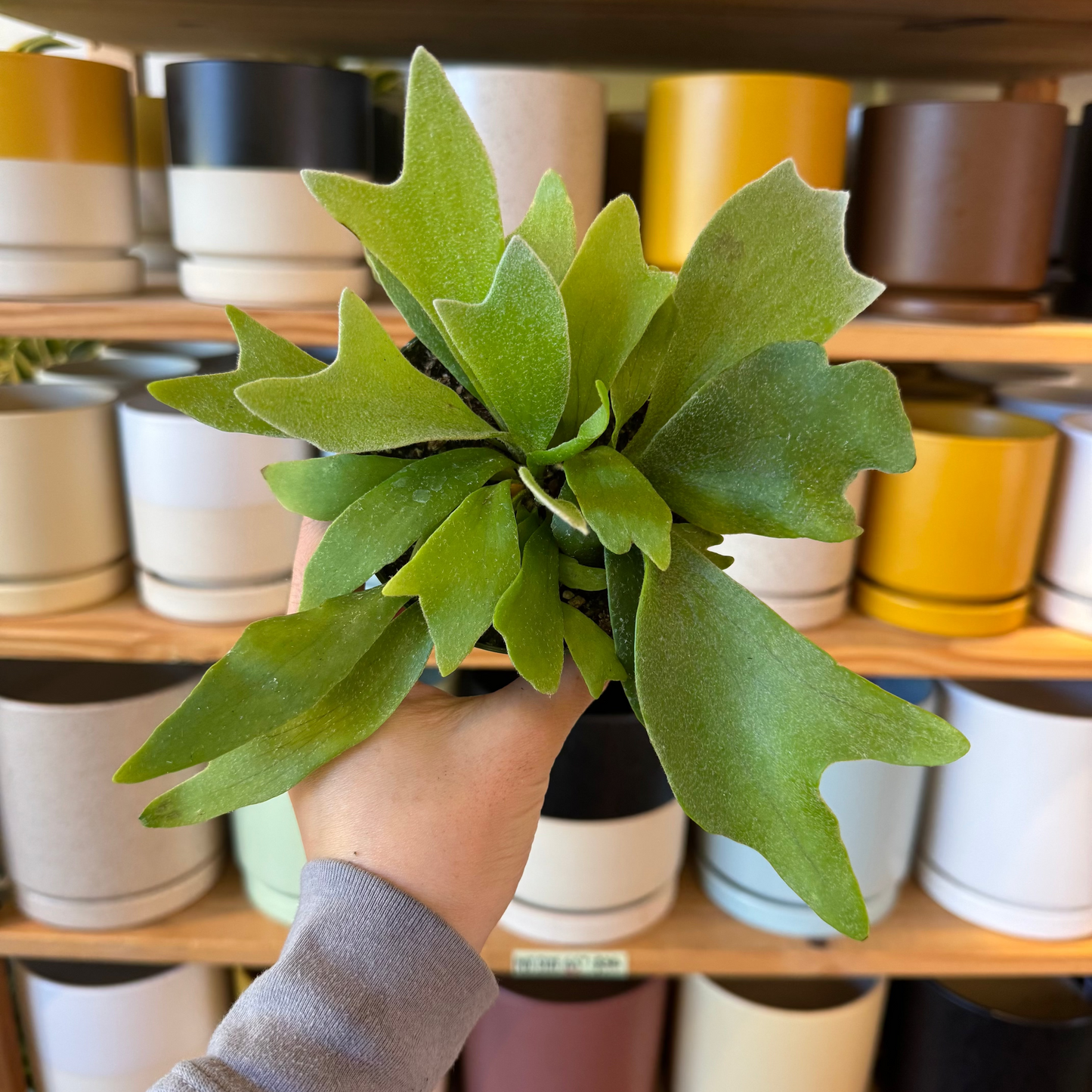
Platycerium hybrid — Staghorn Fern “Grande ×”
Platycerium hybrid — Staghorn Fern “Grande ×”
Couldn't load pickup availability
Care Overview
Light: Bright, gentle light. Indoors, place near an east-facing window or provide filtered light from a brighter exposure. Avoid strong afternoon sun, especially before the plant has acclimated.
Water: Water thoroughly when the growing medium approaches dryness, then allow it to drain completely. For mounted plants, soak the moss and root area until evenly hydrated. Avoid keeping the root mass constantly wet or allowing it to remain bone dry for extended periods.
Humidity: Moderate to high humidity with good airflow. Coastal homes in San Francisco, Daly City, and Half Moon Bay may provide suitable conditions; a humidifier can help in drier Oakland or San Jose homes. Humidity does not replace watering the roots.
Soil: This is an epiphytic fern, so use an airy growing medium rather than dense garden soil. Loosely packed long-fiber sphagnum works well for mounting; potted plants need a freely draining mix incorporating fine orchid bark and perlite. Keep the growing point exposed.
Temperature: Warm, stable indoor conditions are the safest starting point while the hybrid’s parentage is unknown. Protect from frost, cold drafts, and prolonged chilly conditions. Outdoors in San Francisco, choose sheltered bright shade during mild weather and bring indoors when nights turn cold.
Growth Habit: Produces two distinct frond types: shield fronds that protect the root area and collect organic debris, and projecting fertile fronds that may eventually bear spores. Older shield fronds naturally become brown and papery; leave them attached. Do not assume this hybrid will produce pups. Growth may slow in winter, but it does not require a dry dormancy.
Fertilizer: Apply a diluted, balanced fertilizer to the growing medium about monthly during active growth. Reduce feeding when growth slows. Modest, regular feeding is preferable to heavy applications.
Flowers: No flowers. Staghorn ferns reproduce through spores, which may appear as brown patches on the undersides of mature fertile fronds. These patches are a normal reproductive feature, not necessarily a pest or disease.
Pest Care: Check regularly for scale insects and mealybugs, particularly around frond bases. Avoid rubbing away the fine protective fuzz on the leaves. Test any treatment on a small area first, since fern foliage can be sensitive to sprays.
Pet Safety: Staghorn ferns are generally considered pet friendly. The ASPCA lists Platycerium bifurcatum and P. alcicorne as non-toxic to cats and dogs, although this unspecified hybrid does not have its own listing.
Share