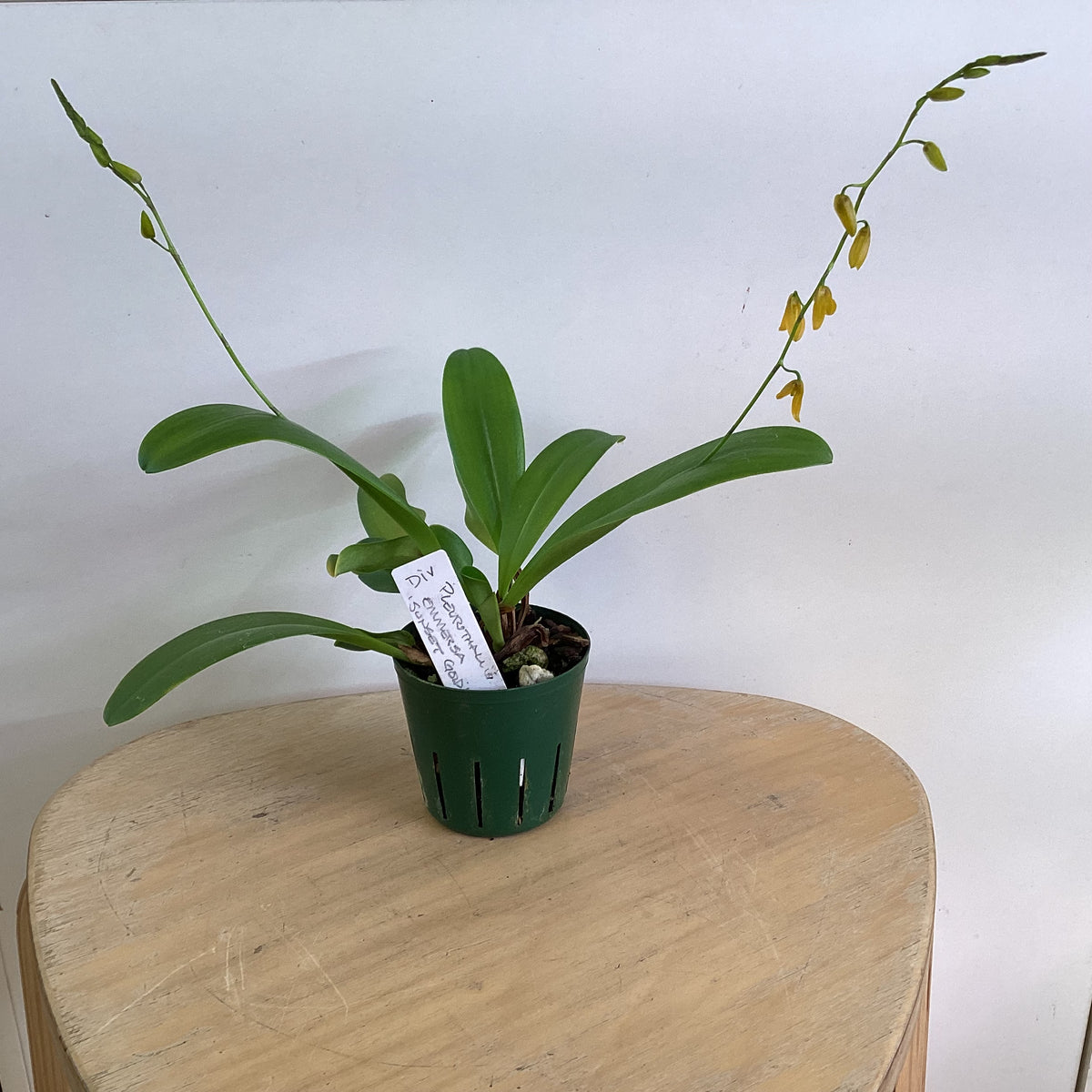
Pleurothallis immersa ‘Sunset Gold’
Pleurothallis immersa ‘Sunset Gold’
Couldn't load pickup availability
Pleurothallis ‘Sunset Gold’ belongs to a group of orchids with some extraordinary relationships with insects. Across the pleurothallids, flowers may imitate a potential mate, advertise themselves through scent, or use moving parts to position a visiting fly for pollination. Their small size makes these interactions even more remarkable: a flower only a few millimeters across can have a mechanism suited to a particular insect.
Care Overview
Light: Bright, gentle light is a useful starting point. An east-facing window, filtered light near a brighter exposure, or a suitable grow light can work well. Avoid harsh afternoon sun, particularly while the plant adjusts to your home.
Water: Keep the potting medium lightly moist, with enough drainage and air around the roots to prevent stagnant conditions. Check the medium regularly rather than following a fixed schedule. A small pot or mounted plant can dry surprisingly quickly, especially during warm weather.
Humidity: Humid air and gentle circulation work together here. Coastal San Francisco, Daly City, and Half Moon Bay often provide a helpful humidity baseline, although heated indoor rooms can still become dry. In Oakland or San Jose, a humidifier or ventilated growing cabinet may make suitable conditions easier to maintain. Avoid enclosing the plant in a warm, airless container.
Soil: Use an orchid medium rather than ordinary houseplant soil. Fine bark, loosely packed sphagnum, or a combination of the two can provide moisture without smothering the roots. Choose a small pot with good drainage and avoid packing moss tightly.
Temperature: Temperature preferences vary widely across Pleurothallis and its relatives, so the name alone does not tell us whether this plant wants cool or warm conditions. Avoid prolonged overheating and confirm the supplier’s growing range before deliberately chilling it. Outdoor growing in San Francisco should depend on that confirmed temperature tolerance and a sheltered location.
Growth Habit: Many pleurothallids produce new leafy growths beside older ones, gradually forming a fuller clump. Allow room for those new growths when positioning the plant. Larger, established clumps can eventually be divided, but very small divisions have fewer roots and leaves to support recovery.
Water Quality & Fertilizer: Distilled or suitable low-mineral water is a straightforward choice. Feed lightly with a dilute orchid fertilizer during active growth, following the product’s directions. Periodically water thoroughly with plain water to help limit fertilizer buildup.
Flowers: Flower size, color, fragrance, and season vary considerably within the group. Some plants bloom repeatedly from an existing spike, so leave healthy spikes in place until they are clearly finished. The flower characteristics of ‘Sunset Gold’ remain unconfirmed; the name should not be taken as a promise of golden blooms.
Seasonal Behavior: Do not impose a dry winter rest without species-specific guidance. Adjust watering and feeding to actual growth and drying conditions, while avoiding prolonged dehydration.
Pest Care: Inspect regularly for mealybugs, scale, and spider mites, paying attention to leaf bases and new growth. Slugs and snails can damage tender growth in greenhouse or outdoor collections. Quarantine new arrivals before placing them beside established orchids.
Pet Safety: Species-specific pet safety has not been verified, although orchids are generally considered pet safe.
Share