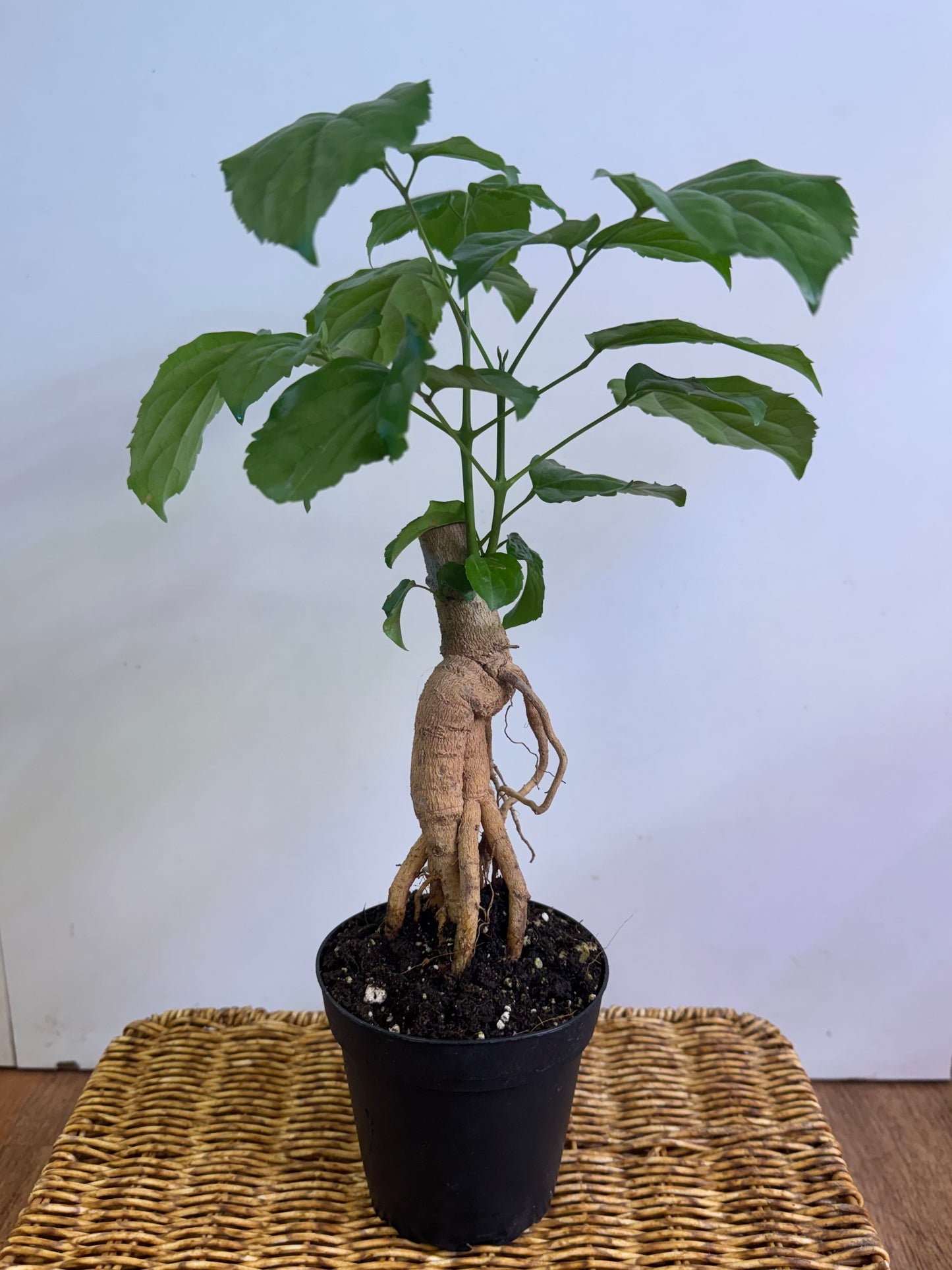
Radermachera sinica (China Doll bonsai)
Radermachera sinica (China Doll bonsai)
Couldn't load pickup availability
Radermachera sinica is an evergreen tree in the Bignoniaceae family, grown here as a China Doll bonsai. Its finely divided leaves create a layered canopy that can be refined through regular pruning, offering collectors an engaging tree to shape over time. “Bonsai” describes its cultivation and presentation rather than a separate species or cultivar; its compact form depends on continued care. It rewards abundant light, consistent watering, and a stable location, but can shed leaves when conditions change abruptly.
Care Overview
Light: Bright, gentle light close to a window. Some mild morning sun can be beneficial after gradual acclimation. Avoid a dim shelf, which can lead to sparse growth and long stems; supplement with a grow light if needed.
Water: Check the growing medium frequently, especially in a shallow bonsai pot. Water thoroughly when the surface begins to dry, allowing excess water to drain. Avoid letting the entire root ball dry out or leaving the pot standing in water. Small containers can dry faster than standard nursery pots.
Humidity: Moderate household humidity is a good starting point. Coastal homes in San Francisco, Daly City, and Half Moon Bay often provide suitable conditions. A humidifier may help in drier Oakland or San Jose homes, particularly during heating season. Keep away from heating vents.
Soil: Use a freely draining mix that retains some moisture. For a shallow bonsai container, a blend incorporating pumice, fine bark, and other appropriately sized bonsai components can balance aeration and water retention. Drainage holes are essential.
Temperature: Warm, stable indoor conditions are best. Protect from cold drafts and sudden temperature changes. Outdoors in San Francisco, choose a sheltered location during mild weather and bring indoors before chilly nights; the small root mass of a bonsai needs extra protection.
Growth Habit: A woody evergreen tree maintained at a compact size through pruning and root management. Pinch or trim new shoots during active growth to encourage branching and preserve the canopy. Allow it to settle after purchase before major pruning or repotting. Winter growth may slow, but it does not require a cold or dry dormancy.
Fertilizer: Apply a diluted, balanced fertilizer every four to six weeks during active growth, following the product’s directions. Reduce or pause feeding when growth slows, and avoid fertilizing a dry root ball.
Flowers: Mature trees can produce trumpet-shaped flowers, but blooming is uncommon indoors and should not be expected from a small bonsai. Its primary appeal is its foliage and miniature tree form.
Pest Care: Inspect new growth and leaf undersides for aphids, spider mites, mealybugs, and scale. Yellowing or leaf drop can also result from watering problems or a change in conditions, so check the growing medium and location before treating for pests.
Pet Safety: China Doll is commonly described as non-toxic, but I could not verify a species-specific ASPCA listing for Radermachera sinica. Its pet safety is therefore less firmly documented than that of plants explicitly assessed by the ASPCA; discourage chewing.
Share