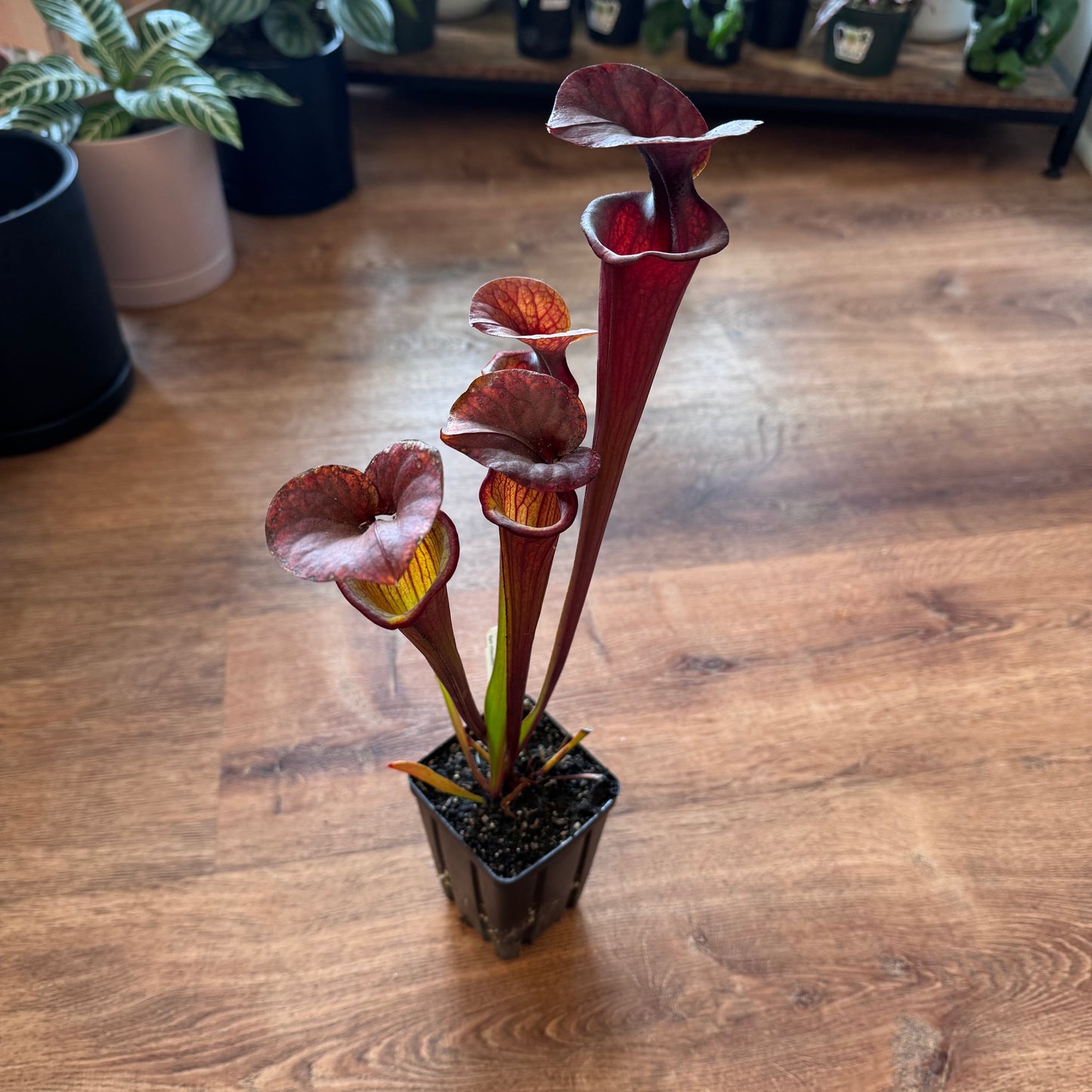
Sarracenia flava var atropurpurea
Sarracenia flava var atropurpurea
Couldn't load pickup availability
Sarracenia flava var. atropurpurea is a naturally occurring variety of the yellow pitcher plant that turns a rich, saturated red from lid to base under full sun. Native to a small range in the Carolinas, it’s highly sought after for its dramatic color and classic flava shape—tall, elegant pitchers with wide lids and graceful curves.
In spring, it produces fragrant yellow flowers before sending up its famous pitchers, which can reach over two feet tall in ideal conditions. The red coloration intensifies as the season progresses, creating a striking focal point in any bog garden or container.
Light: Full sun—6–8+ hours daily for best color.
Temperature: Thrives in temperate conditions (50–90°F). Tolerates light frost.
Humidity: Moderate to high, especially during active growth.
Water: Keep soil constantly wet using distilled, rain, or reverse-osmosis water. Never allow the plant to dry out or use hard tap water unless you’re certain it’s extremely pure (Hetch Hetchy water is generally safe).
Soil: Nutrient-poor, acidic mix such as peat moss and perlite or sand—no fertilizer or compost.
Fertilizer: None; gets nutrients from catching insects.
Dormancy (important!):
This variety requires a winter dormancy period to remain healthy long-term. In late fall, pitchers will brown and die back—this is normal. From November to February, keep the plant cool (35–55°F) and the soil just damp, not saturated. Remove dead leaves in early spring to make way for fresh growth.
How to grow Sarracenia flava var. atropurpurea indoors:
Best suited to outdoor or greenhouse cultivation. Indoors, it needs strong grow lights, proper water, and a cool winter rest, which can be difficult to achieve without a dedicated setup.
How to grow outdoors in the Bay Area:
This plant thrives outdoors in full sun in both coastal and inland parts of the Bay Area. Keep it in a bog container or tray of water year-round and allow it to naturally enter dormancy in winter. Protect from heavy winter rains if grown in a small pot, and ensure it’s never exposed to freezing temperatures for extended periods.
Bloom season: Spring
Dormant period: Winter (Nov–Feb)
Pet safe: Yes
Difficulty: Intermediate—easy to grow outdoors with full sun, clean water, and seasonal dormancy.
Share